- The paper presents a novel framework that integrates biological neural networks with engineered digital systems to enhance AI performance.
- It demonstrates the use of neuromorphic computing and active inference to overcome limitations of traditional architectures with improved efficiency.
- The study addresses ethical considerations, advocating for precautionary frameworks to balance technological advances with moral responsibilities.
A Computational Perspective on NeuroAI and Synthetic Biological Intelligence
This paper provides a comprehensive overview of the intersection between neuroscience and AI, focusing primarily on the emerging field of NeuroAI and its subset, Synthetic Biological Intelligence (SBI). It highlights the paradigm shift towards integrating biological neural networks (BNNs) with engineered hardware and software systems.
Introduction to NeuroAI and SBI
NeuroAI represents a convergence of neuroscience and AI, wherein insights from brain function guide the design of intelligent systems. A focal point within this domain is SBI, which integrates adaptive learning properties of BNNs with digital architectures to facilitate novel forms of embodied intelligence. The paper delineates NeuroAI into three interactive domains: hardware, software, and wetware, outlining frameworks that amalgamate these systems. Advances in organoid intelligence, neuromorphic computing, and neuro-symbolic learning signal the advent of hybrid systems computing through the interaction of neural tissue and algorithms.
Biological Neural Networks: A Basis for NeuroAI
Biological neural networks differ fundamentally from artificial neural networks (ANNs), particularly in their structural complexity and functionality. The dendritic trees of a neuron (Figure 1) act as distributed filter banks with leaky RC characteristics, operating with an intricate interplay of sodium and calcium channels. This sophistication allows for nonlinear processing capabilities such as temporal pattern recognition and complex signal gating, surpassing the simplistic computational models of perceptrons traditionally used in ANNs.
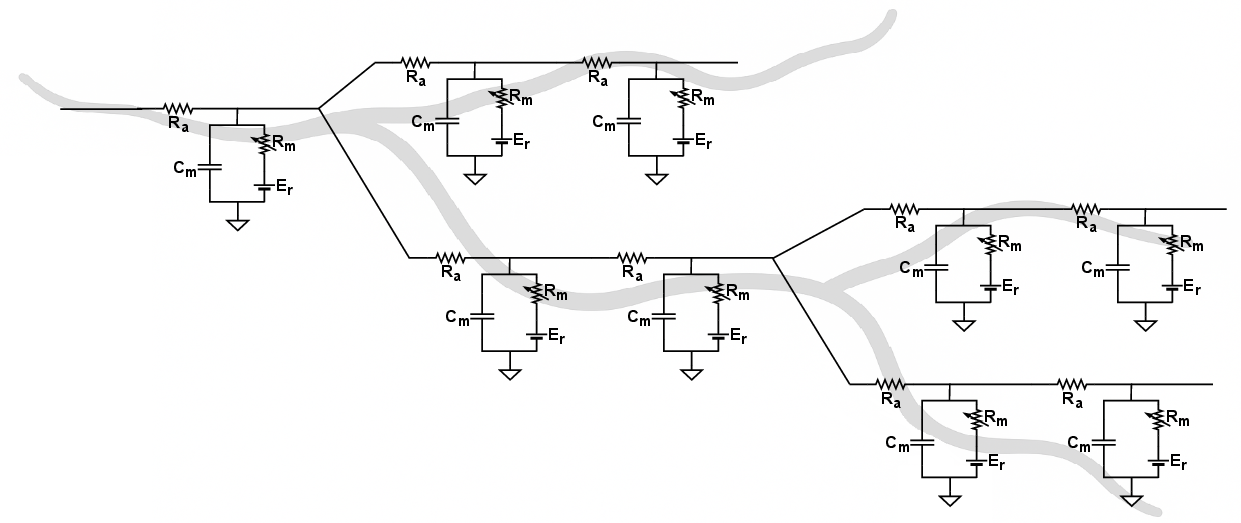
Figure 1: Representation of dendrite branches as electrical circuits with active elements.
Key properties of BNNs, such as neuronal diversity, modular organization, and parallel distributed processing, underlie the brain's functional capacities and guide the design of SBI systems.
NeuroAI Spectrum and System Design
The neuroAI field integrates three domains: hardware, software, and wetware (Figure 2). This interdisciplinary framework fuels innovations across domains, emphasizing the importance of designing systems that are both biologically plausible and computationally efficient.
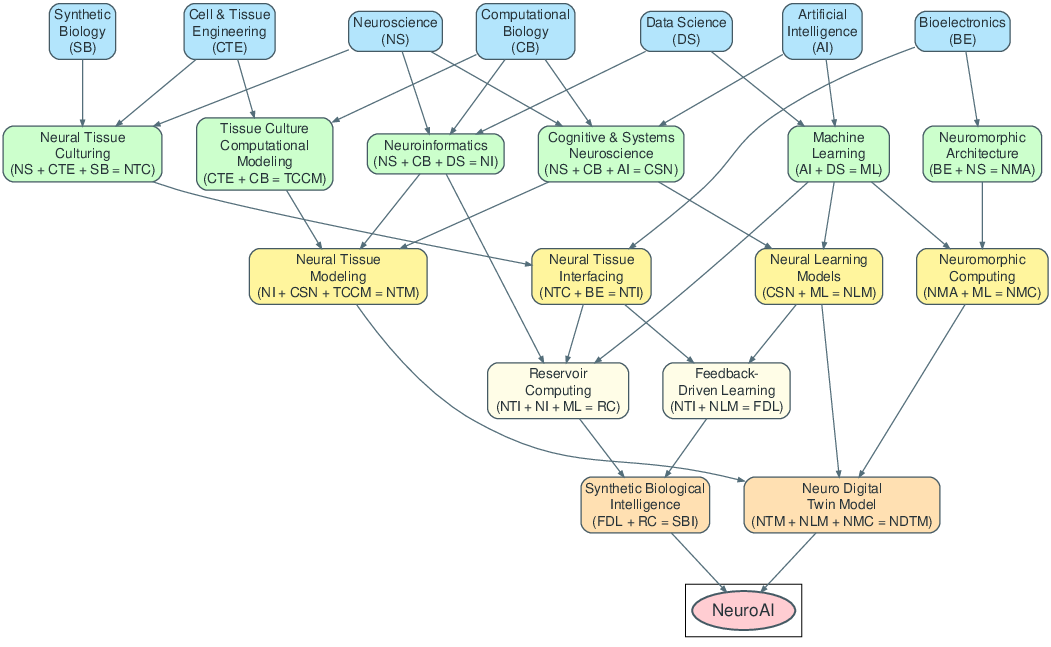
Figure 2: Graph representation of the relations between different fields that build the foundation for NeuroAI.
Neuromorphic computing architectures (Figure 3) aim to replicate the spike-based communication and synaptic connectivity of biological systems, differing from traditional von Neumann architectures by emphasizing in-memory computation to reduce data transfer bottlenecks.
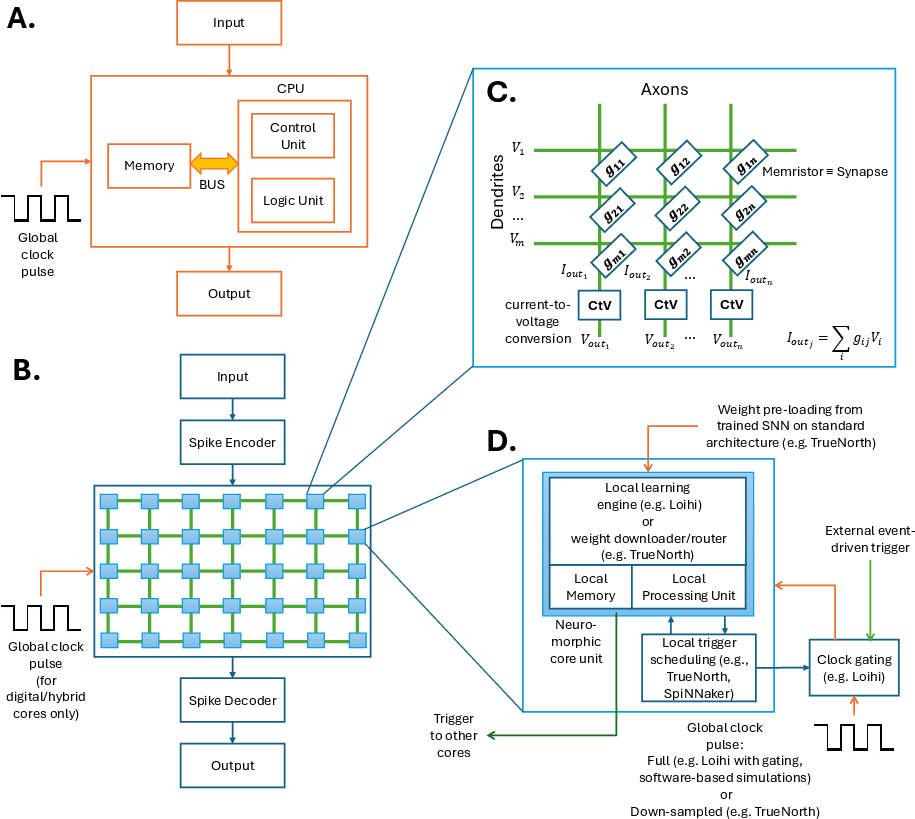
Figure 3: Illustration of the neuromorphic architecture. A: Traditional von Neumann architecture with separate memory and processing units connected by a shared communication BUS, which creates a bandwidth bottleneck and increases energy consumption. B: Neuromorphic architecture composed of analog, digital, or hybrid cores activated by spike-based signals, mimicking the event-driven dynamics of biological neurons. C: Analog neuromorphic core based on memristors-resistive elements that simultaneously store and modulate synaptic weights without requiring a clock signal. D: Digital neuromorphic core with integrated local memory and processing units.
Reinforcement Learning and Neuro-Symbolic AI
The paper discusses computational models like reinforcement learning (RL) and active inference (AIF) as frameworks for decision-making in NeuroAI applications. RL focuses on optimizing policy for reward maximization, whereas AIF is predicated on minimizing free energy through a generative model describing agent-environment interactions (Figure 4).
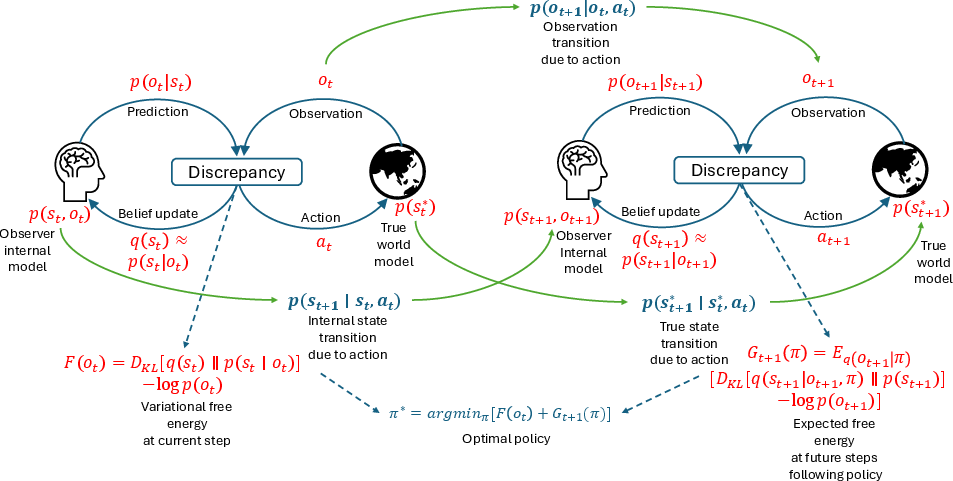
Figure 4: Diagram of active inference over two timesteps.
Neuro-symbolic AI bridges symbolic reasoning and sub-symbolic learning (Figure 5), enabling greater interpretability and factual reliability in AI decision-making frameworks.
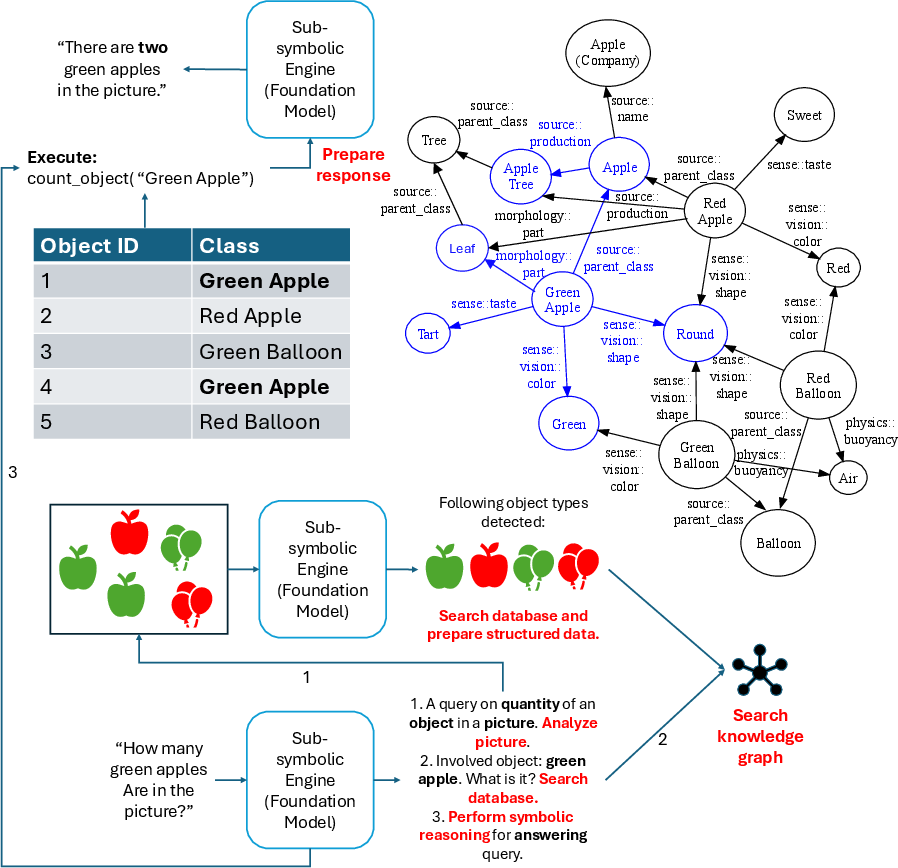
Figure 5: Exemplary neuro-symbolic AI model. A multimodal foundation model (sub-symbolic core) receives a user query, activates a relevant subgraph from an internal knowledge graph, performs symbolic reasoning, and generates an output.
SBI Systems and Applications
SBI seeks to harness the adaptability and efficiency of BNNs within hybrid computational platforms. Two models—reservoir computing and feedback-driven learning—illustrate different approaches for utilizing in vitro neural cultures for information processing and cognitive tasks (Figure 6).
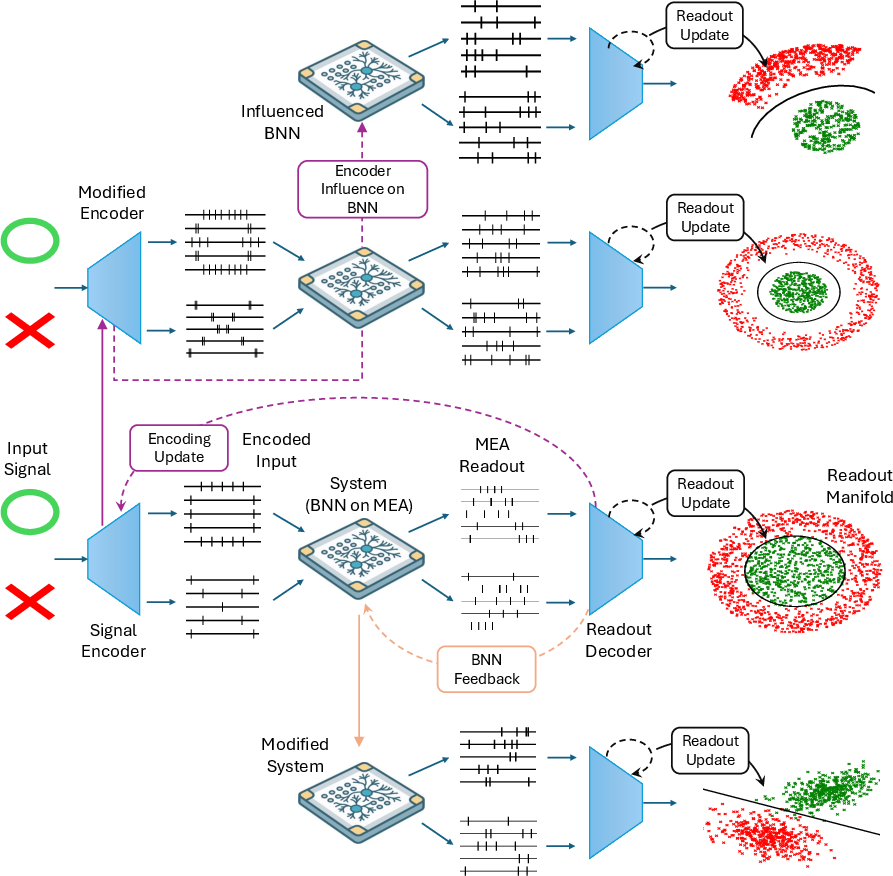
Figure 6: SBI computing methods. The computing method relies on open-loop and closed-loop configurations.
The paper also emphasizes the potential for assembling modules, such as assembloids and connectoids, to replicate in vivo cortical architectures, thereby advancing the study of complex cognitive functions and disease modeling.
Ethical Considerations and Future Directions
Ethical considerations surrounding NeuroAI and SBI raise important questions about the moral status of brain organoids, given their potential for spontaneous neural activity that might align with aspects of consciousness. The paper calls for precautionary ethical frameworks to address these emerging concerns.
Conclusion
This research illustrates the potential of NeuroAI and SBI as transformative forces in artificial intelligence, capable of blending biological processes with computational techniques to achieve advanced, efficient, and interpretable AI systems. Continued interdisciplinary efforts and ethical vigilance are necessary to navigate the technological frontiers opened by these hybrid systems.