A Linear Generative Framework for Structure-Function Coupling in the Human Brain
Abstract: Brain function emerges from coordinated activity across anatomically connected regions, where structural connectivity (SC) -- the network of white matter pathways - provides the physical substrate for functional connectivity (FC) -- the correlated neural activity between brain areas. While these structural and functional networks exhibit substantial overlap, their relationship involves complex, indirect mechanisms, including the dynamic interplay of direct and indirect pathways, recurrent network interactions, and neuromodulatory influences. To systematically untangle how structural architecture shapes functional patterns, this work aims to establish a set of rules that decode how direct and indirect structural connections and motifs give rise to FC between brain regions. Specifically, using a generative linear model, we derive explicit rules that predict an individual's resting-state fMRI FC from diffusion-weighted imaging (DWI)-derived SC, validated against topological null models. Examining the rules reveals distinct classes of brain regions, with integrator hubs acting as structural linchpins promoting synchronization and mediator hubs serving as structural fulcrums orchestrating competing dynamics. Through virtual lesion experiments, we demonstrate how different cortical and subcortical systems distinctively contribute to global functional organization. Together, this framework disentangles the mechanisms by which structural architecture drives functional dynamics, enabling the prediction of how pathological or surgical disruptions to brain connectivity cascade through functional networks, potentially leading to cognitive and behavioral impairments.
Paper Prompts
Sign up for free to create and run prompts on this paper using GPT-5.
Top Community Prompts
Explain it Like I'm 14
A simple guide to “A Linear Generative Framework for Structure-Function Coupling in the Human Brain”
Overview
This paper asks a big question: how does the brain’s wiring (the physical connections) shape the way different parts of the brain work together (the activity patterns we see when you’re resting)? The authors build a simple, math-based “rulebook” that can predict how brain areas will talk to each other based on how they’re connected. They show this works well for individual people and use it to spot special types of brain regions and how illness can change brain communication.
What is the paper’s main purpose?
The main goal is to explain and predict how the brain’s structure (its “roads”) gives rise to its function (its “traffic patterns”). The authors introduce a clear set of rules that turn a map of physical connections into a map of coordinated activity, and they test how well those rules work in healthy people and in people with schizophrenia.
What questions did the researchers ask?
- Can we predict how strongly two brain areas will sync up (functional connectivity) just by looking at the white-matter pathways between them (structural connectivity)?
- Which kinds of structural patterns matter most: direct connections, or indirect patterns that go through other regions?
- Are there different “roles” that brain regions play in shaping overall brain activity (for example, regions that pull groups together versus regions that separate competing groups)?
- How do these structure-to-function rules change in brain disorders like schizophrenia?
How did they study it? (In everyday terms)
Two kinds of brain maps
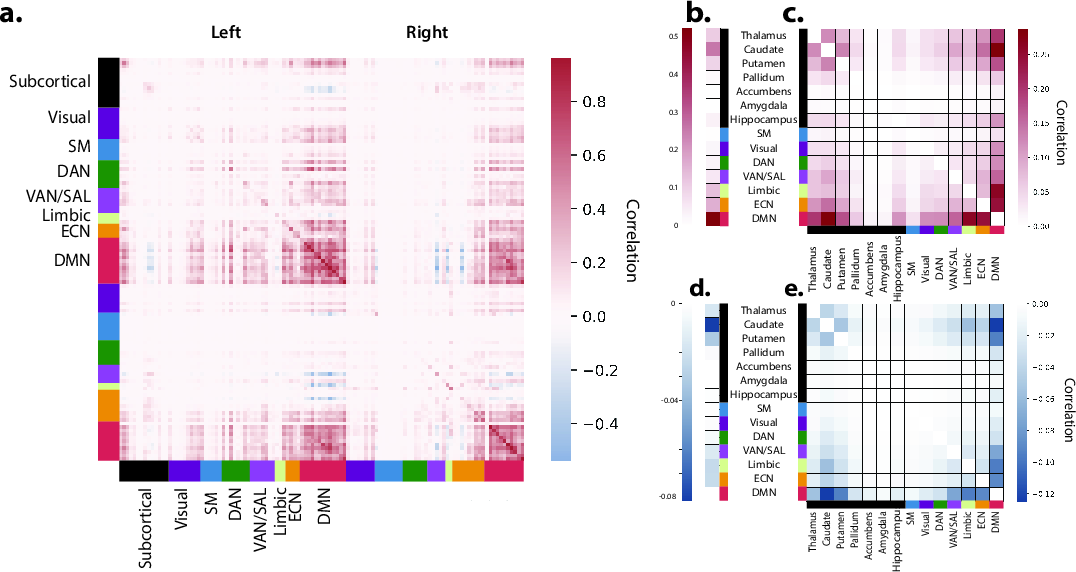
- Structural connectivity (SC): Think of this as a road map. It shows the white-matter “highways” that physically connect brain regions. It comes from diffusion MRI, which tracks how water moves along fibers.
- Functional connectivity (FC): Think of this as a traffic map. It shows which brain regions’ activity goes up and down together over time when a person is resting. It comes from fMRI, which measures changes in blood oxygen related to brain activity.
A simple rulebook to turn roads into traffic
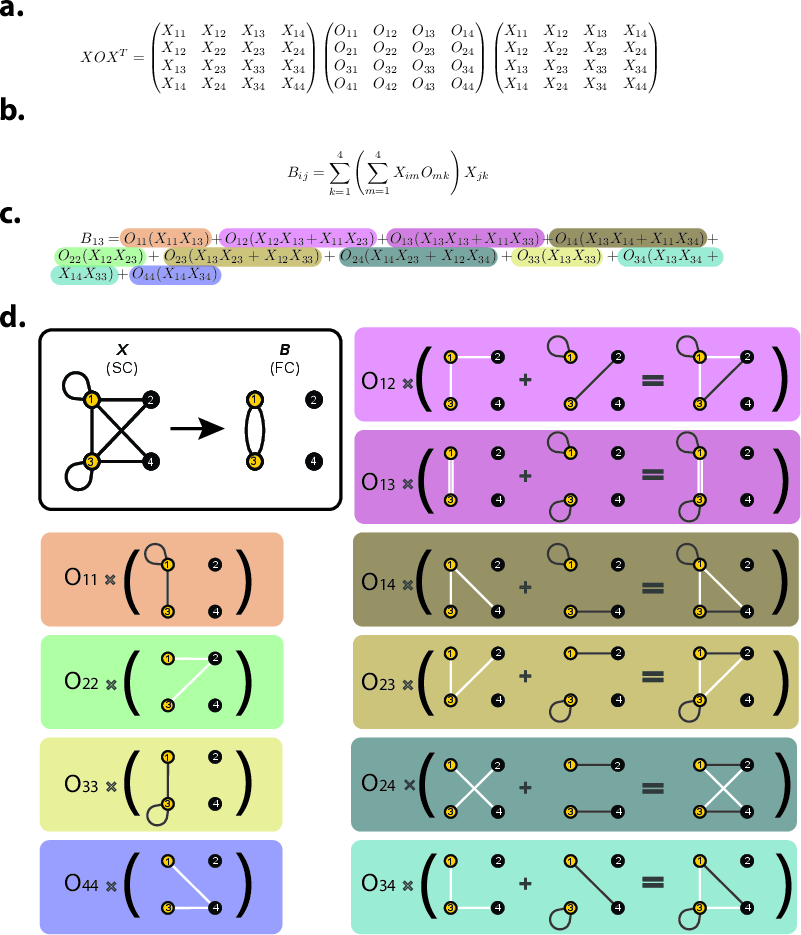
The authors propose a simple formula: .
- is the structural map (the roads).
- is the functional map (the traffic).
- is the “rule matrix,” like a rulebook that says how road patterns translate into traffic patterns.
In plain language: if you know how the brain is wired and you learn the rules of how wiring shapes activity, you can predict which areas will act together.
This rulebook does two things:
- It captures direct effects (if two regions are directly connected, they’re more likely to sync).
- It captures indirect effects (if two regions share friends, triangles, or other small connection patterns—called “motifs”—that also affects how they sync).
Teaching the model the rules
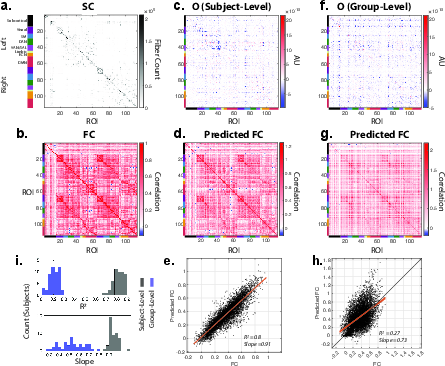
They “learn” the rulebook from real people’s SC and FC using a method called LASSO. You can think of LASSO as a smart filter that keeps the most important rules and sets tiny, unhelpful rules to zero. This helps the model stay simple and not overfit.
They tried two versions:
- Subject-specific rules: Learn a separate rulebook for each person.
- Group rules: Learn one rulebook to use for everyone.
Checking what really matters
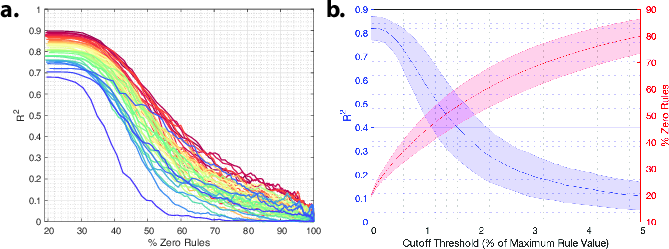
- Sparsity: They tested how many rules can be set to zero before predictions get worse. Predictions stayed strong until roughly 30% of the rules were zeroed out—after that, performance dropped quickly.
- Null tests: They shuffled connections while keeping some basic features the same (like how many roads each city has) to make sure the rules weren’t just picking up random patterns.
- Direct vs. indirect structure: They compared using the raw structural map to using “search information” (a measure of how easy it is to travel along shortest paths). Direct structure did better.
What did they find, and why is it important?
- Individual rulebooks predict really well:
- Using a person’s own wiring to learn their own rules, the model accurately predicts their FC (on average, very high agreement between predicted and real FC). This means the rules capture real, person-specific structure-function links.
- One-size-fits-all rules don’t fit as well:
- A single group rulebook works, but not nearly as well as person-specific rules. Everyone’s brain is unique enough that personal rules matter.
- Most rules aren’t needed:
- The rulebook is “sparse”: only a fraction of rules carry most of the predictive power. That’s good for simplicity and interpretability.
- Direct connections matter most:
- Using the actual wiring map beats using shortest-path “ease-of-travel” measures. This suggests that immediate, direct connections and simple motifs are the main drivers of how activity spreads at rest.
- The brain organizes into special roles:
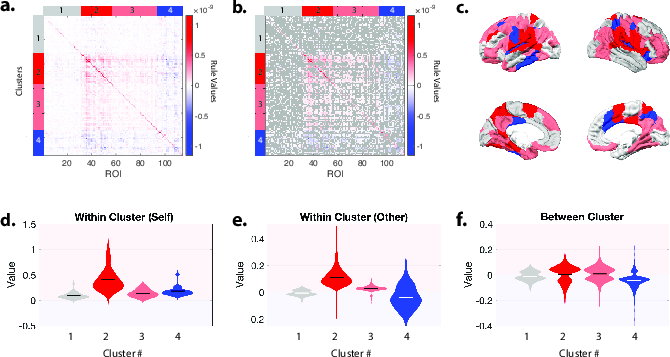
- By grouping regions with similar rule patterns, the authors found:
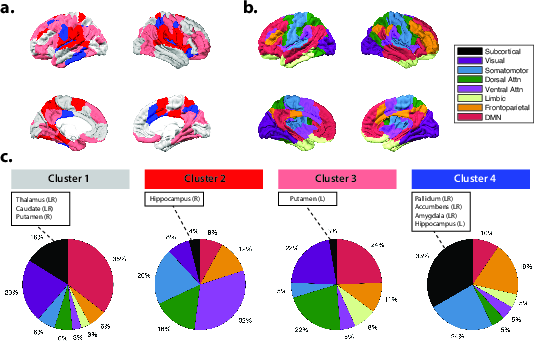
- Integrator hubs: “linchpins” that help different areas sync up.
- Mediator hubs: “fulcrums” that balance or separate competing activity patterns, helping create anti-correlations (when one network is up while another is down).
- Attention and sensorimotor areas often act like integrators; some subcortical and control regions act like mediators.
- Virtual experiments show how one network shapes the rest:
- Keeping only the Default Mode Network (DMN) connections, the model still predicts how the DMN influences both its own internal coordination and coordination between other regions indirectly connected to it. This shows how a single system can shape global patterns, directly and indirectly.
- In schizophrenia, the rules change:
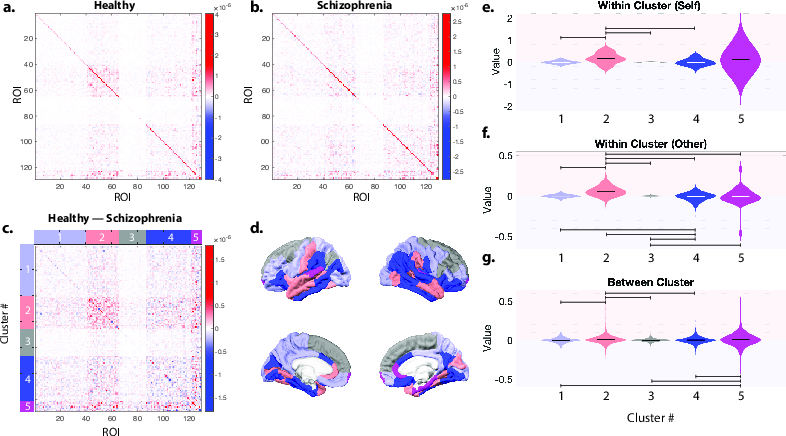
- Comparing healthy people and people with schizophrenia, the rulebook differs notably in temporal and limbic areas (including auditory cortices and medial temporal regions). Some rules that were strongly positive in healthy people are weaker in schizophrenia, while others shift toward negative. This suggests the disorder changes how structure gives rise to function—not just the structure itself.
Why does this matter?
- It bridges structure and function in a clear, testable way. Instead of black-box models or super complex simulations, this is a straightforward, interpretable rule-based approach that still predicts well.
- It identifies meaningful roles for brain regions—some regions knit activity together, others separate it—helping us understand how large-scale brain patterns emerge.
- It offers a tool to predict how changing structure (due to injury, aging, or surgery) might change function. That’s valuable for planning treatments and understanding recovery.
What are the implications?
Science and engineering
- Provides a simple, accurate model for turning wiring into activity. This can guide new studies about how specific connection patterns produce brain-wide effects.
- Encourages focusing on direct connections and small motifs when building communication models of the brain.
Medicine and health
- Could help forecast how a stroke, tumor removal, or injury will affect a person’s brain function by simulating “virtual lesions.”
- Shows that in disorders like schizophrenia, the rules linking structure to function change. This could lead to better diagnostics, biomarkers, and personalized treatments that target not just damaged connections but also how the brain uses them.
Limitations and what’s next
- The model is linear and focuses on simple, short-range motifs. Real brains have nonlinear dynamics and longer chains of influence. Future work can add more complex effects and time-varying rules to capture changing brain states.
- Group rules underperform, and subject rules could overfit. Repeated scans and causal tests (like predicting post-surgery outcomes) will help validate stability.
- Adding more biology—like local microstructure or neurotransmitter maps—could make predictions even better.
- Moving from undirected “correlation” to directed “cause-and-effect” measures (effective connectivity) is a promising next step.
In short: the paper builds a clear, accurate rulebook for how brain wiring shapes brain activity. It explains who the “linchpins” and “fulcrums” of brain communication are, shows how single networks can influence the whole brain, and reveals how these rules shift in mental illness—opening new doors for science and medicine.
Collections
Sign up for free to add this paper to one or more collections.