- The paper introduces OMG-HD, a novel AI-driven weather model that bypasses traditional NWP data assimilation for improved forecast accuracy.
- It employs a dual-block architecture with multi-scale Transformer and Shifted-Window layers to process raw observations effectively.
- Results show superior performance in short-term forecasts, reducing RMSE across key atmospheric variables and excelling during extreme events.
OMG-HD: A High-Resolution AI Weather Model for End-to-End Forecasts from Observations
Introduction
The study presents OMG-HD, an AI-driven high-resolution weather forecasting model that processes raw observational data directly, bypassing the traditional data assimilation from numerical weather prediction (NWP) models. This approach leverages surface station, radar, and satellite data to enhance forecast accuracy and computational efficiency by reducing the uncertainties induced by data assimilation. The results indicate that OMG-HD outperforms leading models like IFS-HRES and HRRR in short-term forecasts across the contiguous United States (CONUS).
Framework and Architecture
OMG-HD's architecture comprises two major components: the Assimilating Block and the Forecasting Block. The Assimilating Block is responsible for the initial data processing, transforming raw observations into a gridded representation. This block employs a multi-scale Transformer with Shifted-Window (Swin) Layers, which are effective in scalable spatio-temporal forecasting tasks.
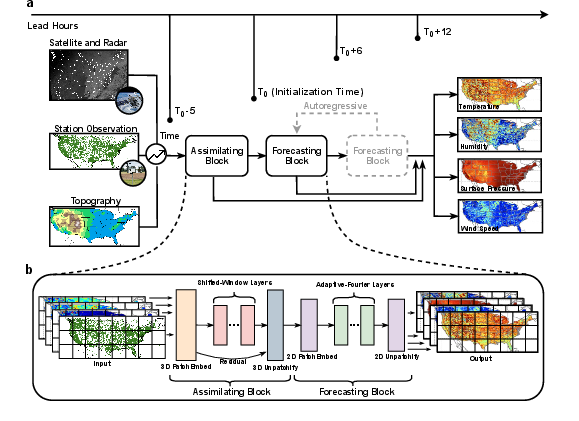
Figure 1: The framework of OMG-HD highlighting the forecasting pipeline and detailed architecture of the Assimilating and Forecasting Blocks.
The Forecasting Block predicts weather conditions for upcoming periods in an autoregressive manner, reducing computational complexity while maintaining high input resolutions. Both blocks are trained together using a unified loss function to align latent space representations with forecast expectations.
OMG-HD demonstrates notable improvement in prediction accuracy across multiple atmospheric variables, including temperature, wind speed, specific humidity, and surface pressure, especially in short-term forecasts of up to 12 hours. The model shows significant enhancements in root mean squared error (RMSE) over traditional NWP models.
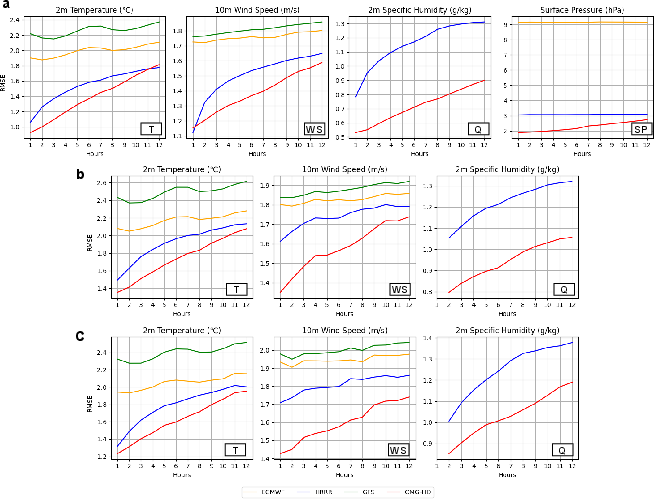
Figure 2: OMG-HD achieves lower forecasting error than baselines across varying lead hours.
OMG-HD maintains spatial consistency in temperature and wind speed forecasting across the CONUS region, as visualized by RMSE spatial distributions, outperforming coarser models such as ECMWF and GFS.
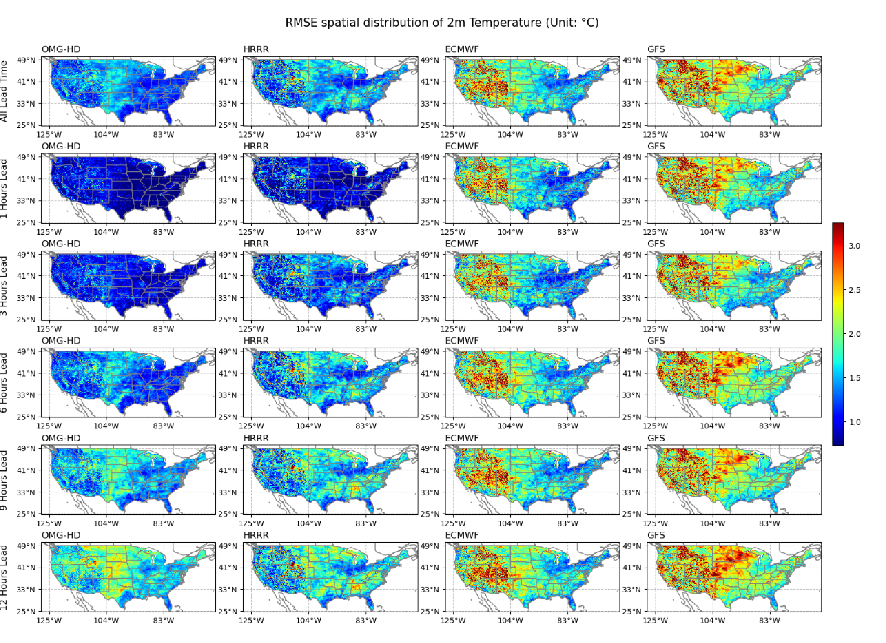
Figure 3: OMG-HD provides accurate, consistent temperature forecasts throughout the CONUS region.
Robustness and Adaptability
OMG-HD's robustness is tested against various data denial scenarios, including masked input station observations and hold-out station evaluations. The model's performance remains superior, demonstrating resilience to missing data and generalization across diverse spatial locations.
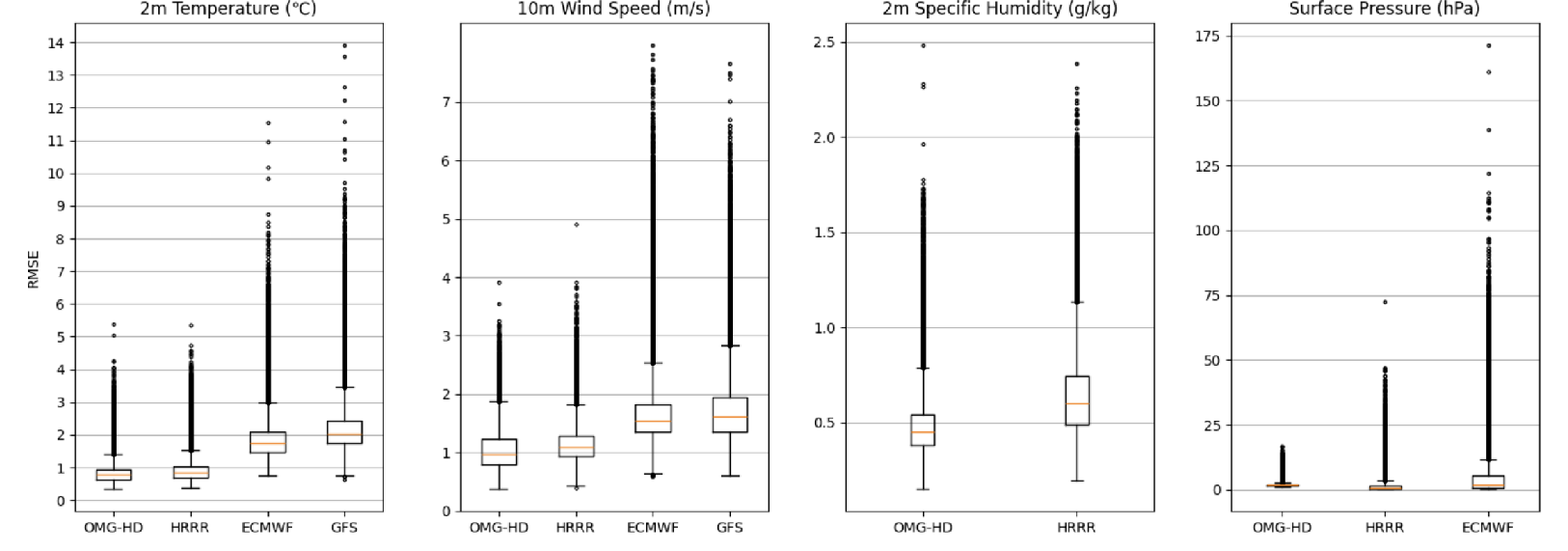
Figure 4: The initial state produced by OMG-HD is more accurate than that of the baselines.
Case Studies
OMG-HD's efficacy in predicting extreme weather events is evident in case studies of a winter storm and a heatwave event, where it accurately captures dramatic temperature changes and high humidity levels, outperforming baseline models in bias and accuracy.
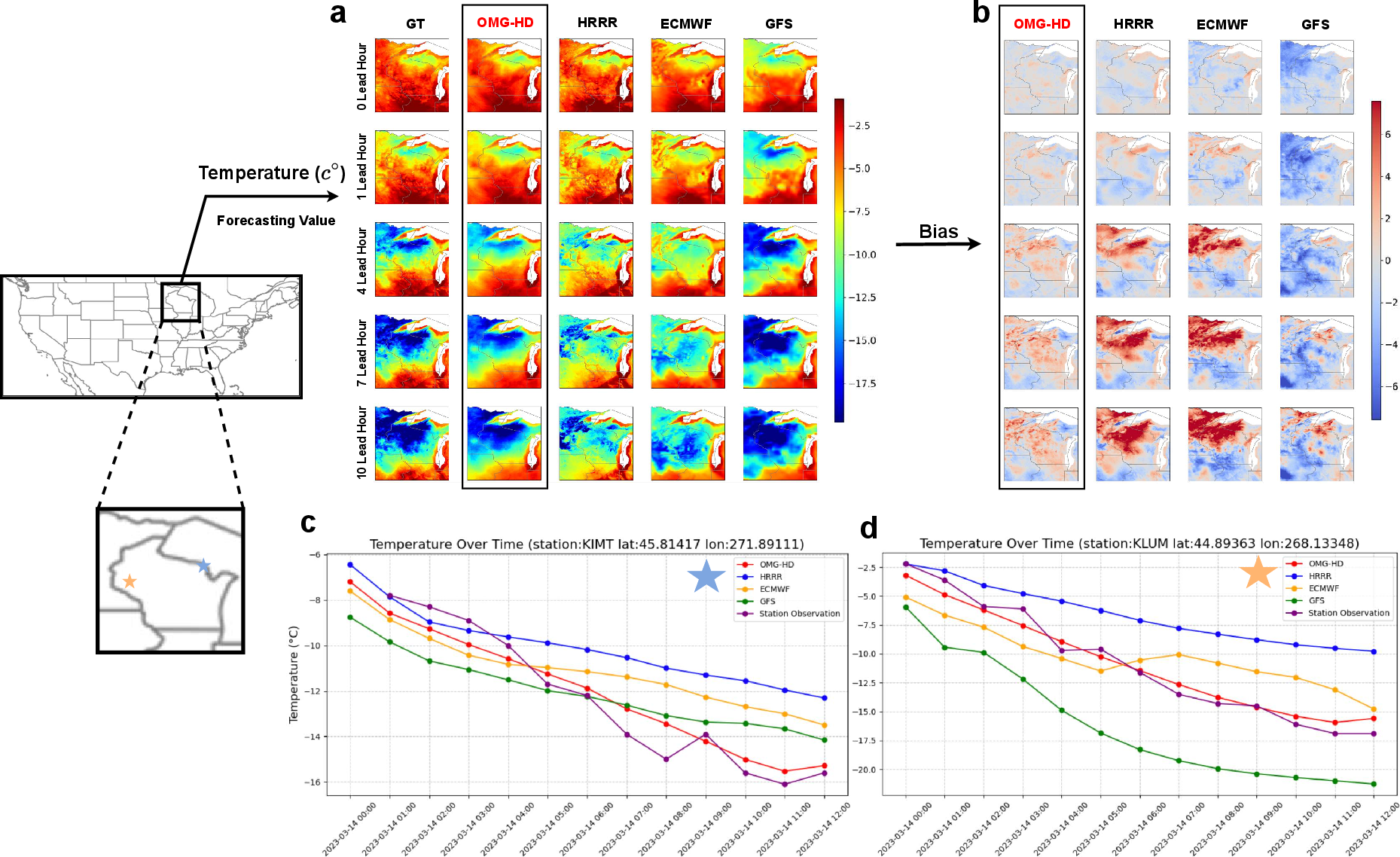
Figure 5: OMG-HD better predicts the temperature drop in a winter storm than the baselines.
Discussion
OMG-HD sets a benchmark for AI-based regional weather forecasting, showcasing capabilities beyond traditional NWPs by directly utilizing observational data. Future work could focus on extending the model's coverage, input diversity, and prediction timelines to further enhance its applicability in global forecasting scenarios. The end-to-end design heralds a shift towards more responsive and precise weather prediction systems that can adapt quickly to environmental changes.
Conclusion
OMG-HD represents a significant advancement in AI weather models, offering superior short-term accuracy through a novel end-to-end approach. Its ability to utilize direct observational data positions it as a potential foundational model for regional weather forecasting, prompting future exploration to expand coverage and tackle diverse atmospheric conditions.