Papers
Topics
Authors
Recent
Search
2000 character limit reached

Spectro-photometry of Phobos simulants: II. Effects of porosity

Published 26 Aug 2024 in astro-ph.EP | (2408.14149v1)

Abstract: Surface porosity has been found to be an important property for small bodies. Some asteroids and comets can exhibit an extremely high surface porosity in the first millimeter layer. This layer may be produced by various processes and maintained by the lack of an atmosphere. However, the influence of porosity on the spectro-photometric properties of small body surfaces is not yet fully understood. In this study, we looked into the effect of porosity on the spectro-photometric properties of Phobos regolith spectroscopic simulants; created by mixing the simulants with ultra-pure water, producing ice-dust particles, and then sublimating the water. The reflectance spectroscopic properties in the visible and near-infrared (0.5-4.2 $\mu$m) show no strong variations between the porous and compact samples. However, one simulant exhibits a bluing of the slope after increasing porosity, providing possible insights into the differences between the blue and red units observed on Phobos. In the mid-infrared range, a contrast increase of the 10-$\mu$m emissivity plateau due to silicates is observed. Photometry reveals a modification in the phase reddening behavior between the compact powder and the sublimation residue for both simulants. However, the observed behavior is different between the simulants, suggesting that the phase reddening may be dependent on the composition of the simulants. The phase curve also appears to be modified by the addition of porosity, with a higher contribution of forward scattering observed for the sublimation residue. The derivation of the Hapke parameters indicates an increase in roughness for the porous sample, but no significant modification of the opposition effect. This study aims to provide new insights into the understanding of porosity by using two Phobos simulants in the context of the upcoming JAXA/Martian Moons eXploration mission.
Summary

  • The paper reveals that increased porosity significantly alters the spectral slope and reflectance, particularly emphasizing a pronounced 10-μm plateau.
  • The study employs laboratory analogs with controlled sublimation to generate micro- and macroporosity, using Hapke parameter inversion to detail scattering changes.
  • The findings offer practical insights for interpreting Phobos' remote sensing data and guiding future mission strategies like MMX.

Effects of Porosity on Phobos Simulants

The study on "Spectro-photometry of Phobos simulants: II. Effects of porosity" (2408.14149) investigates the spectro-photometric characteristics influenced by porosity within simulated materials mimicking regolith from Phobos, the Martian moon. The research, relevant to understanding surface phenomena on small celestial bodies, presents insightful results using both laboratory analogs and model inversion techniques.

Introduction and Experimental Setup

This investigation considers porosity as a significant factor affecting the physical and optical properties of planetary surfaces. Prior research has acknowledged porosity's role in remote sensing interpretations, particularly affecting the reflectance and spectral characteristics. This study utilized laboratory-created simulants, OPPS and UTPS-TB, mixed with ultra-pure water to form ice-dust compounds, and further sublimated under controlled vacuum and low-temperature conditions.

The sublimation process effectively generated micro- and macroporosity, representative of Phobos' surface texture. Comparative analyses between smooth compact surfaces and porous sublimation residues reveal spectral variations potentially aiding Phobos' remote sensing data interpretation. Figure 1

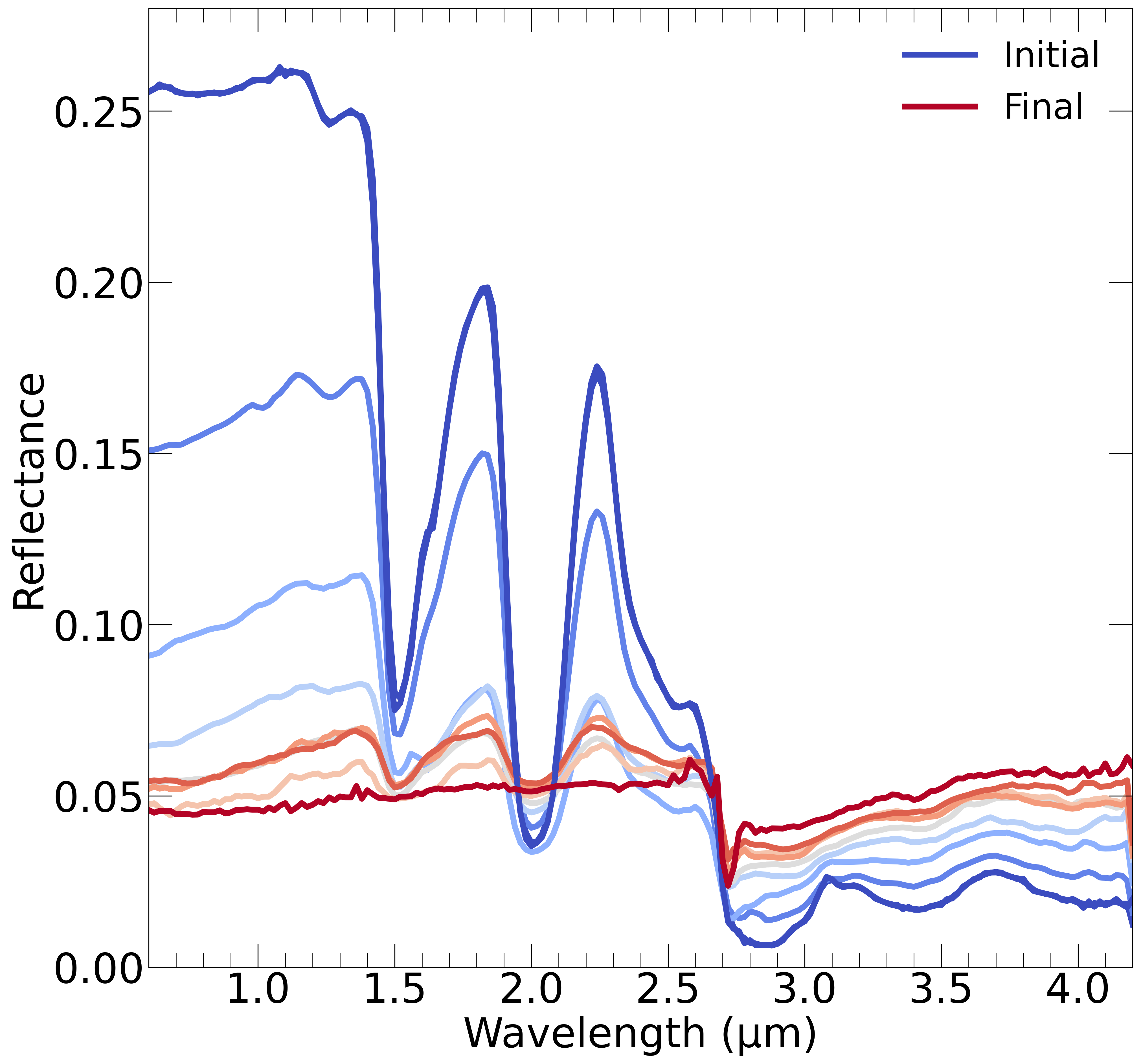
Figure 1: Evolution of the spectrum of the mixture of water ice and UTPS simulant during the sublimation process.

Spectral Analysis

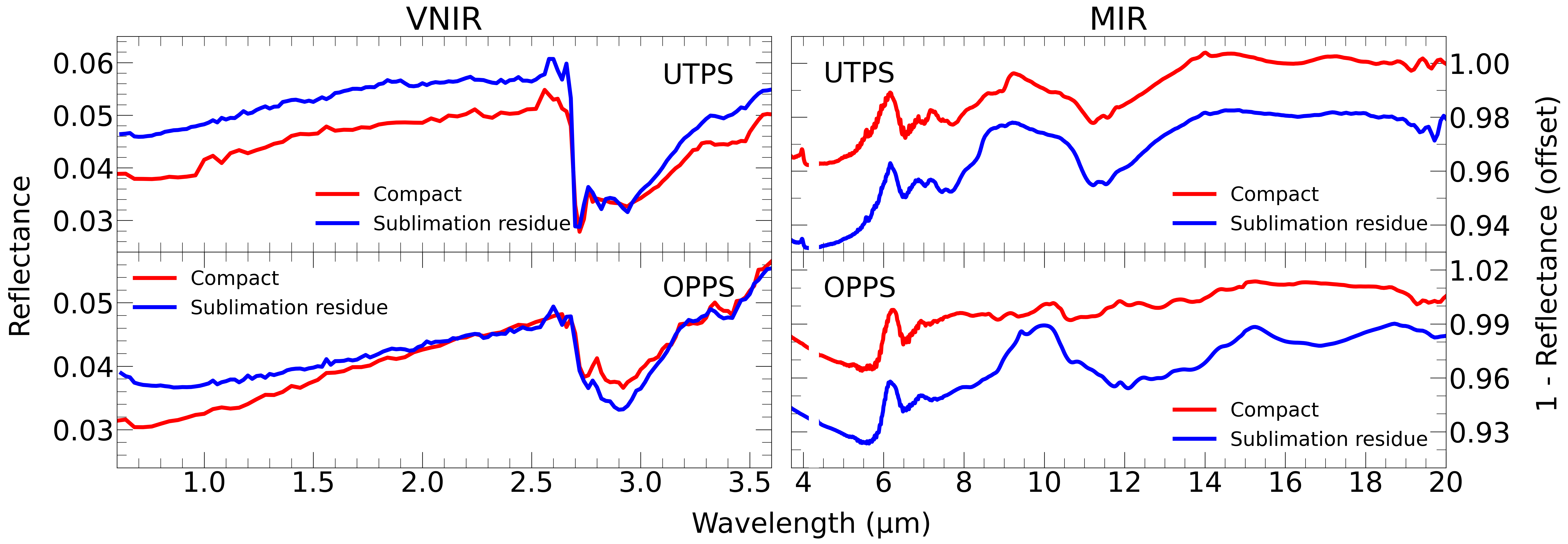
In the mid-infrared range, a distinct spectroscopic feature—the 10-μm plateau—becomes pronounced with increased porosity. The surface reflectance in VNIR and MIR regions shows higher reflectance levels for porous samples, indicative of increased scattering due to higher porosity. Specifically, the OPPS simulant exhibits a considerable bluing effect in the spectral slope, contrasting with results from compact simulations. Figure 2

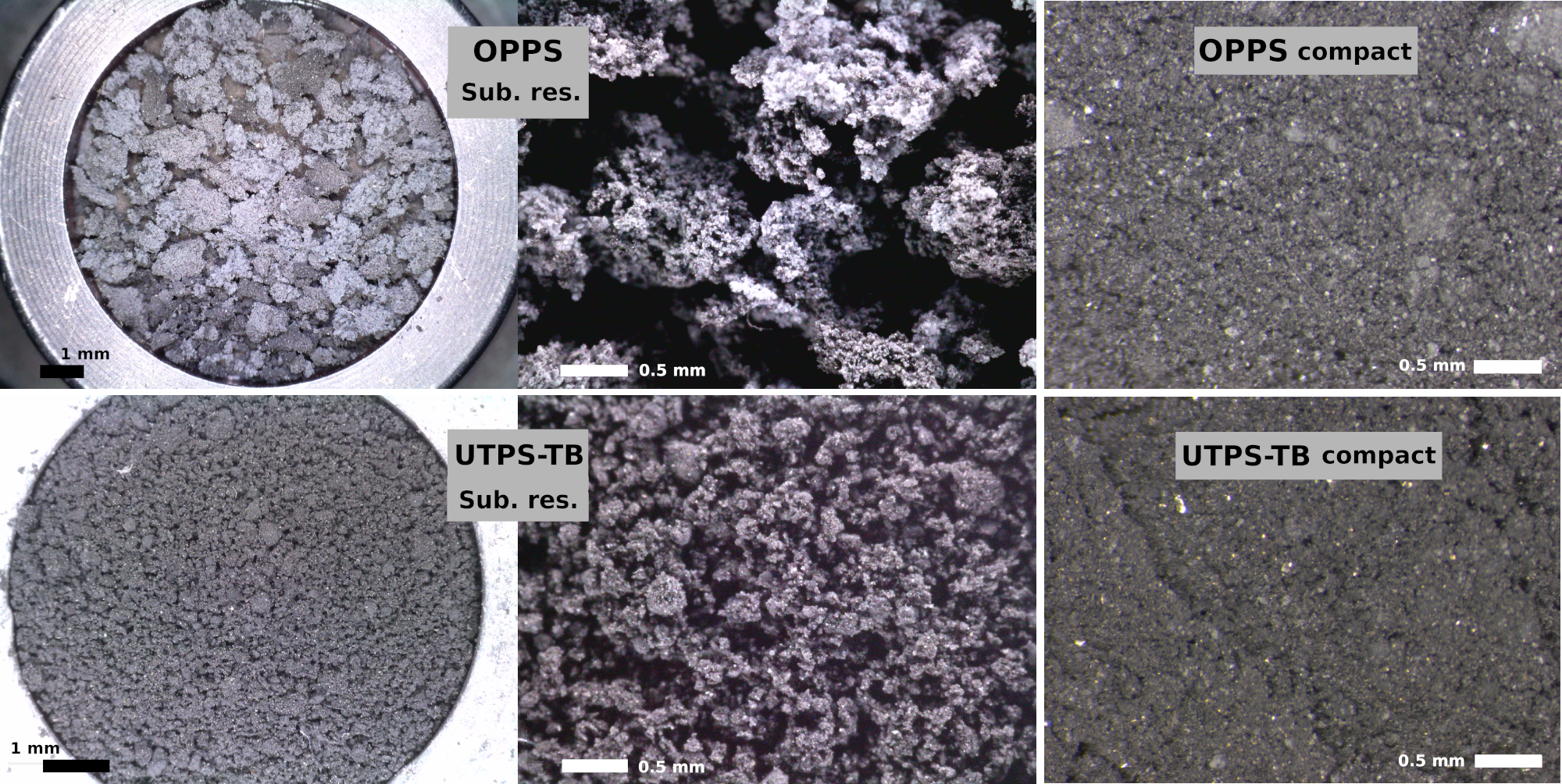
Figure 2: Optical microscope images of the sublimation residues of the OPPS (top) and the UTPS simulants (bottom), illustrating the size and texture differences.

Photometric and Hapke Modeling

Photometric analysis indicates modifications in phase curves due to porosity, impacting phase function parameters and macroscopic roughness. The Hapke parameter inversion using MCMC highlights changes in scattering behavior upon increased porosity, showing a preference for forward scattering in sublimation residues. Figure 3

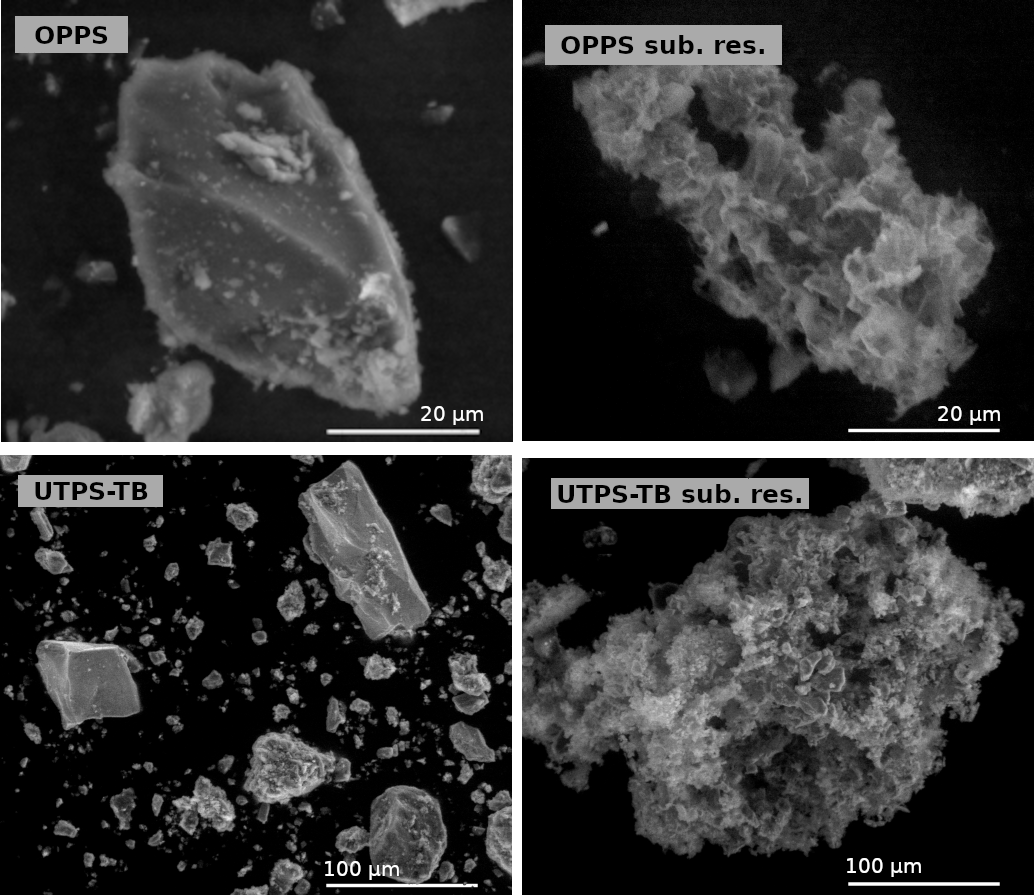
Figure 3: SEM images of Phobos simulant (UTPS and OPPS) before and after the water ice mixture and sublimation experiment.

Discussion on Implications for Remote Sensing

Understanding the effects of porosity on surface spectral and photometric properties opens potential insights, particularly distinguishing between Phobos' blue and red spectral units. Higher porosity could contribute to the observed blue spectral region, suggestive of less altered or fresher material geologically influenced by impact processes.

Further, insights from mid-infrared spectroscopy propose examining the 10-μm plateau for potential Phobos compositional analysis, offering a proxy for surface porosity estimation. Figure 4

Figure 4: Comparison of the VNIR and MIR spectra of UTPS and OPPS after the sublimation experiment.

Conclusion

This investigation elucidates the significant role that porosity plays in the spectro-photometric characteristics of Phobos simulants, providing valuable benchmarks for interpreting upcoming data from the MMX mission. The comprehensive study of porosity differences through spectral slope alterations and phase function modifications highlights porosity as a vital consideration in understanding and modeling small-body surface phenomena. Further exploration integrating porosity with compositional studies promises advanced interpretations impacting future mission designs and remote sensory data analysis.

Paper to Video (Beta)

Whiteboard

No one has generated a whiteboard explanation for this paper yet.

Open Problems

We haven't generated a list of open problems mentioned in this paper yet.

Collections

Sign up for free to add this paper to one or more collections.