- The paper presents a novel anisotropic diffusion model revealing how signal propagation in biofilms varies by location and environmental structure.
- It employs Green’s function and Bessel’s differential equations to model distinct radial and azimuthal diffusion in a 2D porous medium.
- Simulation validations show that off-center transmitter positions produce amplified diffusion peaks, suggesting strategies for targeted biofilm control.
Anisotropic Diffusion Model of Communication in 2D Biofilm
Introduction
The study presented in "Anisotropic Diffusion Model of Communication in 2D Biofilm" (2408.07626) offers a comprehensive analysis of bacterial quorum sensing (QS) within a biofilm, emphasizing the anisotropic nature of molecular diffusion. Biofilms, structured communities of bacteria embedded in extracellular polymeric substances (EPS), rely on QS to coordinate behaviors. The paper proposes a 2D diffusion model to capture the anisotropic characteristics due to variances in EPS density and water channels within biofilms. The analytical model employs molecular communication (MC) concepts to detail signal propagation between transmitters (TX) and receivers (RX) within a bounded biofilm environment.
System Model
The paper models biofilms as a porous medium where autoinducers (AIs) propagate anisotropically. The model uses a circular symmetry with distinct diffusion coefficients in the radial (Dρ) and azimuthal (Dθ) directions. The anisotropic diffusion is modeled under conditions where artificial boundaries are reflective, and AIs degrade or are consumed at a specific rate. This conceptual framework allows for an insightful examination of communication processes within biofilms.
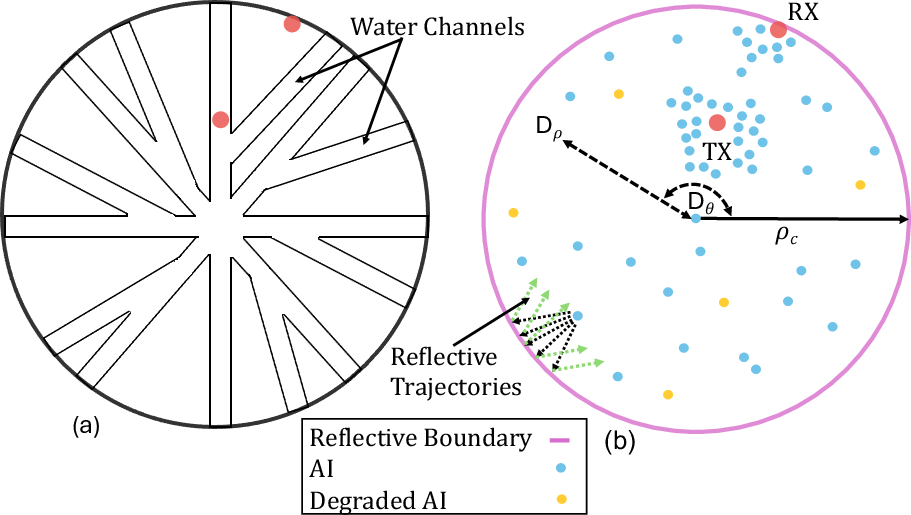
Figure 1: Schematic representation of AI propagation in a 2D biofilm with point-to-point TX and RX.
Green's Function Derivation
The mathematical treatment centers around the derivation of the Green's function for concentration (GFC), which serves as the channel impulse response in this biophysical model. The model considers both isotropic and anisotropic diffusion scenarios—conventionally used diffusion coefficients informed the parameters to evaluate the dynamic range in propagation characteristics. The employment of Bessel's differential equations accommodates the derived GFC, addressing different boundary conditions reflective of the biofilm’s geometric and reactive properties.
Validation and Diffusion Characteristics
The validation of the analytical model with particle-based simulations (PBS) demonstrates remarkable alignment in diffusion trends. Importantly, isotropic diffusion profiles retain symmetry when TX is centrally located, while anisotropic diffusion reveals greater peaks and broader spread when TX is off-center. This behavior underscores the influence of anisotropy in signal propagation dynamics, contributing to a nuanced understanding of biofilm ecology.
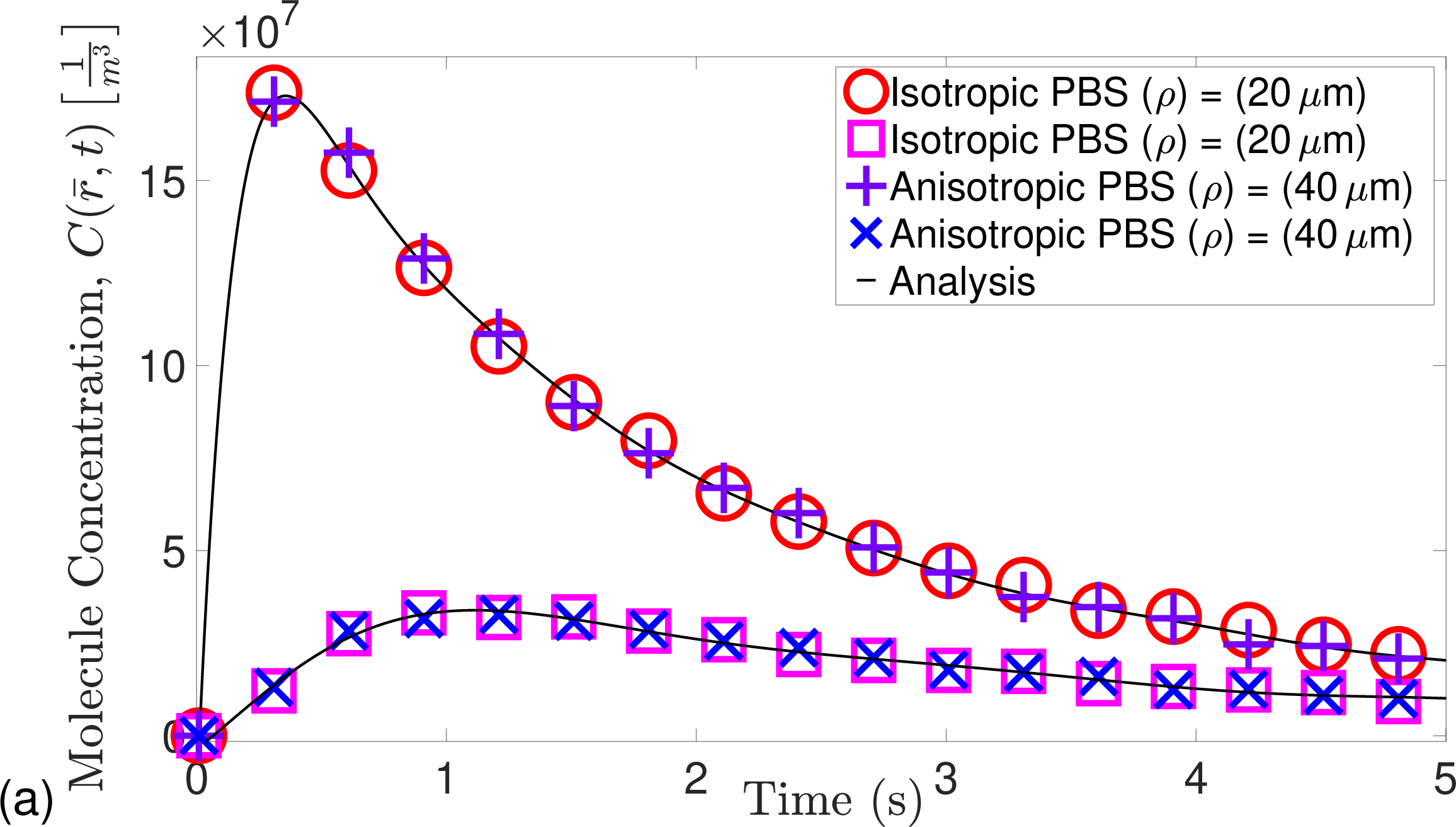
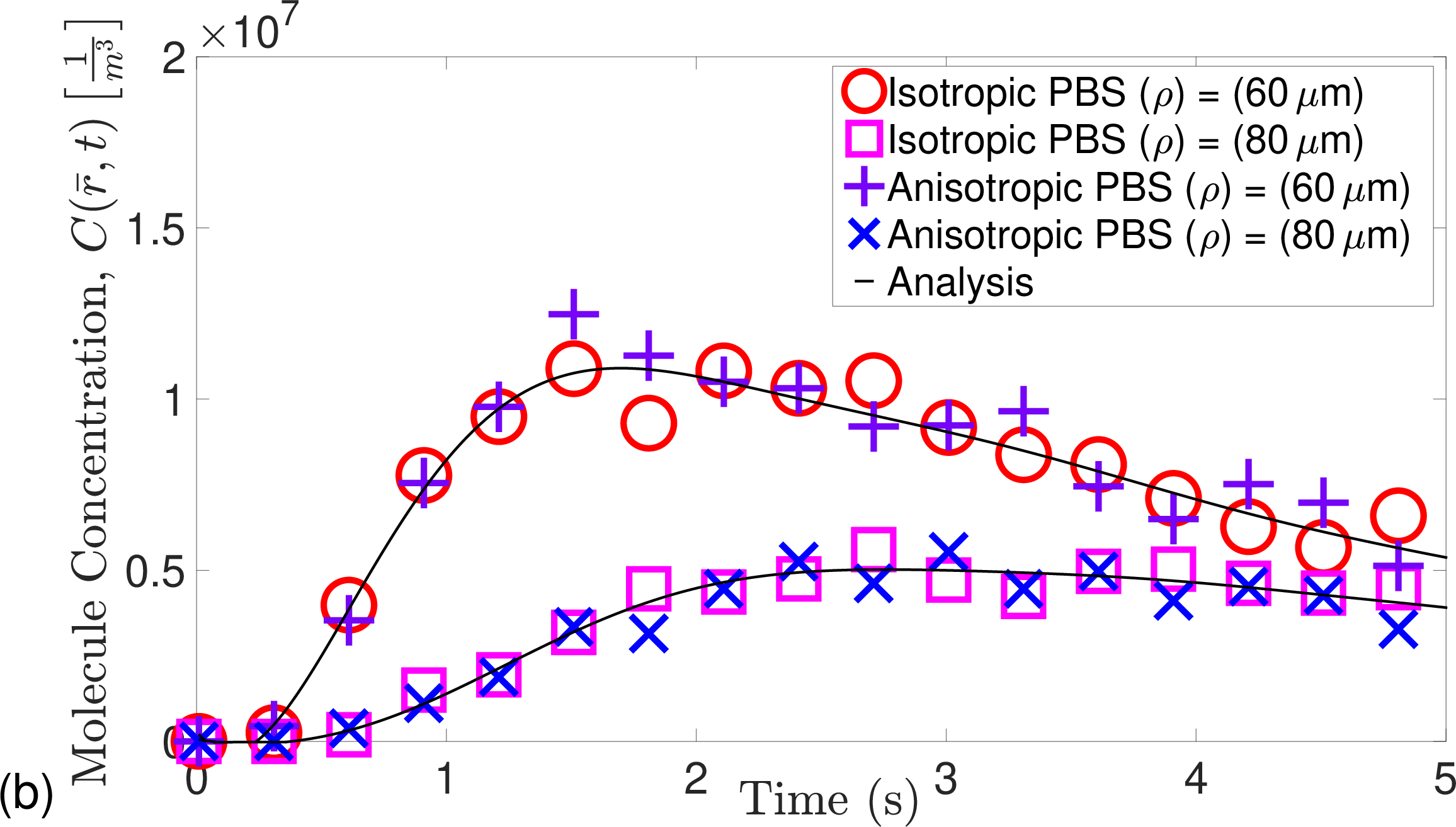
Figure 2: Comparison of isotropic and anisotropic diffusion at the biofilm center.
Further detailed investigation shows how anisotropic diffusion facilitates efficient radial signal propagation, emphasizing quick responses to environmental changes. These findings align with hypotheses of an evolutionary mechanism within biofilms, enhancing both protective responses and nutrient transport from edges to the core.
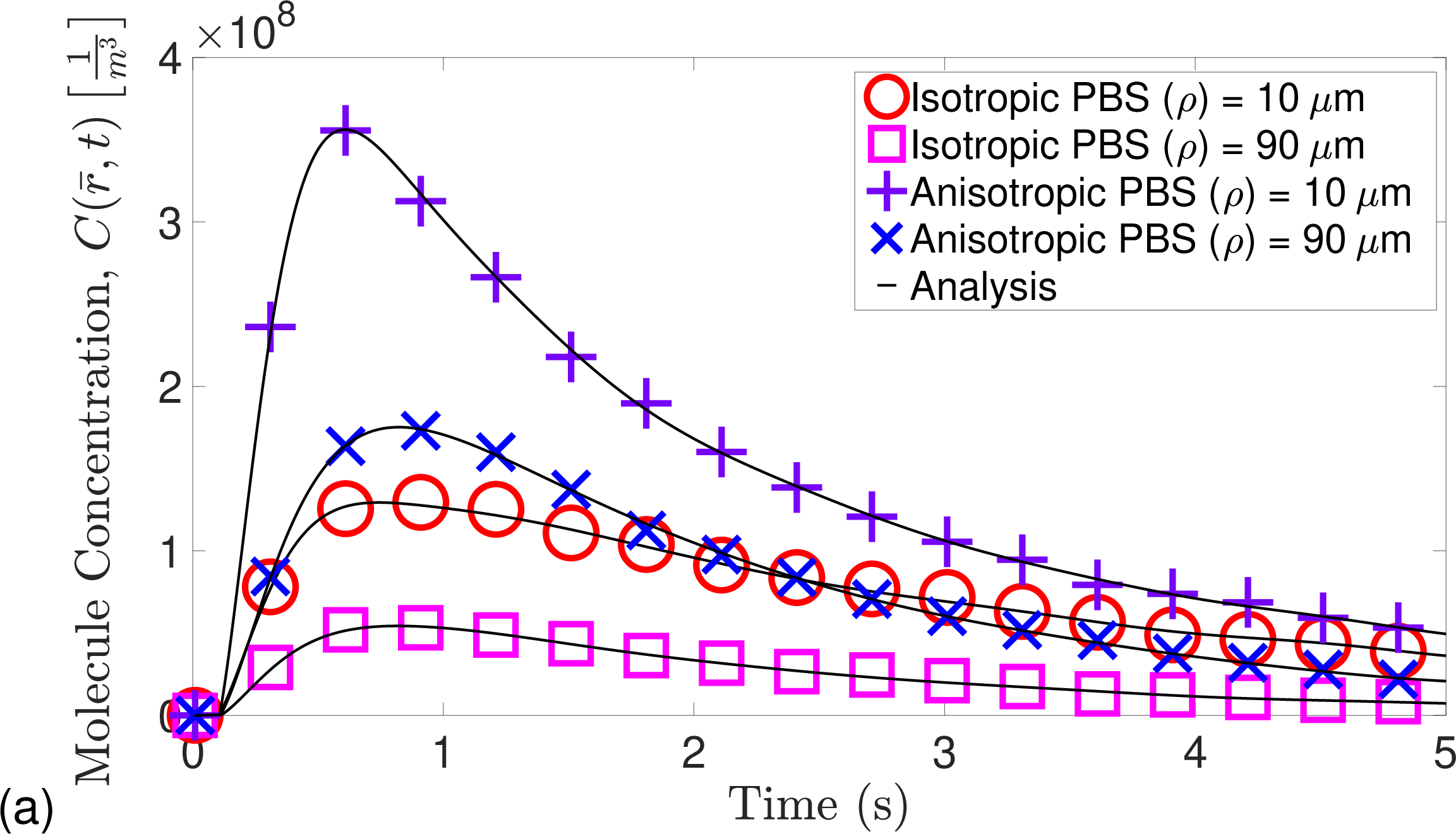
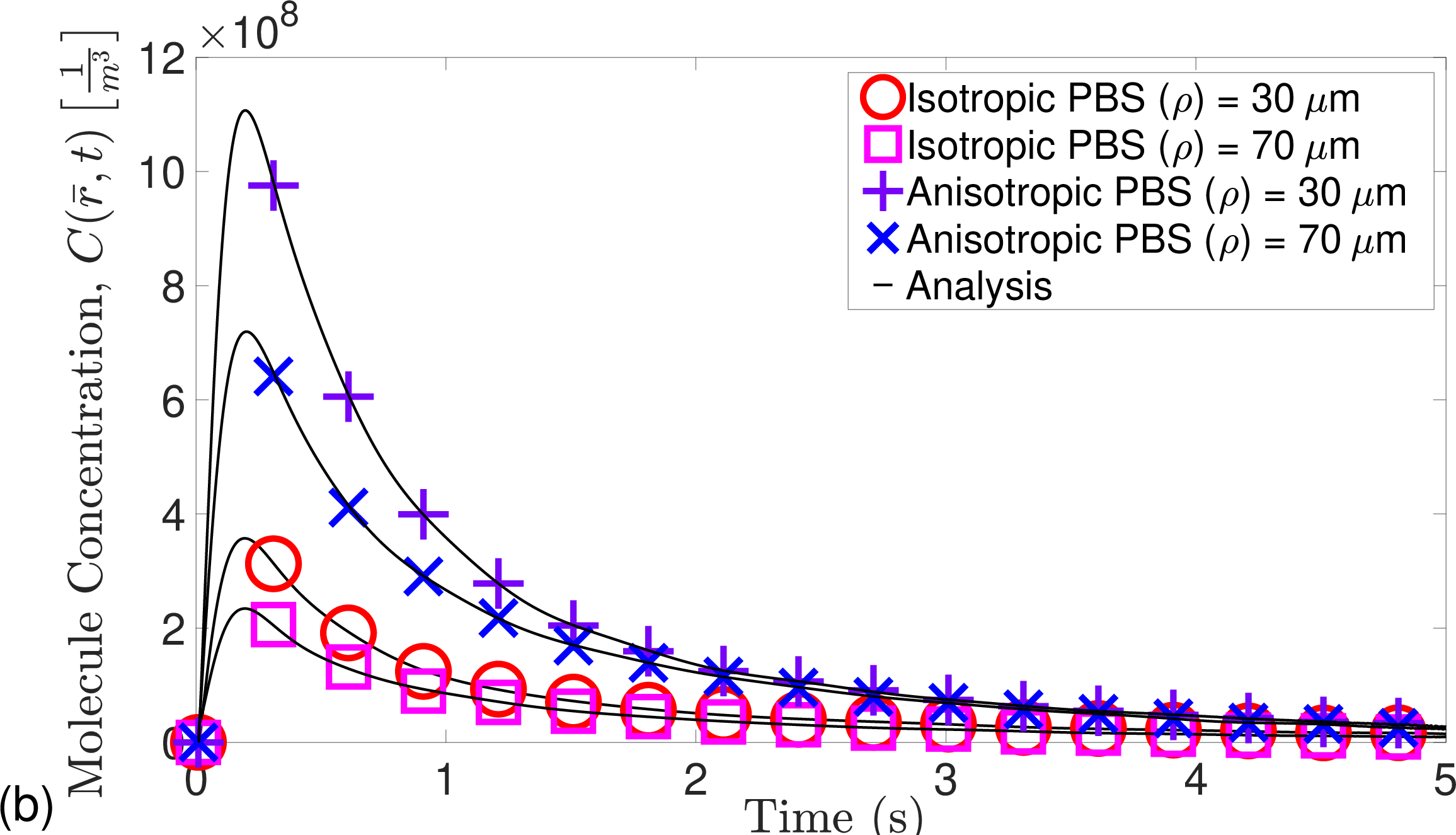
Figure 3: Anisotropic diffusion effect with TX placed off-center.
Implications and Future Work
The research findings suggest significant implications for advancing biofilm control strategies, particularly those targeting QS systems. The model highlights that anisotropic diffusion contributes to the robustness of biofilm responses, presenting an area for the development of new antimicrobial treatments targeting QS pathways.
Practical applications extend to industrial bioprocessing, public health due to drug-resistant infections, and environmental engineering fields like wastewater management. Future studies should include natural environmental variables affecting biofilms and incorporate complex life cycle dynamics to enhance model fidelity. Additional research should focus on multi-dimensional diffusion tensor design and explore molecular relaying in biofilm contexts.
Conclusion
The study advances the understanding of molecular diffusion within biofilms through a robust anisotropic model, validating its predictions with comprehensive simulations. By identifying key signaling pathways and their physical constraints, the model provides a crucial foundation for future efforts in biofilm research and related tactical innovations. As such, it represents a meaningful contribution to both the theoretical exploration and practical management of biofilm communities.