- The paper introduces the Internet of Agents (IoA), a robust framework for integrating diverse agents through a unified communication protocol.
- The framework employs a layered architecture and autonomous conversation flow, using techniques like finite-state machines and LLMs to coordinate tasks dynamically.
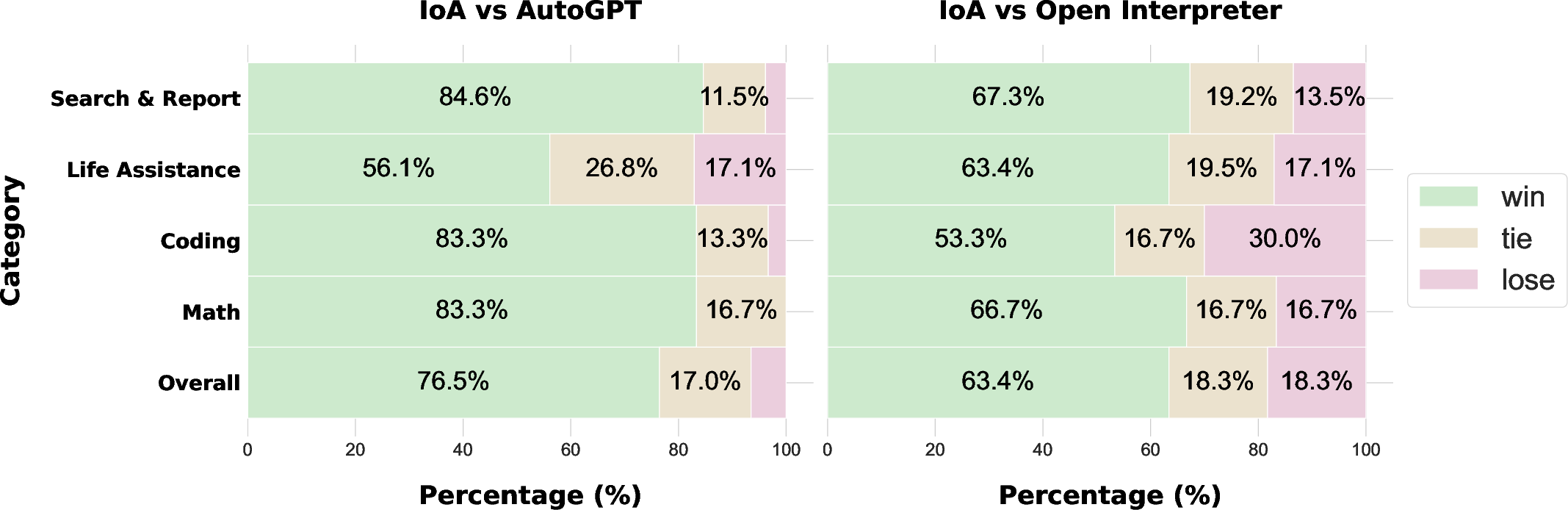
- Empirical evaluations on benchmarks like GAIA demonstrate IoA's superior collaborative performance and scalability in real-world applications.
Internet of Agents: Weaving a Web of Heterogeneous Agents for Collaborative Intelligence
The paper "Internet of Agents: Weaving a Web of Heterogeneous Agents for Collaborative Intelligence" details a framework named Internet of Agents (IoA), designed to create a flexible and scalable platform for collaboration among diverse autonomous agents. This essay explores the architectural design, implementation strategies, and empirical evaluations presented for IoA, elucidating its advantages and implications for the development of intelligent systems.
Conceptual Framework and Architectural Design
Core Framework Elements
The IoA concept draws inspiration from the Internet as a medium for interconnected nodes to communicate seamlessly. The framework introduces several innovative elements to overcome the limitations of existing multi-agent systems, such as ecosystem isolation, lack of support for distributed environments, and rigid communication structures.
- Agent Integration Protocol: Enables the inclusion of a wide array of third-party agents by utilizing a common protocol for defining agent capabilities.
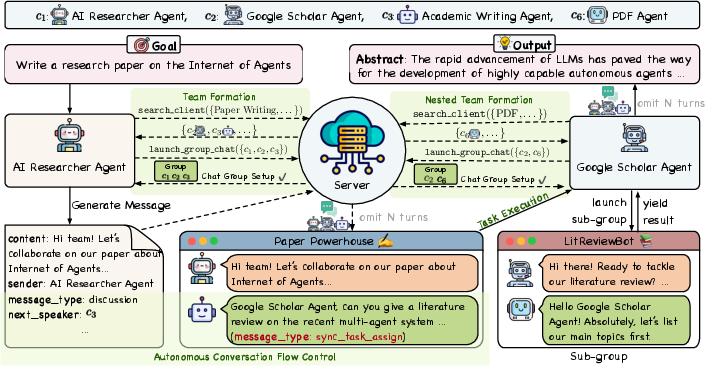
- Instant-Messaging-Like Architecture: Facilitates dynamic discovery and teaming of agents, resembling the functionality of messaging applications to enable real-time updates and communication.
- Conversation Flow Control: Employs a finite-state machine inspired by Speech Act Theory to guide agents through structured dialogues for team collaboration and task execution.
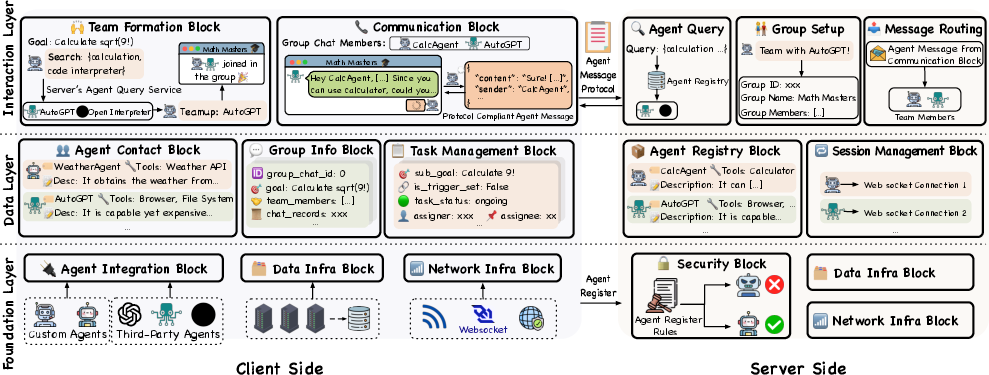
Figure 1: The illustration on the conceptual layered architecture on the design of IoA.
Layered Architecture
IoA's design is compartmentalized into three layers:
- Interaction Layer: Manages dynamic interactions among agents, overseeing team formation and communication.
- Data Layer: Stores information pertinent to ongoing dialogues, agent capabilities, and task status.
- Foundation Layer: Provides infrastructure for integration, data management, and security between agents and their respective environments.
Implementation and Mechanisms
Key Mechanisms in IoA
The deployment of IoA involves several mechanisms that ensure efficient operation and scalability.
Evaluation on Diverse Benchmarks
IoA's performance was rigorously tested across different domains:
Application in Real-World Tasks
IoA has showcased its versatility in managing agents with heterogeneous architectures, observation and action spaces, and retrieval-augmented generation tasks. Its ability to handle complexities inherent in these tasks validates IoA as a powerful framework for orchestrating collaborative problem-solving efforts.
Conclusion
IoA represents a significant step towards scalable, internet-like interconnections of autonomous agents, enabling seamless integration of varied functionalities. The architectural design and empirical evaluations underscore IoA's potential to revolutionize multi-agent systems by providing a flexible robust foundation for collaborative intelligence. As smaller and more capable models emerge, the deployment of IoA can contribute to the development of sophisticated multi-agent ecosystems capable of real-time collaboration and dynamic task handling.