- The paper reveals that AI publishing expanded from 14% in 1960 to over 98% across 333 research fields today.
- The study uses a bibliometric approach, identifying 3.1 million AI-related publications from a database of 137 million records using 214 phrases.
- Key findings indicate that accessible AI tools and technological advances boosted annual publication growth from 17% to 26% in recent years.
Artificial Intelligence Adoption Across Diverse Research Fields
The manuscript titled "Artificial intelligence adoption in the physical sciences, natural sciences, life sciences, social sciences and the arts and humanities: A bibliometric analysis of research publications from 1960-2021" (2306.09145) conducts a comprehensive bibliometric analysis to track the widespread adoption and integration of AI across various research fields over multiple decades. By utilizing an extensive database and a broad definition of AI, the study elucidates the diffusion patterns of AI technology and its transformative influence on scientific discovery.
Methodology and Data Source
The study employs a bibliometric approach, analyzing data from The Lens, which integrates information from multiple scholarly databases. The database offers a vast repository of 137 million peer-reviewed records, from which the authors identified 3.1 million AI-related publications using a list of 214 AI-related phrases curated collaboratively by expert groups at the OECD. This comprehensive approach allows the researchers to trace AI diffusion from 1960 to 2021 across 333 fields categorized under the All-Science Journal Classification (ASJC).
Results and Analysis
The analysis documents a noteworthy increase in AI adoption, highlighting that AI research initially concentrated within computer science has permeated almost all fields by the present day. From 14% of research fields in 1960, AI publishing has now expanded to over 98% coverage. The distribution of AI research across fields has likewise evolved, with the Gini coefficient illustrating a diversification from earlier periods where AI was heavily concentrated in select disciplines.
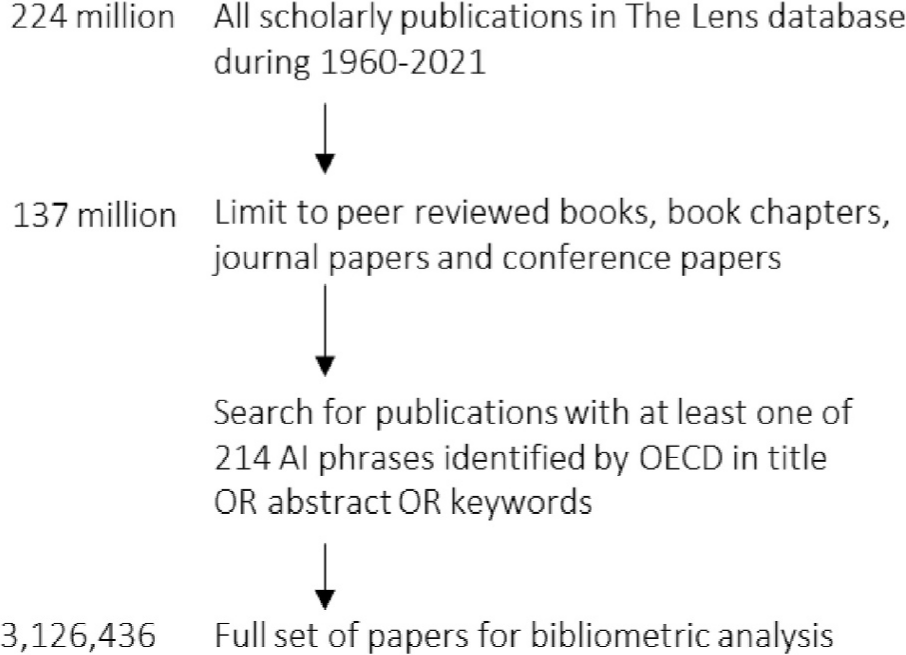
Figure 1: Screening of research publications about artificial intelligence.
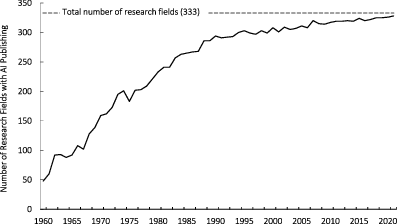
Figure 2: Diffusion of artificial intelligence technology into research fields.
AI research intensity and volume have surged in recent years, with a remarkable 26% annual growth over the last five years compared to 17% in previous years. This increase is partially attributed to technological advances, including accessible AI tools and platforms.
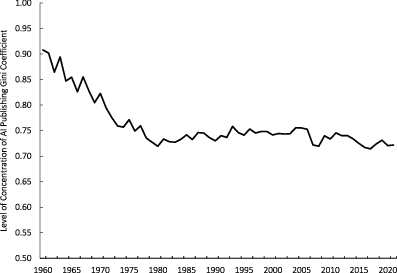
Figure 3: Concentration of artificial intelligence publishing across research fields (Gini coefficient).
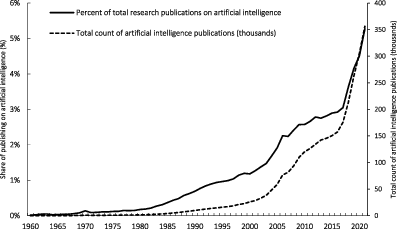
Figure 4: Artificial intelligence publishing intensity and volume over history.
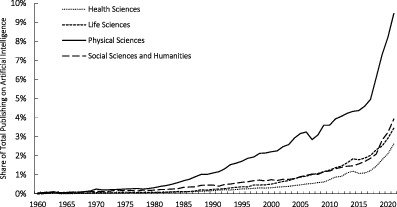
Figure 5: Artificial intelligence publishing in research domains.
Implications and Future Directions
This study underscores the pivotal role AI plays in contemporary research, facilitating advancements across diverse scientific fields. The findings reveal AI's profound potential not only in enhancing research efficiencies but also in redefining methodologies and discovery processes. Despite historical fluctuation in AI's prominence, the current surge in AI activity suggests a sustained trajectory fueled by technological advancements and widespread interdisciplinary applications.
Looking forward, the study suggests that while the risks of an AI winter—historical periods of reduced interest and funding due to unmet expectations—cannot be entirely discounted, the current momentum is supported by robust technological infrastructure and computational capabilities. However, challenges such as potential productivity paradoxes, where expected gains are not realized due to adaptation difficulties, must be addressed.
Conclusion
AI's integration into a multitude of research domains reflects its status as a general-purpose technology with significant transformative potential. As AI continues to evolve, its ability to influence a broader range of disciplines may reshape the landscape of scientific research and knowledge creation. The study encourages further investment in AI capabilities to harness its full potential across all sectors of research, aligning with strategic priorities and interdisciplinary collaboration.

