- The paper proposes a level-set segmentation using DRLSE and pattern-search optimization to accurately detect coronal holes in solar images.
- It introduces a linear programming framework to match segmented holes with model predictions, achieving an 85% accuracy rate.
- The study employs KNN and SVM classifiers to assess solar prediction maps, demonstrating enhanced consistency over traditional manual methods.
Automatic Segmentation of Coronal Holes in Solar Images and Solar Prediction Map Classification
In this paper, the author addresses the need for a reliable system to predict solar wind propagation by automatically detecting coronal holes in solar images and classifying solar prediction maps. The research introduces a hierarchical method that integrates image processing techniques with machine learning algorithms for improved prediction accuracy.
Coronal Hole Segmentation
The foundational step in this research involved developing a level-set segmentation algorithm to identify coronal holes in extreme ultra-violet (EUVI) and magnetic field images. The purpose of this segmentation is to improve upon existing methods by offering higher accuracy in identifying the contours and areas of coronal holes, which are crucial for modeling solar winds.
This level-set method utilizes Distance Regularized Level Set Evolution (DRLSE) with an edge function modified to align with magnetic boundaries, thereby preventing erroneous crossings over neutral lines. Optimization is achieved through a pattern-search approach, adjusting parameters such as α and the Gaussian spread (σ) to refine the segmentation results (Figure 1).
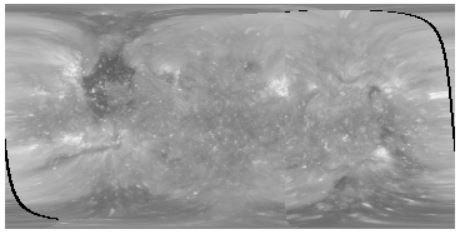
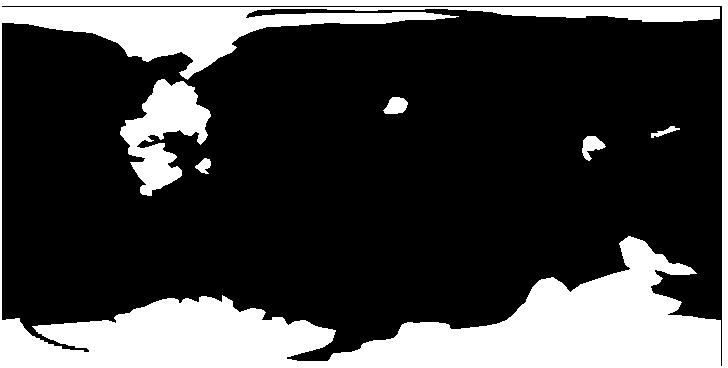
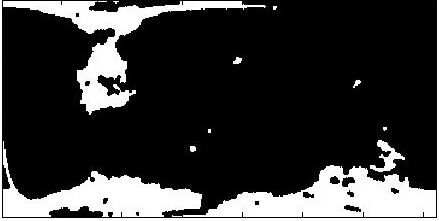
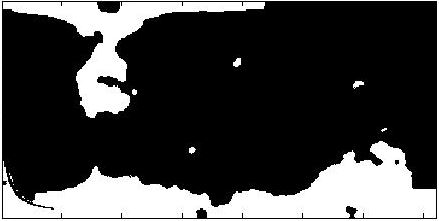
Figure 1: Best case results for the level-set segmentation method for the input data from January 24, 2011, with a 50.76% reduction in the unit distance.
Matching Coronal Holes for Model Selection
The subsequent phase involves matching segmented coronal holes from solar images with those predicted by physical models. This paper introduces a novel linear programming approach to match coronal hole clusters between segmented and model maps. The method aims to minimize discrepancies by clustering coronal holes of similar polarities and proximities, thereby facilitating more accurate model selection.
The linear programming framework established aims to optimize matching by minimizing a cost function, which represents the geographic distance between predicted and observed clusters. This approach enhances previous methods by incorporating polarity-dependent clustering and ensures a high level of agreement with manually annotated maps, achieving an 85% accuracy rate (Figure 2).
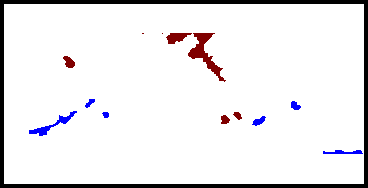
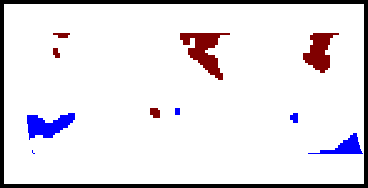
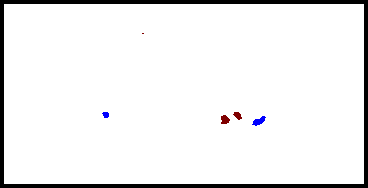
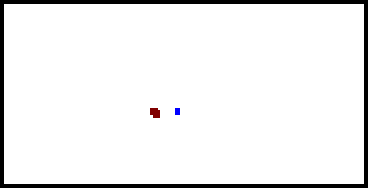
Figure 2: An example that demonstrates good detection of missing and new coronal holes on July 13, 2010.
Classification of Physical Maps
Building on matching strategies, the author proposes a classification system to evaluate the accuracy of physical prediction maps based on the proximity and area coverage of coronal holes they predict compared to the consensus maps. The classification relies on metrics including area differences, distance of matched clusters, and statistics of new and missing clusters, applying K-Nearest Neighbors (KNN) and Support Vector Machine (SVM) classifiers.
Performance assessment indicates that automated methods can outperform individual human classifiers, demonstrating increased consistency and reliability in predicting solar wind impact areas. Tables illustrating classifier performance detail a KNN accuracy of 75.4% when utilizing consensus maps as the ground truth reference (Table 1).
Practical and Theoretical Implications
The research implications are significant for advancing solar weather prediction and mitigating geomagnetic disturbances that can affect Earth's infrastructures. This work underscores the potential for automated systems to assume greater roles in critical predictive tasks traditionally dominated by human experts. The segmentation and classification techniques also suggest applications in other domains where image processing can elucidate complex data patterns.
Conclusion
The integration of optimized segmentation with automated model classification presents a comprehensive approach to solar event prediction, highlighting the potential for improved accuracy and operational efficiency over manual systems. Future work could involve expanding the dataset for robustness checks and enhancing the real-time predictive capabilities of the system by leveraging additional computational and observational resources. Continued advancements could see these methodologies applied in broader geophysical and astrophysical research arenas.