- The paper establishes overfitting as a sufficient condition that elevates membership inference vulnerabilities in machine learning models.
- It employs formal and empirical analyses to demonstrate how model influence can leak sensitive data even with minimal overfitting.
- The research highlights the necessity for robust privacy measures that account for structural risks beyond mere control of generalization error.
Privacy Risk in Machine Learning: Analyzing the Connection to Overfitting
The paper "Privacy Risk in Machine Learning: Analyzing the Connection to Overfitting" explores the relationship between privacy risks inherent in machine learning models and algorithmic overfitting. It focuses on how overfitting and the concept of influence affect privacy risks, specifically through membership inference and attribute inference attacks.
Overfitting and Privacy Risks
Machine learning models can inadvertently expose sensitive information from their training data. Overfitting occurs when a model learns training data too precisely, failing to generalize to unseen data, thus increasing privacy risks. The paper identifies overfitting as a sufficient condition for membership inference attacks, where adversaries determine whether specific data points were part of the training set. Empirical results show a direct relationship between overfitting and adversary advantage, illustrating that higher generalization error correlates with increased membership inference vulnerability.
Influence and Attribute Inference
Influence, a measure of how a feature impacts a model's output, alongside overfitting, is critical for attribute inference attacks. Attribute inference involves deducing missing attributes of data points using a model. The paper demonstrates through formal and experimental analyses that influence must be balanced with generalization error to understand privacy risks fully. Balanced conditions can lead to significant privacy risks, even if overfitting is minimal.
The paper introduces formal definitions for membership and attribute inference advantages, evaluating adversaries’ ability to leverage models to deduce private training data information. This approach allows for a nuanced understanding of how different factors contribute to privacy risks in models, even when these models seem to generalize well in practice.
Formal Theorems: The theoretical contributions include new results regarding the non-necessity of overfitting for privacy risks, demonstrating that learning algorithms can compromise privacy through their structural characteristics even if they don't exhibit overfitting.
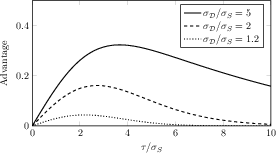
Figure 1: The connection between model influence and generalization error as a function of network size, showing significant privacy risk at higher network capacities.
Practical Implications and Future Directions
This research has significant implications for designing privacy-preserving algorithms. The ability to compromise privacy without overfitting raises concerns about the efficacy of current protection measures like differential privacy, especially in scenarios involving large-scale and powerful models such as deep neural networks.
The colluding training algorithm constructed as part of this research exposes vulnerabilities in training protocols that can be exploited to leak information. The concept of collusion between adversaries and learning algorithms aligns with concerns in cryptographic and privacy domains about algorithm substitution attacks.
Practical Considerations: The paper suggests that merely controlling for generalization error might not be sufficient to safeguard privacy, calling for more robust mechanisms that account for influence and model structure.
Conclusion
The paper sheds light on the multifaceted nature of privacy risks in machine learning, demonstrating that privacy vulnerabilities can persist even in well-generalized models. It provides a robust framework for understanding and quantifying these risks, employing both theoretical analysis and empirical validation. Future research can build on these insights to develop comprehensive strategies that mitigate privacy risks without compromising model utility or performance.