An Ultra-Low Background PMT for Liquid Xenon Detectors
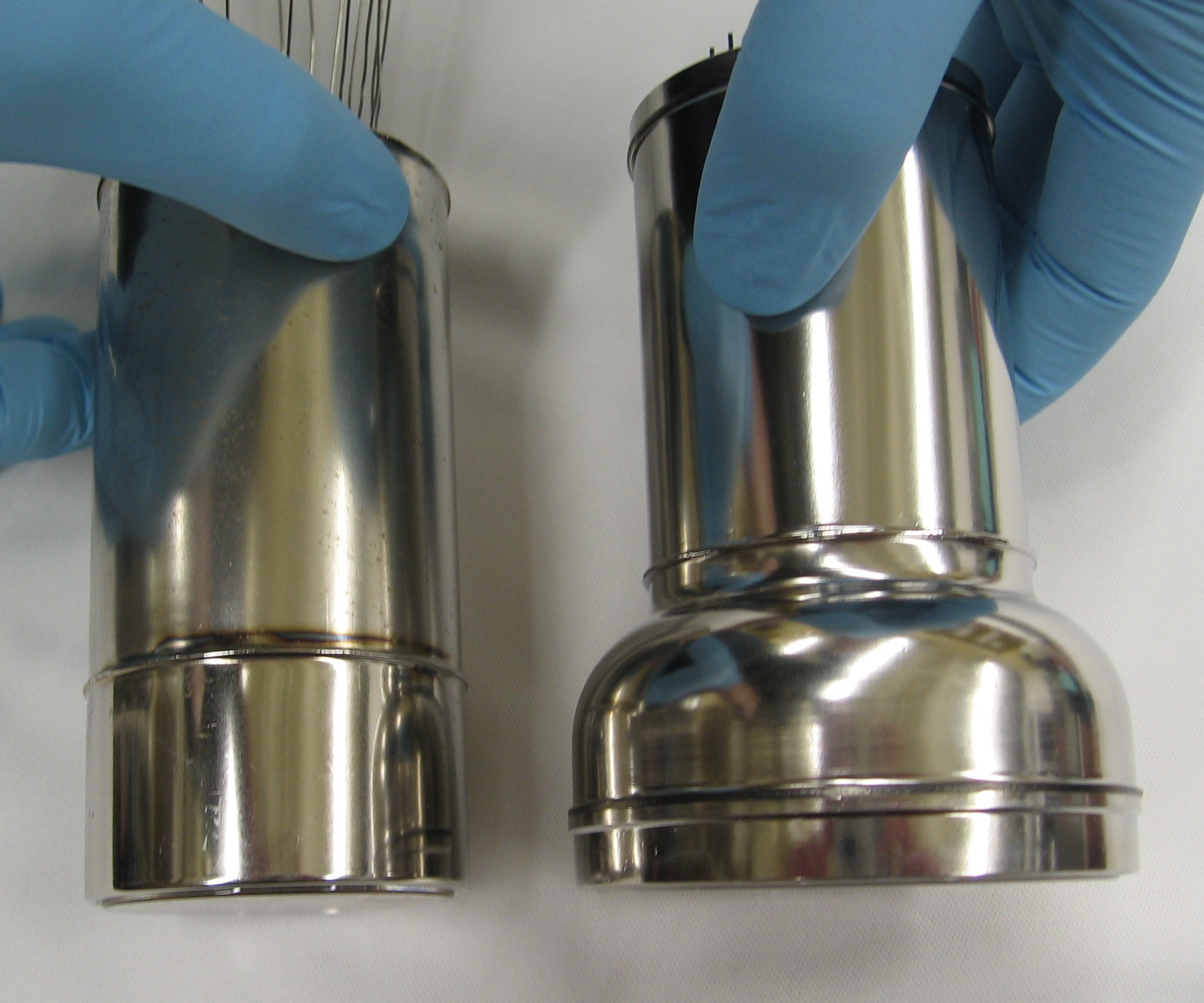
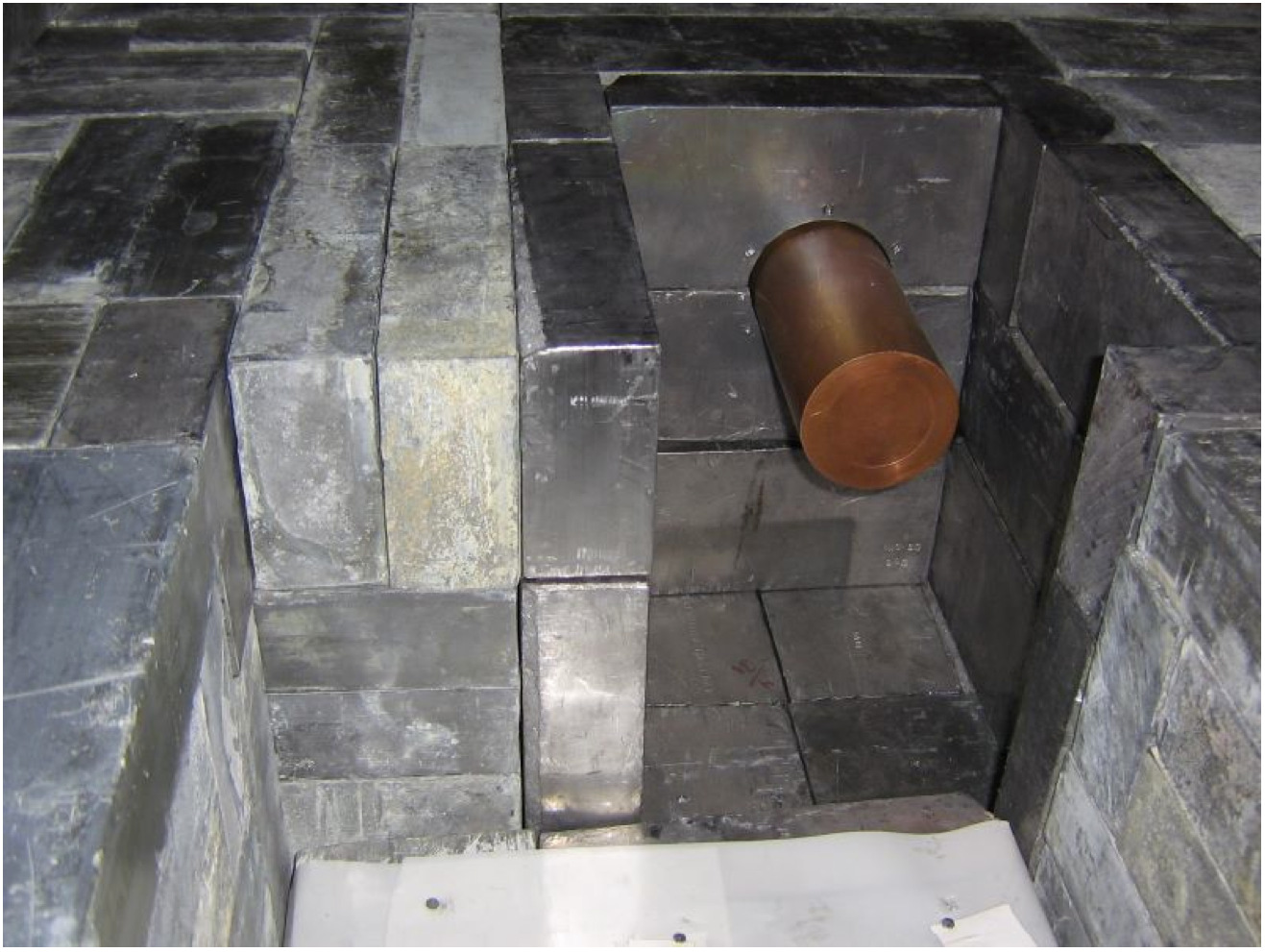
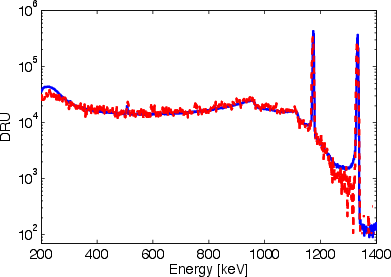
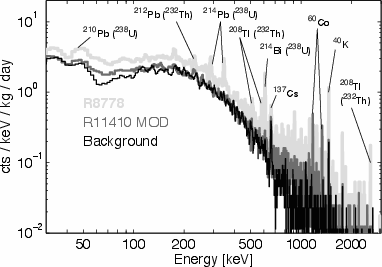
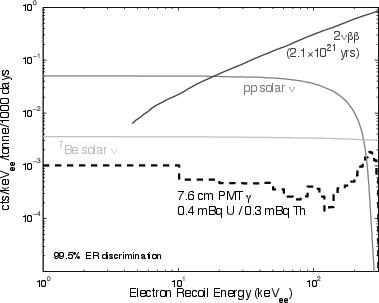
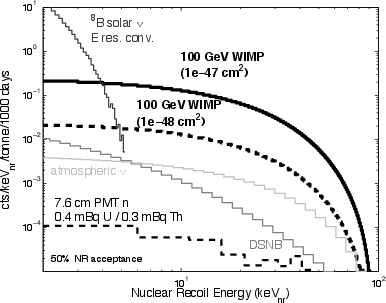
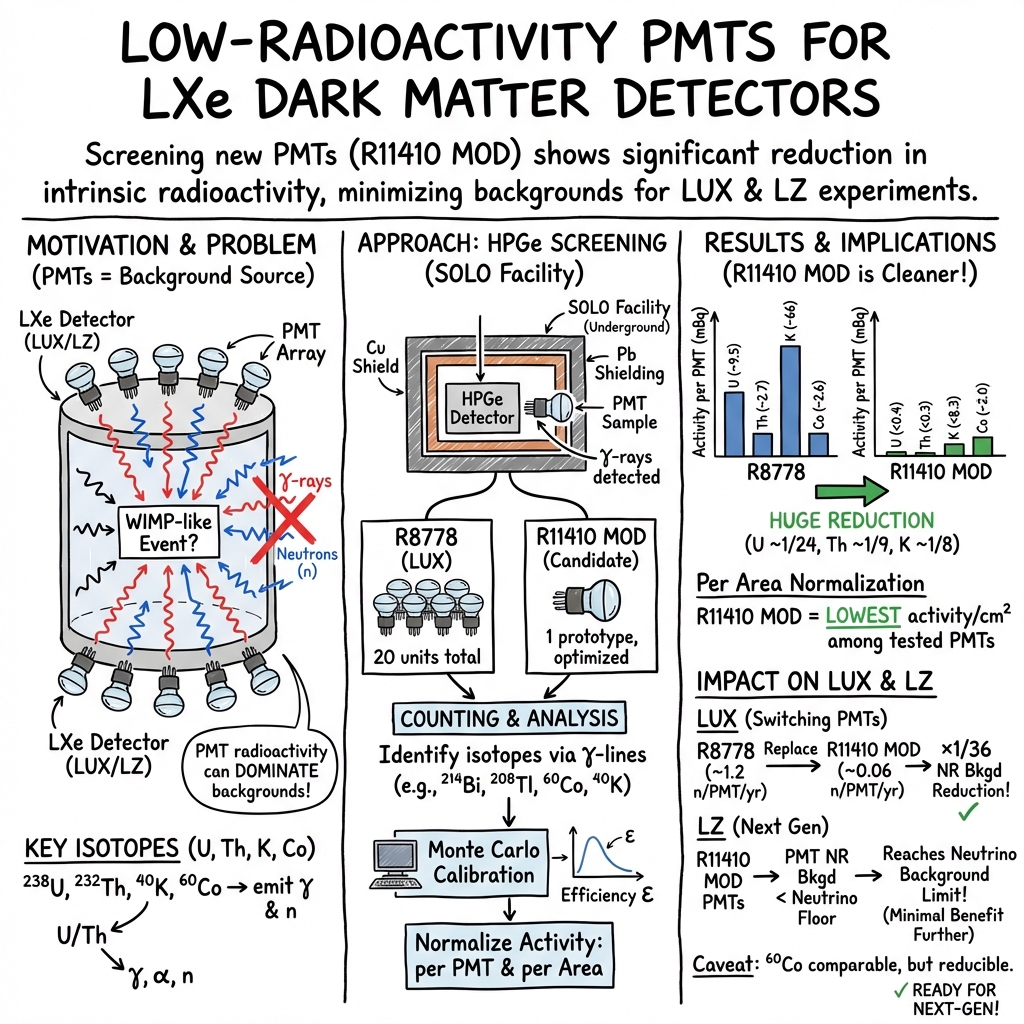
Abstract: Results are presented from radioactivity screening of two models of photomultiplier tubes designed for use in current and future liquid xenon experiments. The Hamamatsu 5.6 cm diameter R8778 PMT, used in the LUX dark matter experiment, has yielded a positive detection of four common radioactive isotopes: 238U, 232Th, 40K, and 60Co. Screening of LUX materials has rendered backgrounds from other detector materials subdominant to the R8778 contribution. A prototype Hamamatsu 7.6 cm diameter R11410 MOD PMT has also been screened, with benchmark isotope counts measured at <0.4 238U / <0.3 232Th / <8.3 40K / 2.0+-0.2 60Co mBq/PMT. This represents a large reduction, equal to a change of \times 1/24 238U / \times 1/9 232Th / \times 1/8 40K per PMT, between R8778 and R11410 MOD, concurrent with a doubling of the photocathode surface area (4.5 cm to 6.4 cm diameter). 60Co measurements are comparable between the PMTs, but can be significantly reduced in future R11410 MOD units through further material selection. Assuming PMT activity equal to the measured 90% upper limits, Monte Carlo estimates indicate that replacement of R8778 PMTs with R11410 MOD PMTs will change LUX PMT electron recoil background contributions by a factor of \times1/25 after further material selection for 60Co reduction, and nuclear recoil backgrounds by a factor of \times 1/36. The strong reduction in backgrounds below the measured R8778 levels makes the R11410 MOD a very competitive technology for use in large-scale liquid xenon detectors.
Paper Prompts
Sign up for free to create and run prompts on this paper using GPT-5.
Top Community Prompts
Explain it Like I'm 14
An Ultra-Low Background PMT for Liquid Xenon Detectors
Overview
This paper is about special light detectors called Photomultiplier Tubes (PMTs) used in physics experiments with liquid xenon (a very cold and dense liquid gas). These detectors are important for experiments aiming to find dark matter, which is mysterious and makes up a lot of the universe, but can't be seen. The main goal was to make these light detectors with very low radioactivity to avoid fake signals that might be mistaken for dark matter interactions.
Objectives
The researchers wanted to:
- Compare two models of PMTs to see which one has less unwanted radioactivity.
- Reduce the radioactive background noise from these PMTs so that they don't interfere with experiments trying to find dark matter.
Methods
The researchers tested two kinds of PMTs for radioactivity:
- Hamamatsu R8778: Older model used in current experiments.
- Hamamatsu R11410 MOD: Newer model designed to have lower radioactivity.
They measured the amount of four common radioactive elements in these PMTs: uranium (U), thorium (Th), potassium (K), and cobalt (Co). Imagine trying to listen to whispers in a noisy room; these radioactive elements are like background noise, and experiments need these elements' levels to be as low as possible.
Findings
- The newer PMT (R11410 MOD) has much lower radioactivity for uranium, thorium, and potassium compared to the older model. Even cobalt was low but could be improved with finer material selection.
- By switching to the new PMTs, experiments could reduce the noise or 'background' signals from radioactivity by 25 to 36 times. This is important because the less noise there is, the easier it is to detect real dark matter interactions.
Implications
Using the new low-radioactivity PMTs in experiments could make it much easier to detect dark matter because the experiments would have less background noise to confuse the results. It's like having a much quieter room to better hear a very faint sound. Overall, this technology is a big step towards better understanding what makes up our universe.
Knowledge Gaps
Knowledge Gaps, Limitations, and Open Questions
The paper provides significant insight into the development and screening of photomultiplier tubes (PMTs) for liquid xenon detectors. However, it leaves several areas unexplored, which future research could address:
- Further Material Selection for R11410~MOD PMT: The paper acknowledges that further reduction in Co activities could be achieved through additional material selection. Details on which materials could lead to such an improvement are not provided.
- Breakage in Secular Equilibrium for U Chain: While the paper notes potential breakage in secular equilibrium, it does not explore methods to ensure equilibrium or compensate for its breakage during the manufacturing process.
- Detection Efficiency and Simulation Validation: The paper relies heavily on simulation for detection efficiency but does not provide details on how these simulations have been validated against experimental data or other independent methods.
- Impact of PMT Arrangement on Background Levels: The precise layout and orientation of the PMTs may impact background levels. Exploration of how different configurations affect detector performance is not addressed.
- Quantitative Analysis of PMT Size and Surface Coverage: Though an increase in photocathode surface area is highlighted, the paper lacks a thorough quantitative analysis of how varying PMT sizes and coverage impact overall detector sensitivity and background reduction.
- Long-Term Stability of PMT Radioactivity Levels: The long-term stability of reduced radioactivity levels in PMTs, especially after exposure to operational environments, remains unexplored.
- Impact of Environmental Factors: Environmental factors (e.g., temperature fluctuations, pressure changes) and their impact on the behavior and radioactivity of PMTs are not discussed.
- Comparative Studies with Alternative PMT Technologies: The paper does not compare the performance and radioactivity of the R11410~MOD PMTs with other emerging photodetector technologies, which could provide alternative solutions for background reduction.
- Exploration of Neutron Backgrounds Beyond PMT Contribution: While PMT-related neutron backgrounds are covered, the contribution from other potential sources within the experimental setup is not thoroughly analyzed.
- Scalability of Techniques for Larger Experiments: The potential challenges in scaling the described methodologies and material selections for even larger future experiments, such as multi-tonne xenon detectors, are not addressed.
Future research could focus on these areas to further enhance the design and application of PMTs in liquid xenon detectors, reducing backgrounds and increasing the accuracy of dark matter detection experiments.
Practical Applications
Immediate Applications
The paper provides insights into the development and testing of photomultiplier tubes (PMTs) with reduced radioactivity levels for use in liquid xenon detectors—the cornerstone of several real-world applications. Here are some immediate applications identified from the findings:
- Dark Matter Detection:
- Sector: Astrophysics
- Use Case: Replacement of current PMTs with low-background R11410~MOD PMTs in existing dark matter experiments such as LUX can vastly reduce background noise, enhancing the sensitivity of the detectors to potential dark matter signals.
- Tools/Products: Upgraded liquid xenon detectors equipped with R11410~MOD PMTs.
- Assumptions/Dependencies: Assumes available stock of replacement PMTs and operational alignment with current detector configurations.
- Neutrino Experiments:
- Sector: Particle Physics
- Use Case: Immediate use in experiments sensitive to low-energy neutrino interactions where background noise reduction is critical. The reduction of gamma and neutron backgrounds from PMTs enhances measurement accuracy.
- Tools/Products: Extended neutrino detection systems with reduced electronic recoil background contributions.
- Assumptions/Dependencies: Requires seamless integration into existing setups without significant redesign.
Long-Term Applications
Some applications derived from the research require further exploration, development, and scaling. Here are the long-term applications:
- Large-Scale Next-Generation Detectors:
- Sector: Fundamental Physics Research
- Use Case: The development of larger-scale detectors, such as the envisioned LZ experiment, using R11410~MOD PMTs to maintain low background levels, essential for new physics discovery (e.g., detection of WIMPs and neutrino signatures).
- Tools/Products: Design and deployment of tonne-scale liquid xenon detectors.
- Assumptions/Dependencies: Actual realization relies on further refinement of PMT manufacturing processes and comprehensive material testing.
- Cross-Disciplinary Applied Research:
- Sector: Interdisciplinary Scientific Research (e.g., Geoscience, Medical Imaging)
- Use Case: Adaptation of low-background photodetectors for applications requiring precise low-level radiation measurement, such as environmental radiation monitoring or advanced medical imaging technologies.
- Tools/Products: Advanced diagnostic tools and environmental monitoring systems with enhanced sensitivity.
- Assumptions/Dependencies: This requires substantial adaptation of technology tailored to sector-specific needs and regulatory approval processes.
Each application identified is linked to specific assumptions or dependencies, impacting their deployment and effectiveness. The immediate focus, however, remains competitive enhancement of existing dark matter and neutrino detection setups leveraging innovations outlined in the paper.
Collections
Sign up for free to add this paper to one or more collections.