Ultra-Light Radar Perception with State Space Models
This presentation explores SSMRadNet, a breakthrough approach that processes raw radar data sample-by-sample using state space models. The method achieves competitive segmentation performance while using 10-33x fewer parameters and 60-88x less compute than traditional transformer and CNN approaches, demonstrating how efficient sequential modeling can revolutionize real-time radar perception for autonomous vehicles.Script
Imagine your car's radar system trying to understand the world around it, but every increase in resolution creates an exponential explosion in computational cost. Traditional radar perception systems face this exact dilemma, requiring multiple stages of heavy processing that create bottlenecks for real-time autonomous driving.
Let's first understand why current radar processing hits computational walls.
Building on this challenge, current approaches create multiple computational bottlenecks. As radar resolution increases through more receiver channels and longer sequences, traditional methods struggle with scalability that grows exponentially rather than linearly.
The key insight here is moving from batch processing entire radar cubes to streaming individual samples through efficient state space models. This eliminates the need for intermediate representations and enables truly real-time processing.
Now let's dive into how SSMRadNet achieves this sample-wise processing.
Following this pipeline, SSMRadNet processes radar data through three distinct stages. Each stage is designed to extract different temporal and spatial patterns from the raw radar signals.
This architecture diagram reveals the elegant flow from raw complex samples to final perception outputs. Notice how the system processes each sample immediately rather than waiting for complete frames, enabling true streaming operation while the multi-scale design captures both range structure within chirps and motion patterns across chirps.
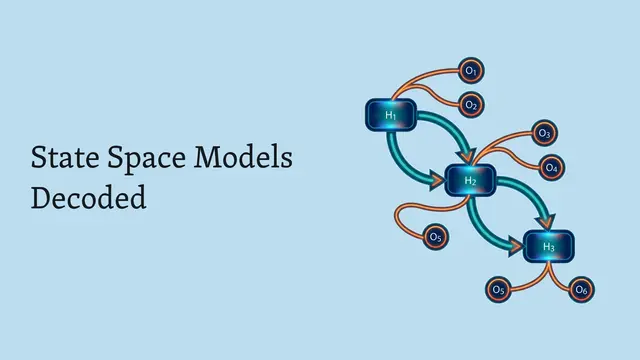
The heart of this approach lies in its clever use of two complementary state space models.
This dual-scale design brilliantly separates two fundamental radar signal characteristics. The Sample-SSM captures spatial relationships within each radar sweep, while the Chirp-SSM models how these patterns evolve over time to distinguish moving vehicles from stationary clutter.
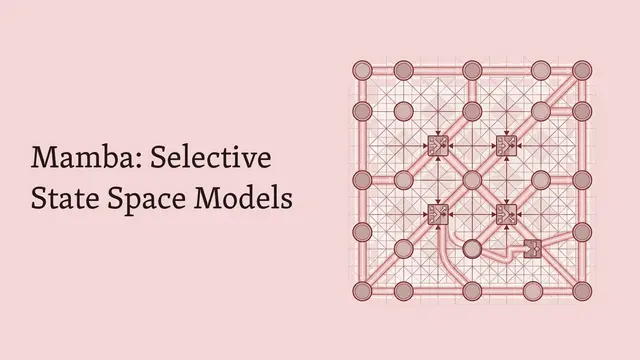
The authors implement these SSMs using Mamba blocks, which provide the crucial linear scaling property. Unlike transformers that become prohibitively expensive with long radar sequences, these selective state space models maintain constant per-timestep computation regardless of total sequence length.
Let's examine how SSMRadNet performs against established baselines.
Moving to validation, the researchers tested on two comprehensive radar datasets that include both vehicle detection and drivable area segmentation tasks. The efficiency measurements on mobile hardware provide realistic deployment scenarios for autonomous vehicles.
These results reveal the remarkable efficiency gains without sacrificing accuracy. The segmentation performance matches state-of-the-art methods while using orders of magnitude fewer computational resources, though detection performance still has room for improvement due to the simplified decoder design.
The ablation studies provide crucial insights into what makes this architecture work. Each component contributes measurably to performance, with the sample-wise processing being particularly important for capturing fine-grained radar signal structure.
These qualitative results demonstrate SSMRadNet's ability to produce clean segmentation masks and accurate vehicle detections directly from raw radar signals. The bird's eye view outputs show clear delineation of drivable areas and precise localization of vehicles, validating that the ultra-efficient processing doesn't compromise perceptual quality.
Despite these impressive results, several areas remain for future development.
Acknowledging these limitations, the authors identify specific areas where the current approach could be strengthened. The detection gap appears primarily architectural rather than fundamental, suggesting clear paths for improvement.
Looking ahead, the linear scaling properties of state space models make this approach particularly promising for next-generation high-resolution radars. The framework also opens possibilities for seamless multi-modal sensor fusion at the feature level.
This work represents a fundamental shift in how we approach radar signal processing.
These contributions extend far beyond incremental improvements. By demonstrating that raw sensor streams can be processed efficiently without traditional preprocessing pipelines, this work challenges fundamental assumptions about sensor data processing in autonomous systems.
From a technical standpoint, this represents several important firsts in radar processing methodology. The combination of streaming processing with multi-scale temporal modeling provides a new paradigm that other sensor modalities could potentially adopt.
SSMRadNet demonstrates that we can achieve competitive radar perception performance while using dramatically fewer computational resources through clever application of state space models. This work opens the door to truly efficient real-time radar processing that could transform how autonomous vehicles understand their environment. To dive deeper into this research and explore related advances in efficient AI, visit EmergentMind.com.