KAT-Coder-V2.5: Infrastructure-Driven Code Agents
This lightning talk explores KAT-Coder-V2.5, a technical report that demonstrates how systematic infrastructure advances—not just larger models—can produce highly capable autonomous coding agents. The presentation examines the paper's core thesis: that verifiable environments, process-aware trajectory curation, and robust reinforcement learning protocols are the limiting factors in agentic software engineering. We walk through the data pipelines, environment synthesis framework, and RL architecture that enable state-of-the-art performance on repository-level software engineering and long-horizon tool-use benchmarks.Script
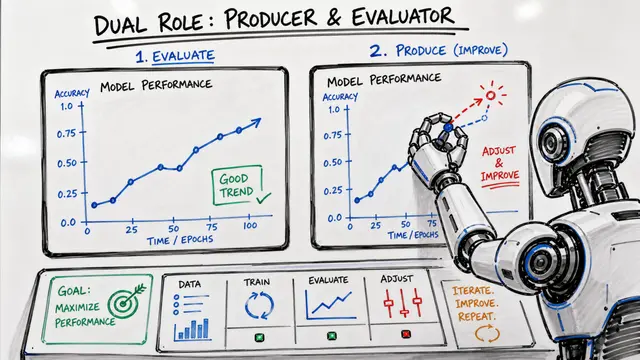
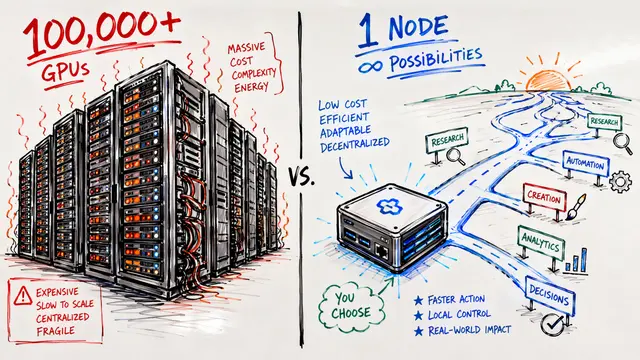
Most researchers chase bigger models for better code agents. KAT-Coder-V2.5 argues the real bottleneck is infrastructure: verifiable environments, trajectory quality, and stable reinforcement learning matter more than parameter count.
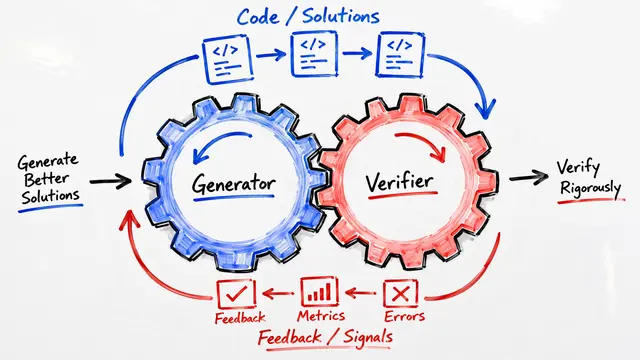
The authors built a task-centric data pipeline that transforms raw pull requests into validated training tasks. Their AutoBuilder system raised reproducible environment success from 16.5% to 57.2% across 12 languages by learning from agent feedback and integrating build-system-specific templates.
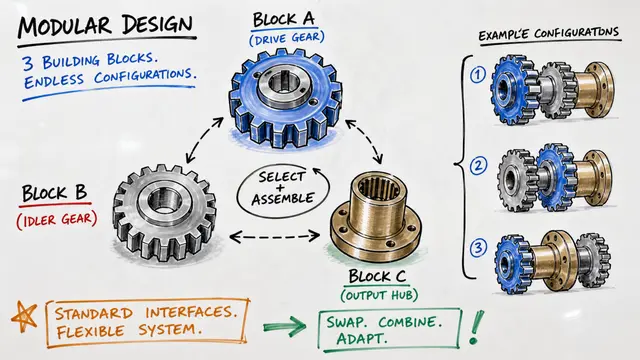
KwaiClawEnv synthesizes large-scale tool-use environments by composing validated service primitives. A small pool of high-quality atomic services scales into tens of thousands of semantically diverse, functionally reliable environments, each with verified interaction trajectories and closed-loop quality feedback.
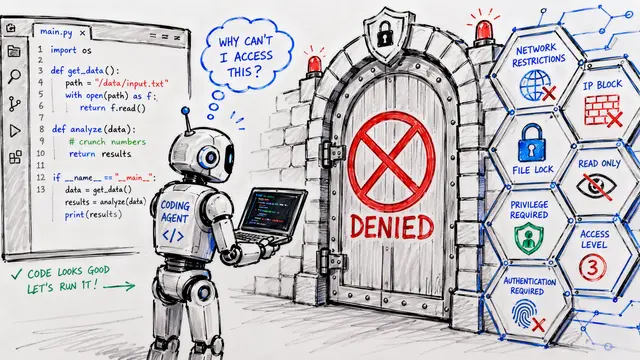
The RL infrastructure isolates harness idiosyncrasies through a Gateway Server and optimizes sandbox reliability, cutting reward corruption from 16% to below 2%. This stability allows long-horizon credit assignment and enables the model to generalize across diverse harnesses without overfitting to a single protocol.
On six major benchmarks, KAT-Coder-V2.5 achieves state-of-the-art tool-use performance, scoring 94.9 on PinchBench and 85.5 on KAT Claw Bench. It ranks second on repository-level software engineering tasks, trailing only a much larger general-purpose model while outperforming all other specialized code agents.
KAT-Coder-V2.5 proves that orchestrated infrastructure can rival or exceed the gains from scaling model parameters. The blueprint established here—verifiable environments, process-aware curation, and robust RL—opens pathways for future agentic systems. Explore more research like this and create your own videos at EmergentMind.com.