The Shift to Agentic AI: Evidence from Codex
This lightning talk examines a groundbreaking empirical study on how agentic AI is fundamentally restructuring knowledge work. Using anonymized usage data from OpenAI's Codex across individual, enterprise, and internal users, the research reveals a tenfold surge in task complexity, dramatic increases in parallel agent management, and the emergence of systematized workflows that transform professionals from executors into supervisors of distributed agentic teams.Script
Within a single year, the most intensive users of AI at work shifted from asking one question at a time to supervising eight autonomous agents running in parallel. This paper reveals how agentic AI is changing not just what we ask machines to do, but how we organize work itself.
The researchers analyzed usage patterns across three populations and found a striking gradient. At OpenAI itself, Codex accounts for over 99% of all output tokens, essentially replacing conversational interfaces for substantive work. Enterprise users show the transition in progress, while individual adopters remain few but exceptionally intensive when they do engage.
The most dramatic finding appears in task complexity. Among individual users, there's been a tenfold increase since late 2025 in tasks requiring more than eight hours of expert human effort. Users aren't just getting faster answers; they're delegating genuinely substantive projects that would previously occupy days of concentrated work.
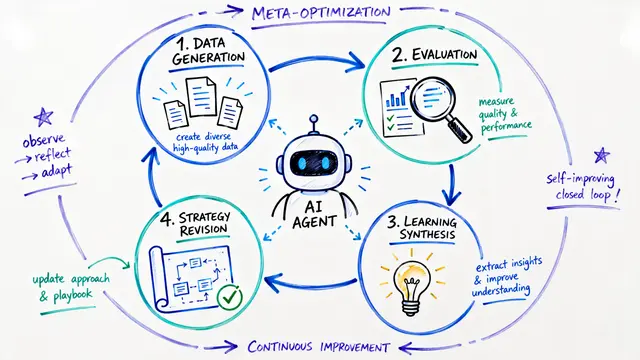
This shift unlocks a new mode of working: concurrency. OpenAI's intensive users routinely manage multiple long-running agents executing in parallel, with cumulative daily runtimes several orders of magnitude greater than external users. The human role evolves from executing tasks to orchestrating distributed portfolios of agentic activity.
But agentic power depends critically on organizational complements. The paper documents rapid growth in systematized workflows encoded as reusable skills and plugins, especially within organizations that invested in training and workflow redesign. Legal roles saw median token volume increase thirteenfold in seven months; researchers over fiftyfold. Productivity gains concentrate among those who re-architect work, not just swap tools.
The future of knowledge work is taking shape now, and it looks less like better assistance and more like fundamental reorganization. As agentic AI matures, the boundary of delegable work expands rapidly, and the skills that matter shift toward oversight, integration, and meta-level judgment. To dive deeper into this transformation and create your own presentations from cutting-edge research, explore EmergentMind.com.