- The paper demonstrates suspended 200 nm LiNbO₃ resonator cavities achieving gigahertz operation with internal Q factors exceeding 6000 at millikelvin temperatures.
- The paper employs finite element analysis and Butterworth-van Dyke modeling to correlate simulated modes with experimental |S₁₁| and |S₂₁| spectra.
- The paper integrates these resonators with superconducting transmon qubits via tunable couplers, enabling strong, adjustable coupling exceeding 1 MHz.
Gigahertz-Frequency Lamb Wave Resonator Cavities on Suspended Lithium Niobate for Quantum Acoustics
Introduction
The integration of phononic nanodevices into quantum architectures is motivated by the unique capability of acoustic phonons to mediate strong, confined, and versatile interactions among various quantum systems. The piezoelectric properties of lithium niobate (LiNbO3) position it as an ideal candidate for hybrid quantum systems, especially for coupling superconducting qubits with gigahertz-frequency phonons. However, conventional approaches based on surface acoustic waves (SAWs) in bulk LiNbO3 are constrained by bulk substrate leakage, limiting coherence and fidelity. This work addresses this limitation by engineering suspended Lamb wave resonator cavities utilizing ultra-thin (200 nm) LiNbO3 membranes, establishing their acoustic characteristics at both room and millikelvin temperatures, and evaluating their quantum acoustic potential, particularly for integration with superconducting transmon qubits (2601.13509).
Device Architecture and Modeling
The resonator cavities are fabricated by defining interdigitated aluminum transducers (IDTs) on 200 nm-thick Y-cut LiNbO3 plates, laterally terminated with acoustic Bragg mirrors to realize Fabry–Pérot-like mode confinement. The suspended regions are engineered through the selective removal of the underlying silicon dioxide using hydrofluoric acid vapor, ensuring mechanical isolation.
Finite element modeling confirms that the observed fundamental resonance corresponds to the antisymmetric A0 Lamb mode at ∼2 GHz, with partial confinement losses attributed to finite aperture size. Lumped-element Butterworth-van Dyke (BvD) modeling, constrained by both simulation and experimental transmission ∣S21∣ spectra, yields equivalent circuit parameters for characterization and hybrid system design.
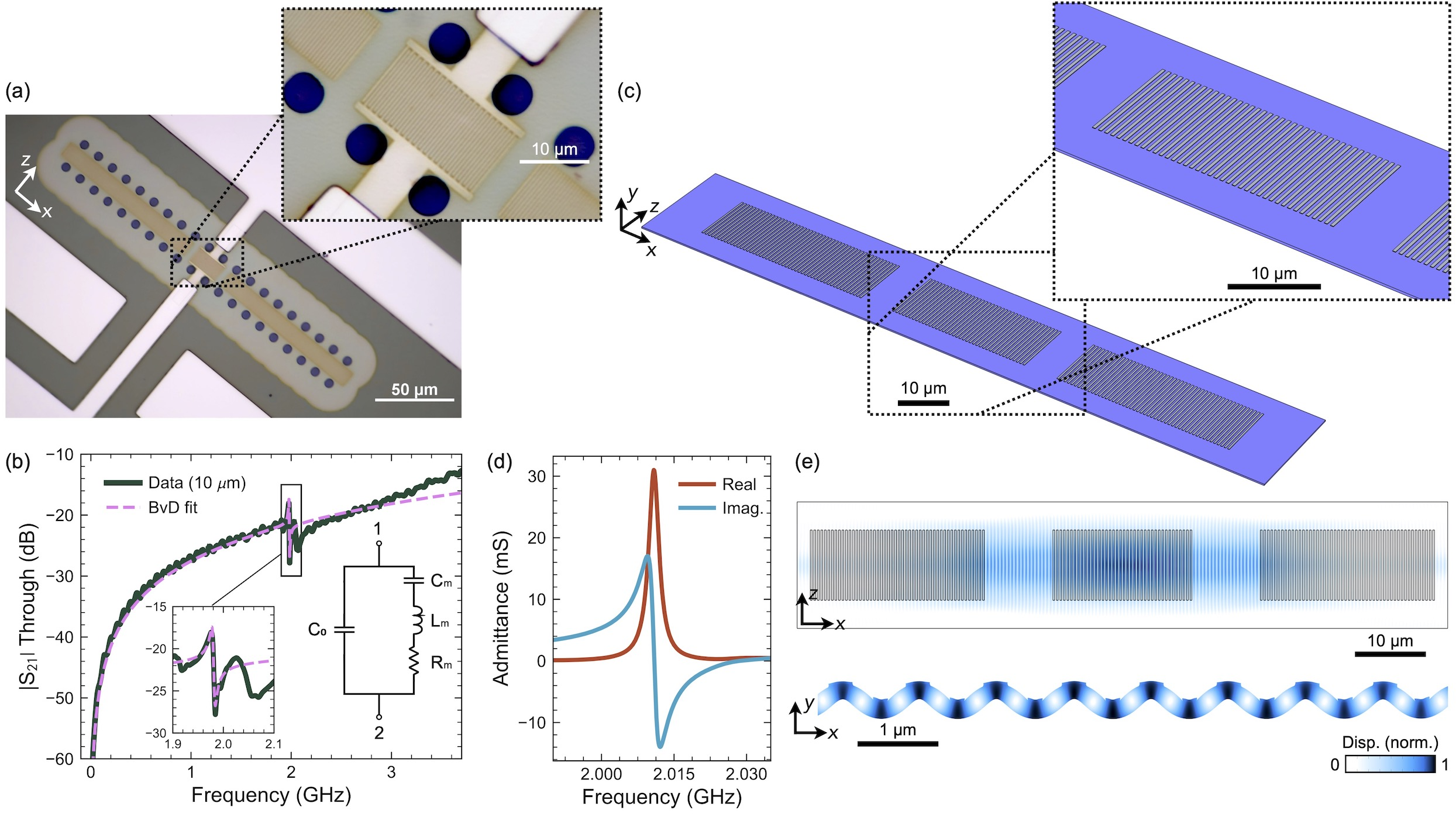
Figure 1: Device schematic, experimental setup, simulation model, and mechanical displacement profile illustrating spatial mode confinement of the A0 Lamb mode.
Experimental Characterization
Room Temperature Regime
Systematic measurements at room temperature across devices with varying IDT–mirror spacings elucidate the dependence of resonance properties on cavity geometries. Reflection (∣S11∣) and transmission (∣S21∣) spectra are acquired in diverse configurations ("tee" and "through"), revealing consistent resonance frequencies and mode profiles with predictions from finite element analysis.
The extracted internal quality factors (Qi) reach several thousand, with a clear trend of increasing Qi for larger metal-free regions (i.e., greater IDT–mirror spacing), up to a saturation regime likely governed by acoustic diffraction and beam-steering effects. Notably, devices with minimal aperture containment experience pronounced radial leakage, limiting achievable Qi.
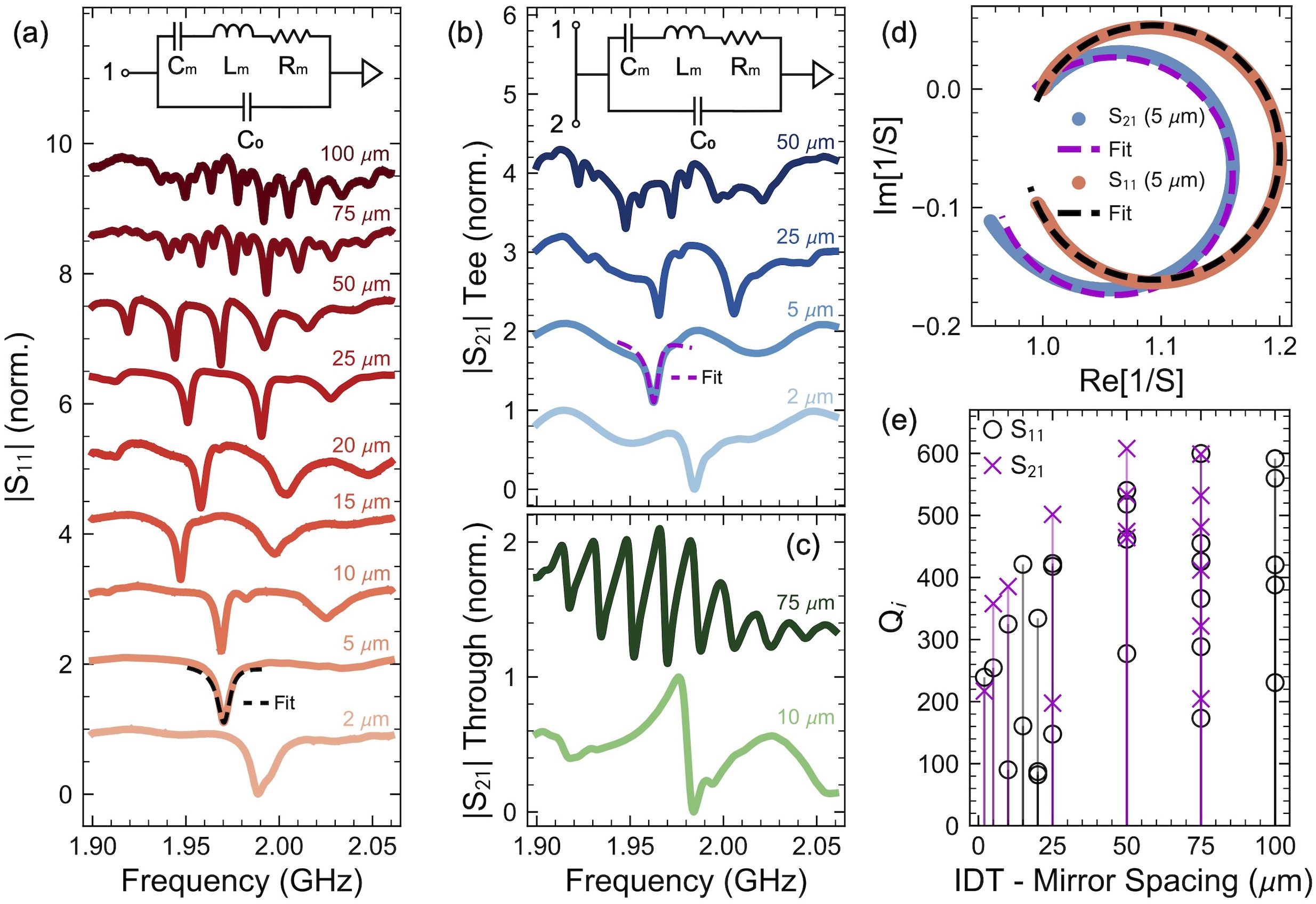
Figure 2: Reflection and transmission spectra for multiple cavity lengths at room temperature; fit-derived internal Qi factors as a function of device geometry.
Millikelvin Regime
Measurements at ∼10 mK show marked enhancements in internal Qi, with a highest observed Qi≈6600 in the shortest cavities (5 μm IDT–mirror spacing) in the single-phonon regime. Transmission spectra reveal a modal landscape sensitive to cavity length, with shorter cavities promoting single-mode domination and longer cavities supporting multimode structure.
Power-dependent studies illuminate the role of two-level systems (TLS) intrinsic to the substrate and interfaces. Qi exhibits a power-dependent increase, asymptotically approaching a saturated value at high phonon occupancy, consistent with TLS loss saturation. For all devices, Qc is independently extracted, and occupancy is estimated considering line attenuation with systematic uncertainties.
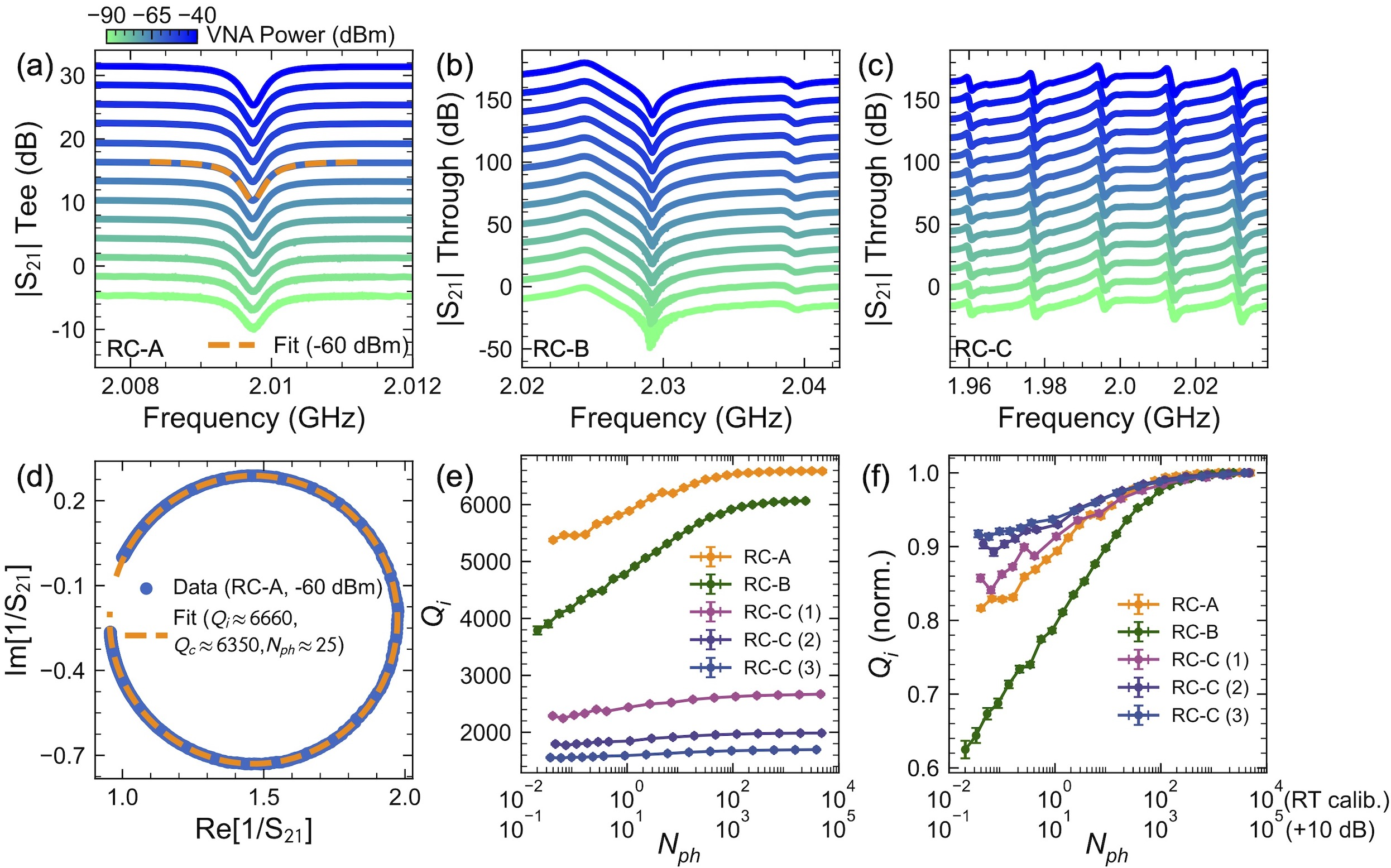
Figure 3: Millikelvin transmission spectra, complex fits, phonon-number-dependent Qi scaling for various cavity designs.
Design and Coupling to Superconducting Qubits
Building upon the experimentally validated BvD model, the study addresses the integration of these Lamb wave resonator cavities with superconducting transmon qubits using inductive flip-chip architectures. Circuit analysis demonstrates that coupling strengths exceeding 1 MHz are achievable with measured device parameters; optimization of aperture and resulting C0 further enables couplings in excess of 10 MHz.
The circuit is reconfigurable via a tunable Josephson junction coupler, affording dynamical control of the interaction, as required in quantum control protocols. This modularity is crucial for scalable hybrid quantum acoustic platforms and the exploration of circuit quantum acoustodynamics.
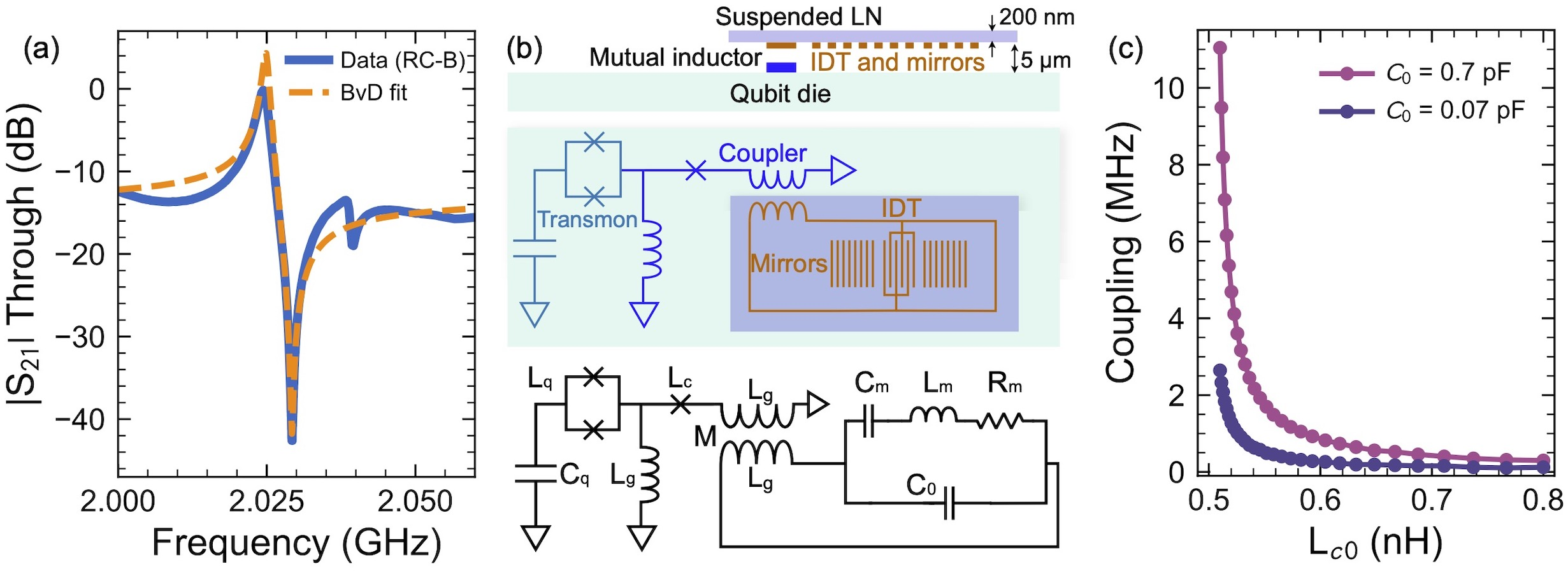
Figure 4: Millikelvin measurement and fit, schematic of transmon–resonator hybrid, and coupling dependence on coupler parameters and aperture capacitance.
Fabrication and Methodological Considerations
Device fabrication leverages electron-beam and photolithography for pattern definition, complemented by selective etching and vapor-phase release for membrane suspension. Finite element simulations employ coupled mechanical and electrostatic modules, enforcing realistic boundary and drive conditions. High-frequency and cryogenic microwave measurements are performed with calibrated probe stations and dilution cryostats, with systematic consideration of attenuation and background normalization critical for reliable parameter extraction.
Implications and Future Directions
These results establish suspended LiNbO3 Lamb wave resonators as competitive candidates for quantum acoustic elements, delivering GHz operation, modest single-phonon regime Qi (>6000), and compatibility with superconducting circuitry. The suppression of substrate leakage, combined with observed TLS-limited losses at low temperature, delineates the path toward further improvements: increasing membrane size and purity, aperture engineering to minimize diffraction, and material process optimization targeting TLS mitigation.
Practical implementations include quantum memories, on-chip transduction, hybrid quantum networks, and the realization of propagating–localized phonon interconversion. Theoretically, the integration of such high-Q phononic devices with tunable superconducting qubits opens opportunities in nonclassical phonon state engineering, quantum information transfer, and multi-modal quantum acoustodynamics. Ongoing work on scalable arrays, topological phononics, and enhanced transduction schemes will further elevate the technological impact of these platforms.
Conclusion
This work demonstrates that suspended GHz-frequency Lamb wave LiNbO3 resonator cavities realize high internal quality factors, robust mode confinement, and favorable integrability with superconducting quantum circuits at cryogenic temperatures. The systematic characterization and ab initio modeling substantiate their potential in quantum acoustic technologies, with tunable strong coupling to superconducting qubits and prospects for deploying them as quantum interconnects, memories, and processors in future hybrid quantum systems.
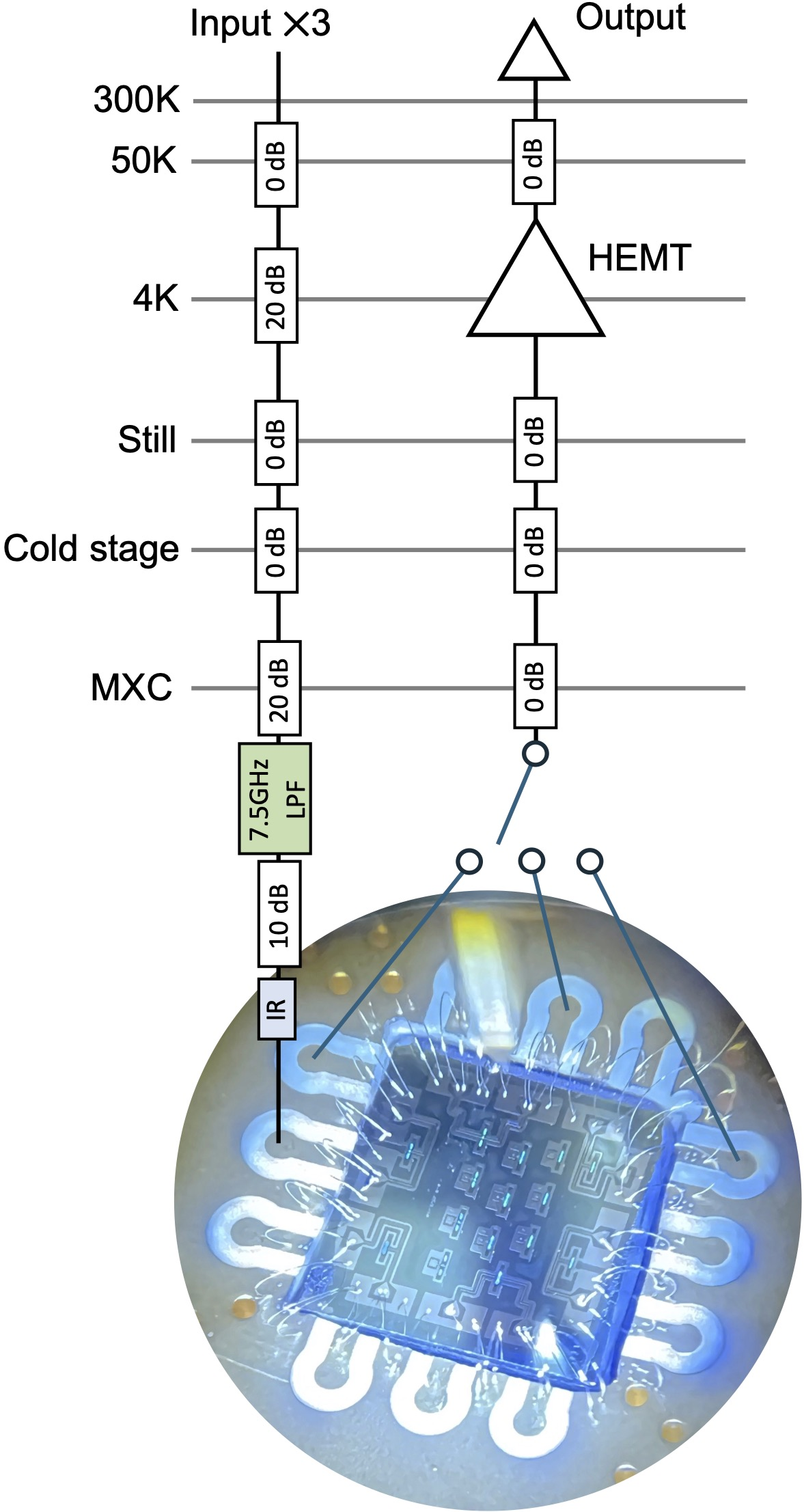
Figure 5: Dilution refrigerator circuitry and device packaging for cryogenic measurement integration.