Persistent Homology-Guided Frequency Filtering for Image Compression
Published 8 Dec 2025 in cs.CV | (2512.07065v1)
Abstract: Feature extraction in noisy image datasets presents many challenges in model reliability. In this paper, we use the discrete Fourier transform in conjunction with persistent homology analysis to extract specific frequencies that correspond with certain topological features of an image. This method allows the image to be compressed and reformed while ensuring that meaningful data can be differentiated. Our experimental results show a level of compression comparable to that of using JPEG using six different metrics. The end goal of persistent homology-guided frequency filtration is its potential to improve performance in binary classification tasks (when augmenting a Convolutional Neural Network) compared to traditional feature extraction and compression methods. These findings highlight a useful end result: enhancing the reliability of image compression under noisy conditions.
The paper introduces a novel image compression framework that integrates persistent homology with frequency-domain filtering to enhance topological fidelity.
It employs a PH-guided mechanism using DFT/FFT and Wasserstein metrics to quantitatively rank frequency components for optimal compression.
Experimental results indicate that the method preserves essential image structures and outperforms JPEG in topological and noise resilience metrics.
Persistent Homology-Guided Frequency Filtering for Image Compression
Introduction and Motivation
This work introduces a framework for image compression that integrates persistent homology (PH), a cornerstone of topological data analysis (TDA), with frequency-domain filtering via discrete Fourier and fast Fourier transform (DFT/FFT). The authors design an automated frequency selection mechanism based on PH to preserve topologically meaningful image data while optimizing for compression efficiency and noise robustness. The motivation is to address the susceptibility of classical feature extraction and compression methods—such as edge detection, texture analysis, and JPEG/DCT compression—to noise and loss of salient structural features, especially under suboptimal acquisition conditions.
Persistent homology offers quantifiable stability of topological features across scalar filtrations, rendering it robust against perturbations induced by noise or lossy transformation. This paper builds on prior works such as Dong et al. (2020) and Callet (2024), extending PH to practical image compression and proposing a metric-driven frequency selection protocol.
Mathematical Framework
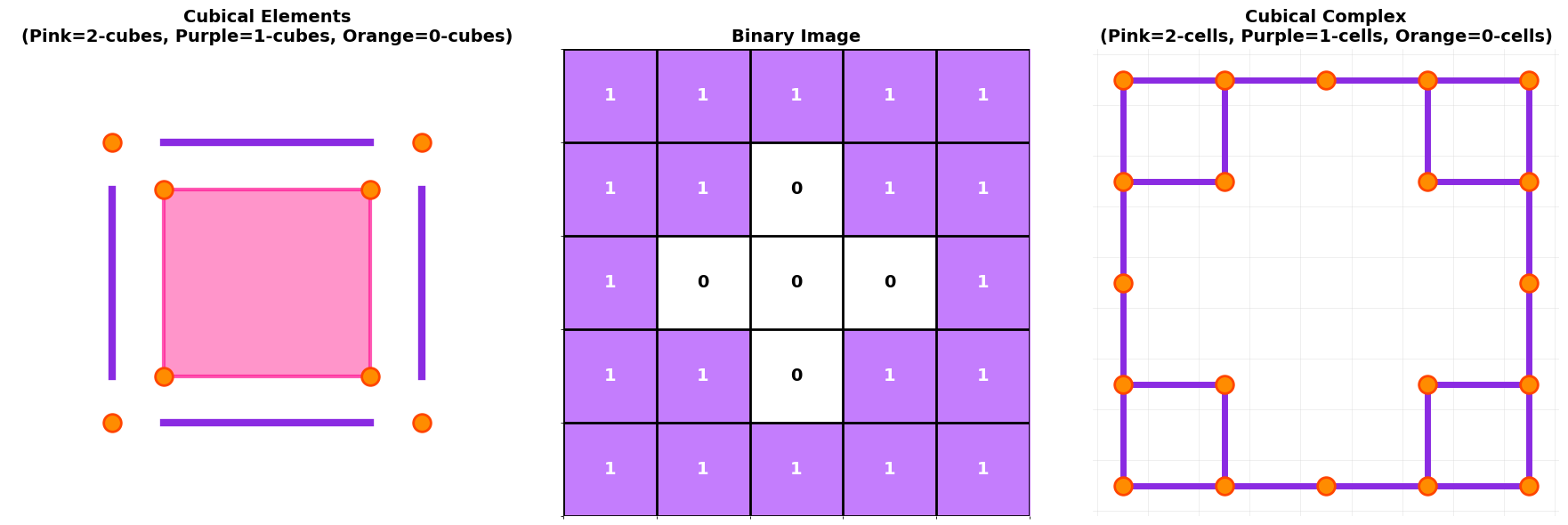
Topological analysis commences with discretization of images as cubical complexes (Figure 1), leveraging their alignment with image grid structure for computational efficiency.
Figure 1: Binary image and corresponding cubical complex construction, enabling PH-based analysis of topological image features.
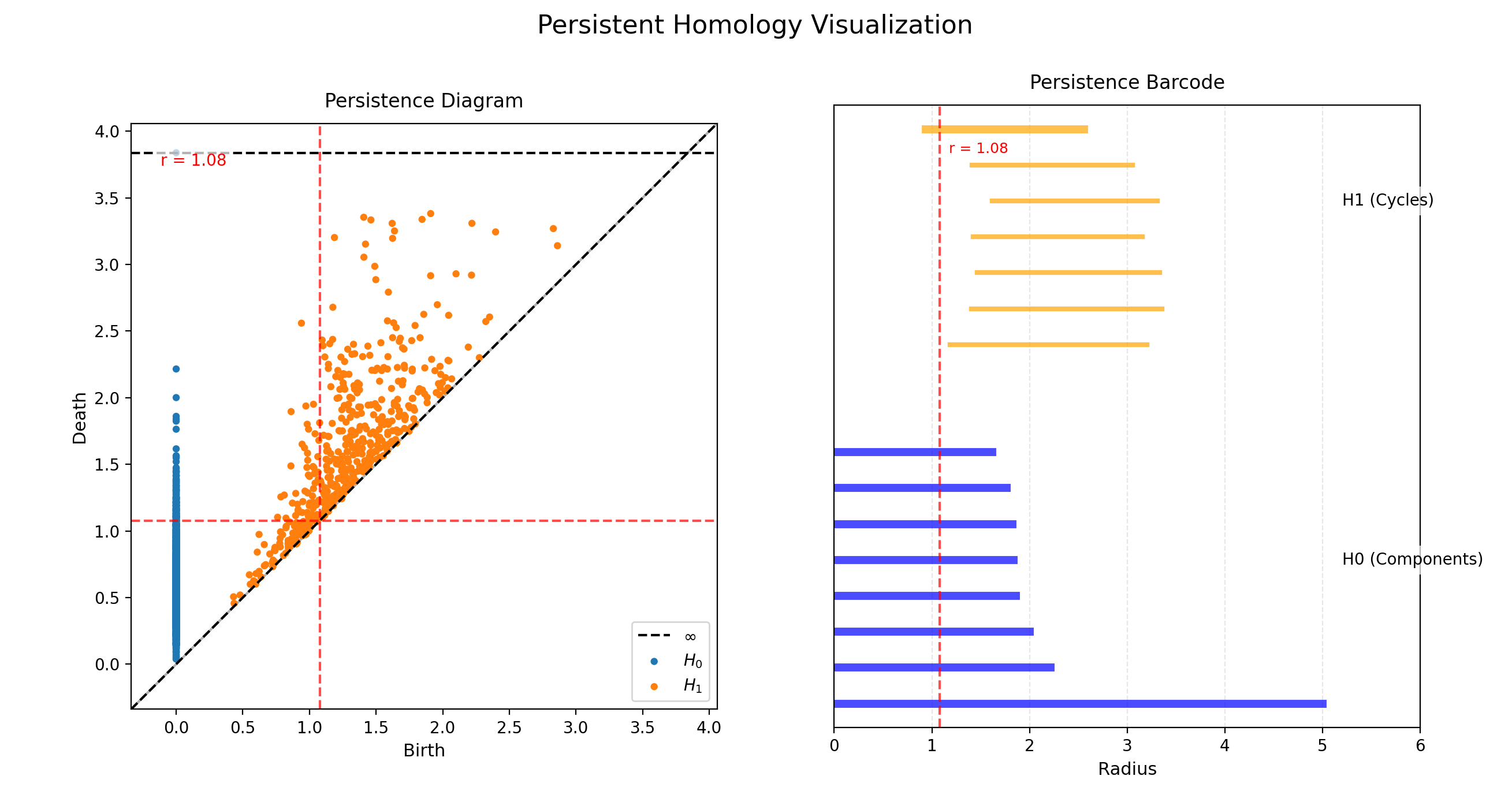
The methodology extracts persistent features using a sequence of nested sublevel filtrations; birth and death events of k-dimensional cycles (connected components, loops, voids) are assigned via Betti numbers and visualized in persistence diagrams and barcodes (Figure 2).
Figure 2: Persistence diagram and barcodes for a Swiss roll dataset, delineating the evolution of H0 (components) and H1 (loops) features across filtrations.
To compare persistence diagrams quantitatively, the Wasserstein and bottleneck metrics are computed; these provide continuous, noise-tolerant estimates of structural similarity between original and compressed images. A critical design choice is the prioritization of 1-Wasserstein distance to reduce the impact of short-lived noise features.
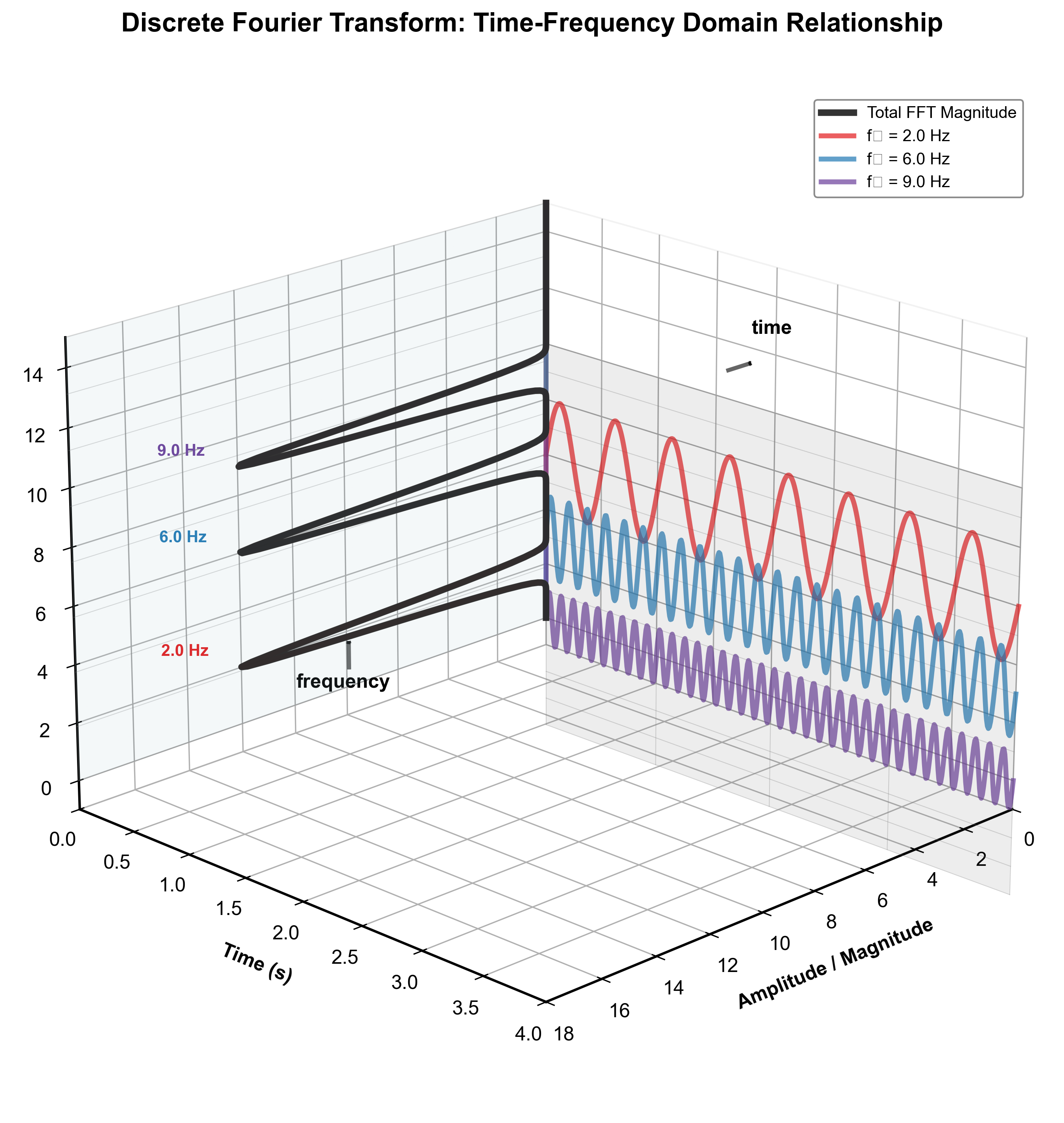
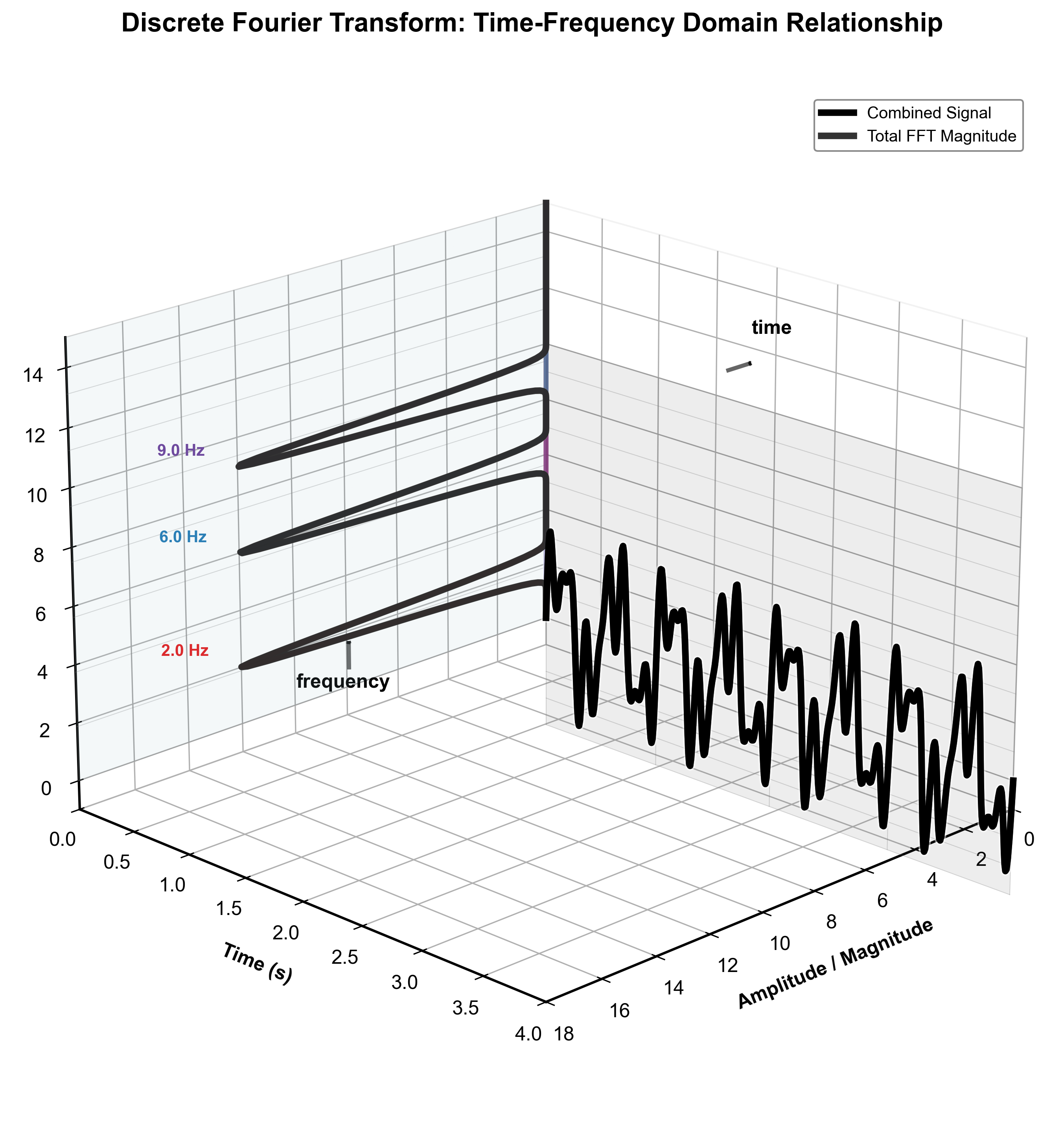
Frequency domain representation is generated using 2D DFT/FFT (Figure 3). Each image is decomposed into sinusoidal components indexed by (fx,fy), and frequencies are ranked for their topological importance by reconstructing single-frequency images, comparing their persistent homology to the full spectrum via Wasserstein distance, and penalizing higher frequencies with a 1/fx2+fy2 prior.
Figure 3: FFT transforms: input color-coded frequencies mapped onto output signal, forming the basis for frequency selection in topological filtering.
Compression Protocol and Metrics
The compression pipeline retains the top α percent of frequencies—ranked by the PH importance score—for image reconstruction. Gaussian smoothing (σ=1) is applied to mitigate high-frequency artifacts impacting PH metrics. Compression quality is assessed via a rigorous suite of metrics: SSIM, MSE, Wasserstein and bottleneck distances, Betti number distances, and file size.
JPEG serves as baseline, employing DCT-based lossy filtering and entropy coding. PH compression diverges crucially by substituting pixel-level redundancy reduction with topologically prioritized frequency retention, enabling preservation of structural information over perceptual similarity.
Experimental Evaluation
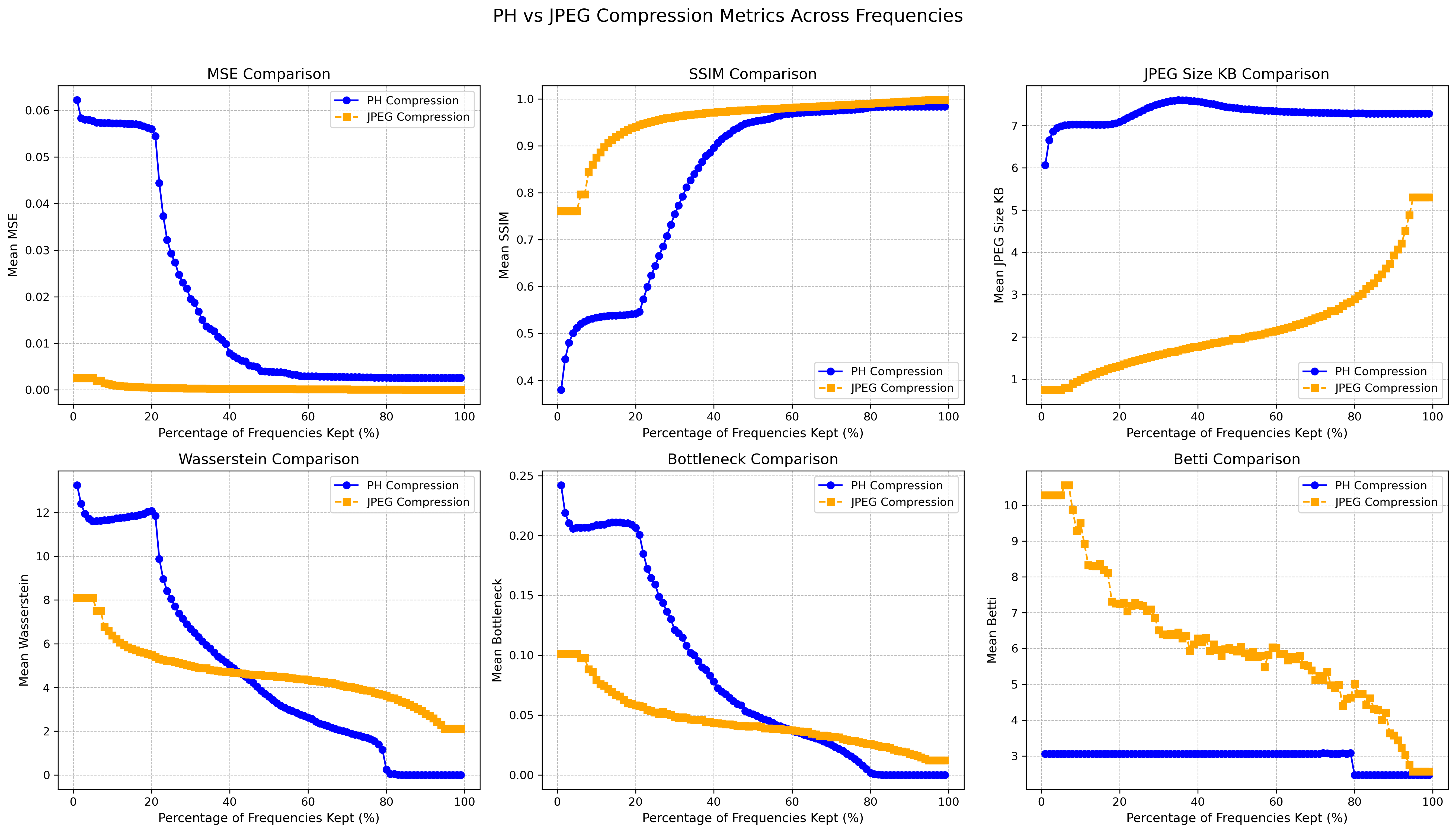
Analysis was carried out on a large random sample of images from TinyImageNet, CIFAR-10, and STL-10. For a subset of 100 images, metrics were computed for both PH-guided and JPEG compression, enabling direct pairwise comparison (Figure 4).
Figure 4: Comparative metric plots for JPEG versus PH compression over 100 images; six metrics highlight topological and visual fidelity, as well as file size shifts with frequency retention.
Strong results are demonstrated in the mid-frequency retention regime ($30$--50%), where PH compression achieves SSIM and MSE levels comparable to JPEG, minimizing perceptual distortion. At >50% retention, PH compression overtakes JPEG on topological metrics: Wasserstein and bottleneck distances approach zero, indicating near-perfect preservation of essential structure (cf. barcodes and Betti curves).
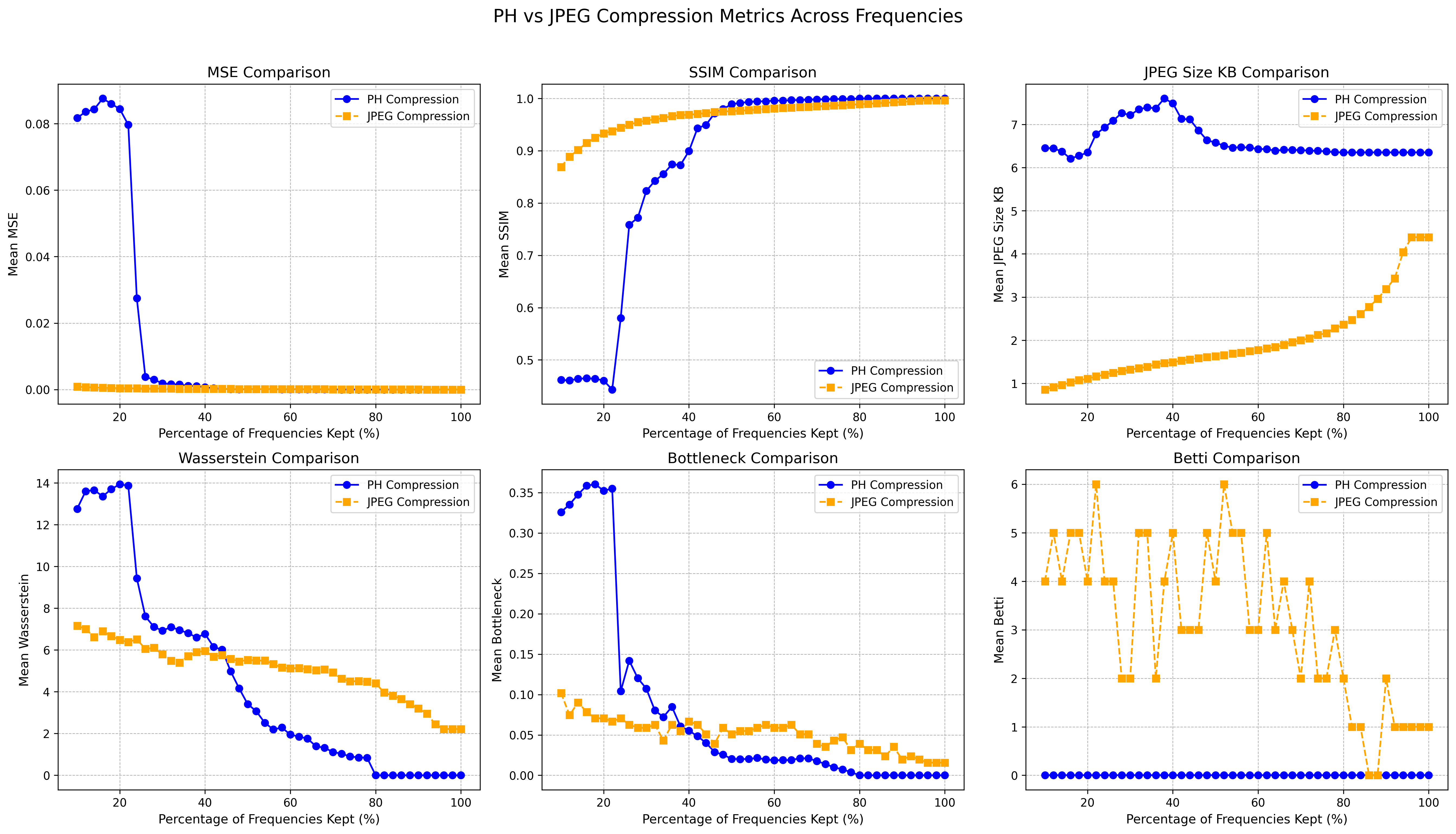
File size analysis reveals non-monotonic behavior: a temporary increase in file size at $20$--35% frequency retention is attributed to breakdown in spatial redundancy, followed by a decrease at higher retention ratios as the reconstructed image structure aligns more closely with the original (see Figure 5 and Figure 6 for qualitative illustration).
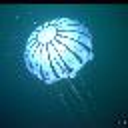
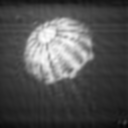
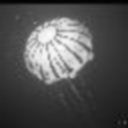
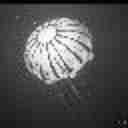
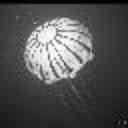
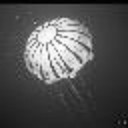
Figure 5: Jellyfish image example; bar plots and metric comparisons reinforce PH compression superiority (at sufficient frequency retention) over JPEG on several axes.
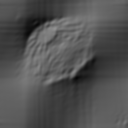
Figure 6: PH versus JPEG image reconstructions across compression levels; visual inspection confirms the near-equivalence at ≥25% frequency retention.
As summarized, PH compression yields marginally larger file sizes than JPEG but excels in topological fidelity—substantially relevant for applications like biomedical or scientific imaging.
Theoretical and Practical Implications
The main theoretical implication is the successful operationalization of topological data analysis for real-world image compression. By using PH, the algorithm offers resilience to noise and invariance to minor perturbations, allowing features significant for downstream tasks (classification, segmentation) to be retained even under lossy compression.
Practically, the method is computationally intensive (O(n3)), posing challenges to scalability and real-time deployment. Nevertheless, the modular architecture enables future integration with lossless entropy coding (e.g., Huffman coding) to further optimize file size without sacrificing topological accuracy.
Additionally, augmenting CNNs with PH-filtered images may improve classification performance in noisy environments, as PH-guided compression emphasizes global structure over local pixel values.
Future Directions
Several avenues for future enhancement are articulated:
Classification Task Integration: Direct assessment of PH-filtered images on downstream predictive tasks.
Real-Time Optimization: FPGA/ASIC-based acceleration or algorithmic approximations to enable rapid PH computations.
Extended Topological Descriptors: Enrichments with persistence landscapes and mapper graphs for multidimensional/topologically complex data.
Advanced Compression: Combining PH-based frequency filtering with entropy coders (Huffman, arithmetic) to optimize for minimal storage while retaining structural criticality.
Conclusion
The paper presents a rigorous approach to image compression that advances topological-data-driven frequency filtering as a viable alternative to classical methods like JPEG. By leveraging persistent homology to rank and retain frequencies according to their contribution to global structure, it achieves high fidelity in both visual and topological metrics, particularly at moderate frequency retention levels. While computational demands remain high and file sizes are currently less competitive, the framework sets the stage for future developments in robust, structure-preserving compression for machine learning and scientific imaging applications.