- The paper presents the first multi-band WAB testbed that integrates FR2 backhaul with FR1 access links to address high-frequency limitations.
- Experimental results in urban vehicular and O2I scenarios validate the architecture's ability to maintain robust connectivity despite NLoS conditions.
- The study highlights the practical feasibility of deploying WAB using off-the-shelf components, paving the way for future 5G network densification.
Multi-Band Wireless Access-and-Backhaul (WAB) for 5G: Implementation and Experiments
The research paper "Multi-Band Wireless Access-and-Backhaul (WAB) for 5G: Implementation and Experiments" (2511.16259) investigates the challenges and solutions associated with modern wireless network architectures, particularly focusing on the limitations of high-frequency bands and the novel Wireless Access Backhaul (WAB) technology's experimental framework. This work provides a detailed analysis of the WAB architecture's role in overcoming frequency range limitations and details the experimental implementation using open-source software and commercial off-the-shelf components.
Introduction and Background
The demand for increased spectral efficiency and bandwidth in wireless networks is driving advancements in adaptive Radio Access Network (RAN) architectures for 5G. Higher frequency bands such as Frequency Range 2 (FR2) offer substantial throughput but suffer from significant drawbacks including severe path loss and environmental impairments. To counter these challenges, the WAB architecture, standardized by 3GPP in Release 19, provides a streamlined approach for cost-effective network densification. It introduces a modular design that supports various backhaul technologies including Non-Terrestrial Networks (NTNs), promoting broader compatibility with existing FR1 user equipment and enhancing outdoor-to-indoor (O2I) network performance.
Despite the promising evolution represented by WAB, the lack of physical implementation has stunted its adoption. This paper seeks to bridge the gap by presenting the first multi-band WAB testbed capable of integrating FR2 backhaul with FR1 access links, offering practical insights through real-world testing in vehicular and O2I scenarios.
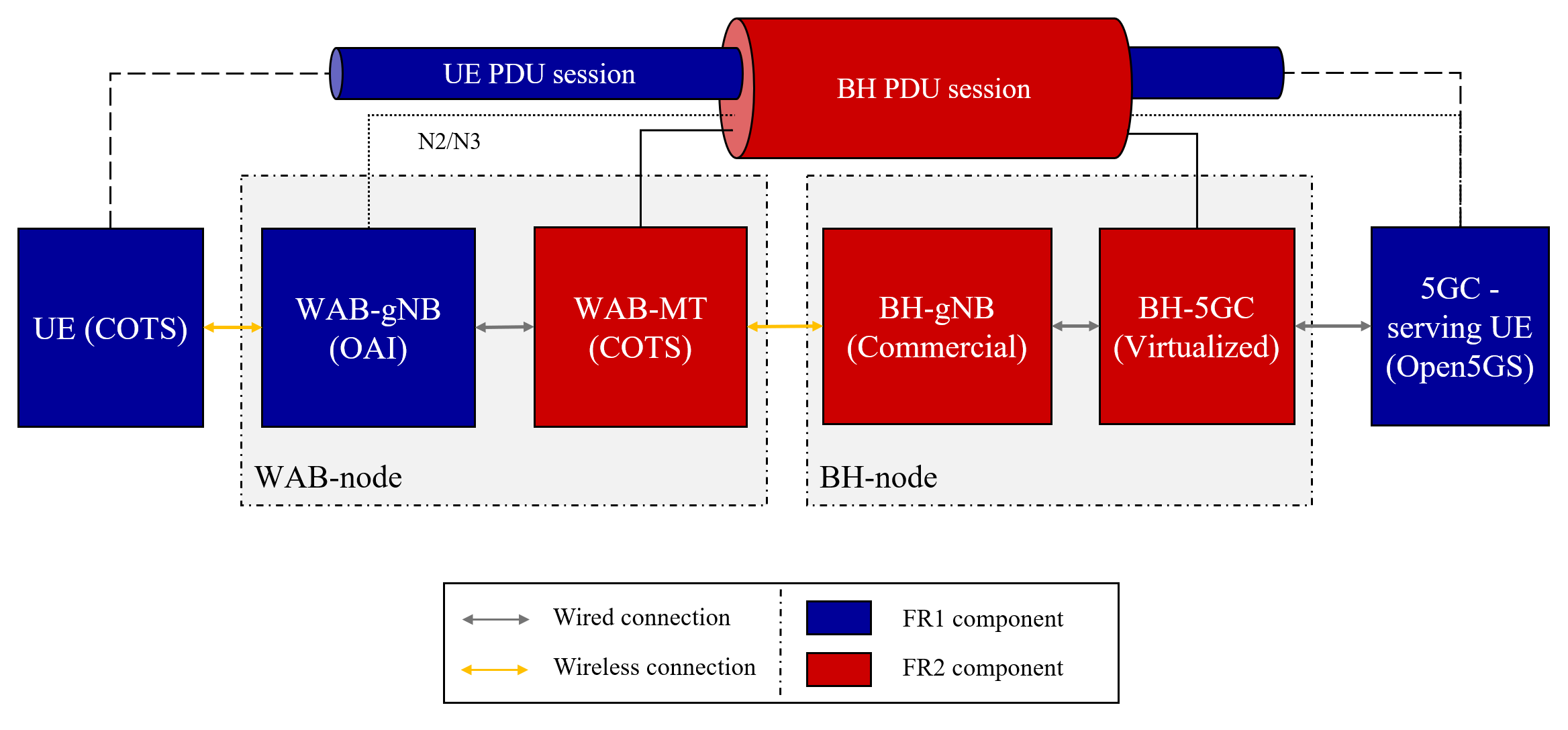
Figure 1: WAB's fundamental architecture, including the corresponding elements in the testbed.
WAB Architecture and Implementation
The core of the WAB architecture consists of a WAB Node embedding both WAB-gNB and WAB Mobile Termination (MT) systems, with distinct roles for access and backhaul. The WAB architecture facilitates multi-band operations endowing networks with flexible combinations of capabilities such as FR2's high throughput and FR1’s superior penetration. The modular design and independence of access and backhaul segments allow for seamless integration within heterogeneous network infrastructures.
Implementing the WAB testbed revealed the architecture’s flexibility, showcasing its ability to extend FR2 coverage and remain compatible with legacy FR1 equipment. Through experimental campaigns, it was demonstrated that WAB decidedly mitigates FR2 limitations in uplink and Non-Line-of-Sight (NLoS) conditions, underscoring its viability for future 5G and beyond networks.
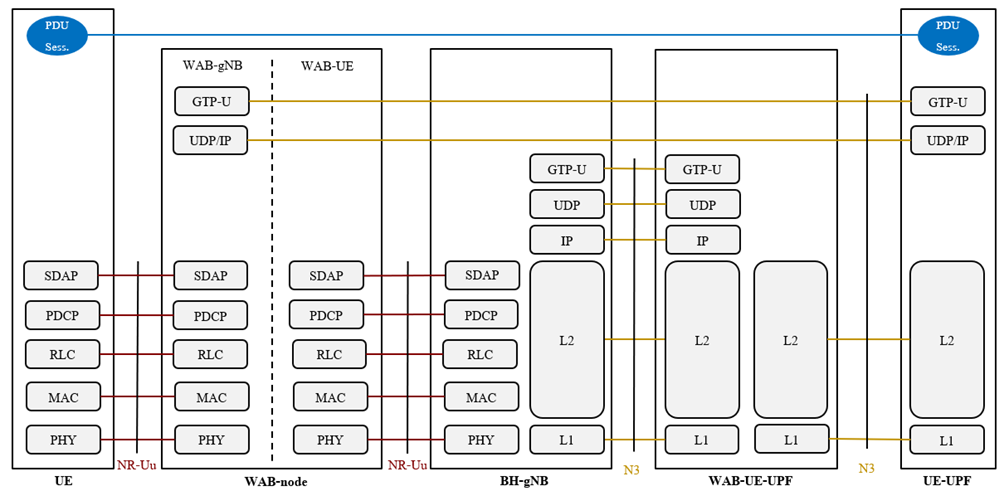
Figure 2: WAB protocol stack on User Plane.
Experimental Results and Analysis
The experimental validation featured measurements in dense urban environments where FR2 propagation challenges are prominent due to obstacles like buildings causing severe signal attenuation. The configured WAB system effectively compensated for these impairments by leveraging FR1 to maintain robust connectivity.
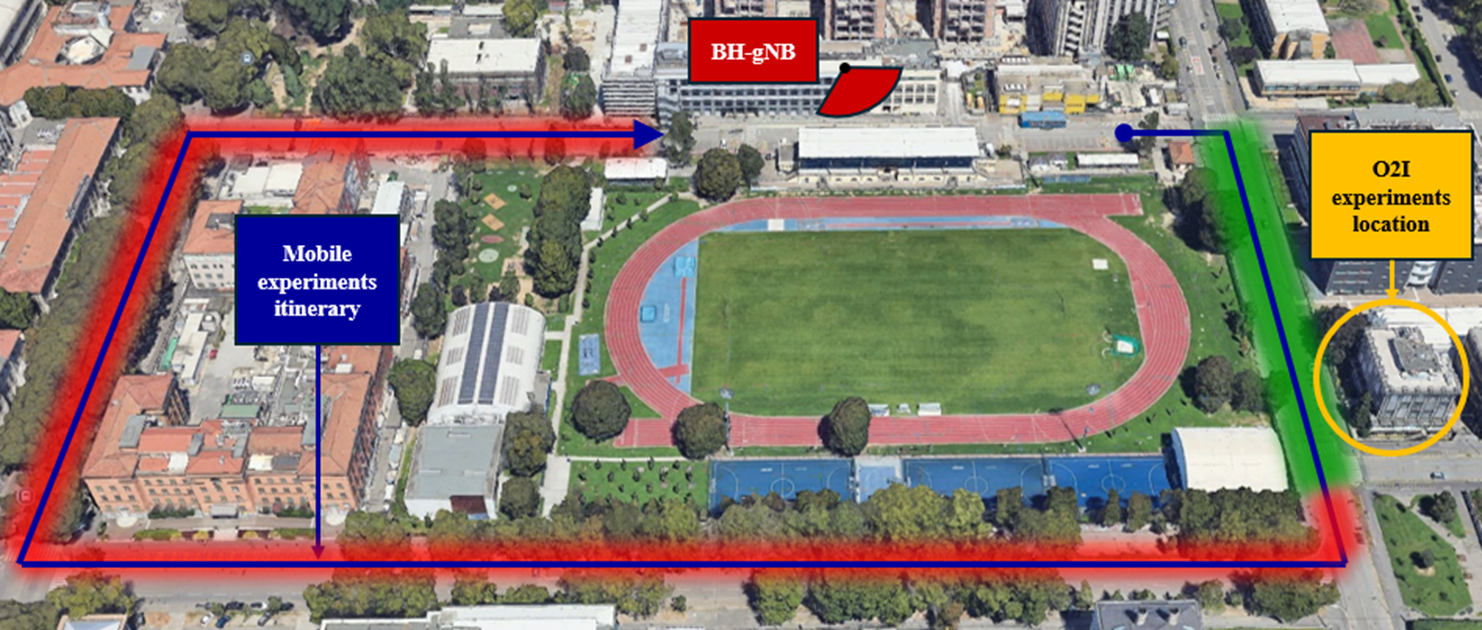
Figure 3: Aerial view of the urban neighborhood covered by the FR2 Base Station (BS) showing experiment locations.
Results from the urban vehicular scenario confirmed that the WAB system could deliver reliable FR2 coverage under LOS conditions and maintain satisfactory transmission performance even amidst challenging NLOS obstructions.
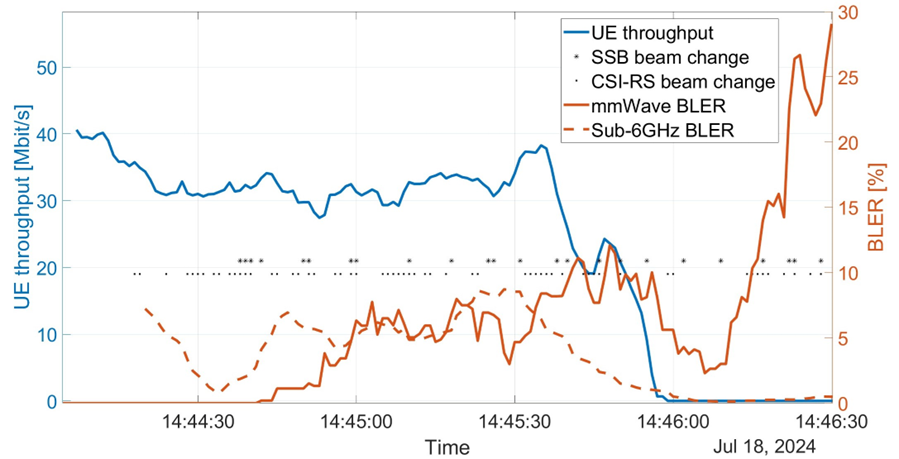
Figure 4: End-to-end throughput, FR2 and FR1 Block Error Rate (BLER) and beam changes in mobile WAB experiments.
In the O2I experiments, a comparative analysis between FR2-only components and the WAB configuration illustrated significant uplink performance advantages for WAB, particularly in scenarios of deep indoor penetration, proving its ability to alleviate FR2-specific transmission limitations.
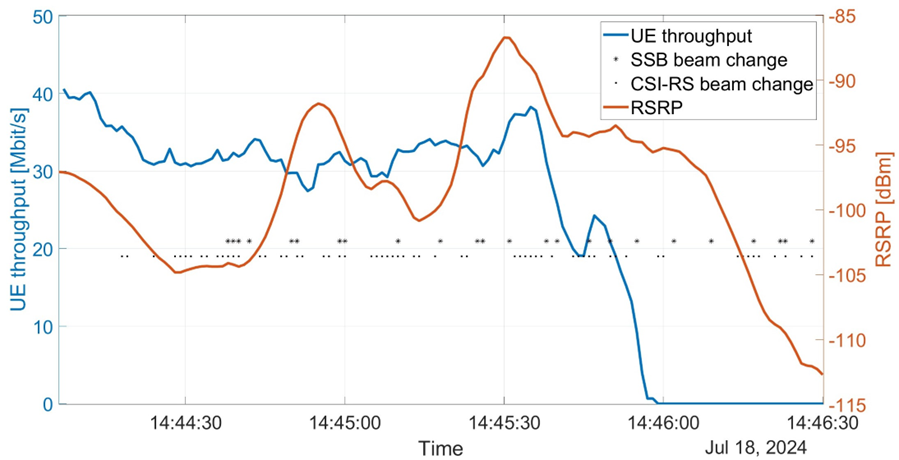
Figure 5: End-to-end throughput, FR2 Reference Signal Received Power (RSRP).
Conclusion
This work marks a critical progression in validating and deploying the WAB architecture as a pivotal development for next-generation wireless networks. The presented testbed demonstrates the feasibility of rapidly deploying a multi-band configuration using available components, thereby underscoring the practicality of widespread WAB adoption. The paper concludes with speculations for future research directions, including topology expansion, enhanced resource management, and further experimental validations to leverage WAB's full potential in 5G-Advanced networks.

