- The paper introduces a decoupled framework that independently models skeletal, facial, and soft-tissue components, enabling precise pose and identity control.
- It employs hierarchical blendshapes and a sparse MLP-based corrective system to reduce artifacts and improve surface fitting with fewer components.
- The model’s design enhances artist workflows and supports AR/VR, animation, and interactive pipelines with modular, multi-resolution control.
Momentum Human Rig (MHR): A Decoupled Framework for Robust Parametric Human Modeling
Background and Motivation
Parametric human body models are central to computer vision, animation, AR/VR, and character synthesis, offering compact descriptors for body shape and pose with articulated mesh outputs. The canonical template-based models (e.g., SMPL, SMPL-X) employ linear blendshapes for personalization, derive internal skeletal joints from meshed surfaces, and rely on linear blend skinning (LBS) with pose-dependent correctives. However, these protocols induce undesired entanglements between shape and skeleton, challenge keypoint fitting, and hamper the independent customization of proportions and tissue, complicating artist-driven workflows and limiting deployment in production and interactive pipelines.
ATLAS addressed these issues by explicitly decoupling the external mesh and internal skeleton, utilizing a high-resolution, anatomically motivated skeleton and sparse, non-linear pose correctives pre-LBS. Although ATLAS achieves superior fidelity and flexibility, two principal drawbacks remain: FLAME-based facial expressions are incompatible with semantic artist workflows, and the skeleton is not optimized for modular pose correctives.
MHR Model Architecture
MHR builds on ATLAS’s paradigm to deliver a fully decoupled, artist-calibrated human body model with semantic controls, multi-resolution support, and robust integration for vision and graphics pipelines. MHR is formally defined as a mapping from shape and pose parameters to mesh vertices via hierarchical blendshapes and skeletal transformations:
X(β,θ)=M(X~(βs,βf,θ),Bk(βk),θ,ω)
X~(βs,βf,θ)=Xˉ+Bs(βs,S)+Bf(βf,F)+Bp(θ,P)
where X denotes mesh vertices, β encapsulates blendshape coefficients (identity, expression, skeletal), θ encodes pose parameters, and ω are artist-defined skinning weights. The identity, pose, and expression spaces are strictly decoupled.
MHR articulates nj=127 skeletal joints, with pose and skeletal transformation parameters mapped via a linear transform to enforce desired degrees of freedom, including overlap and coupling for enhanced control and rigging flexibility.
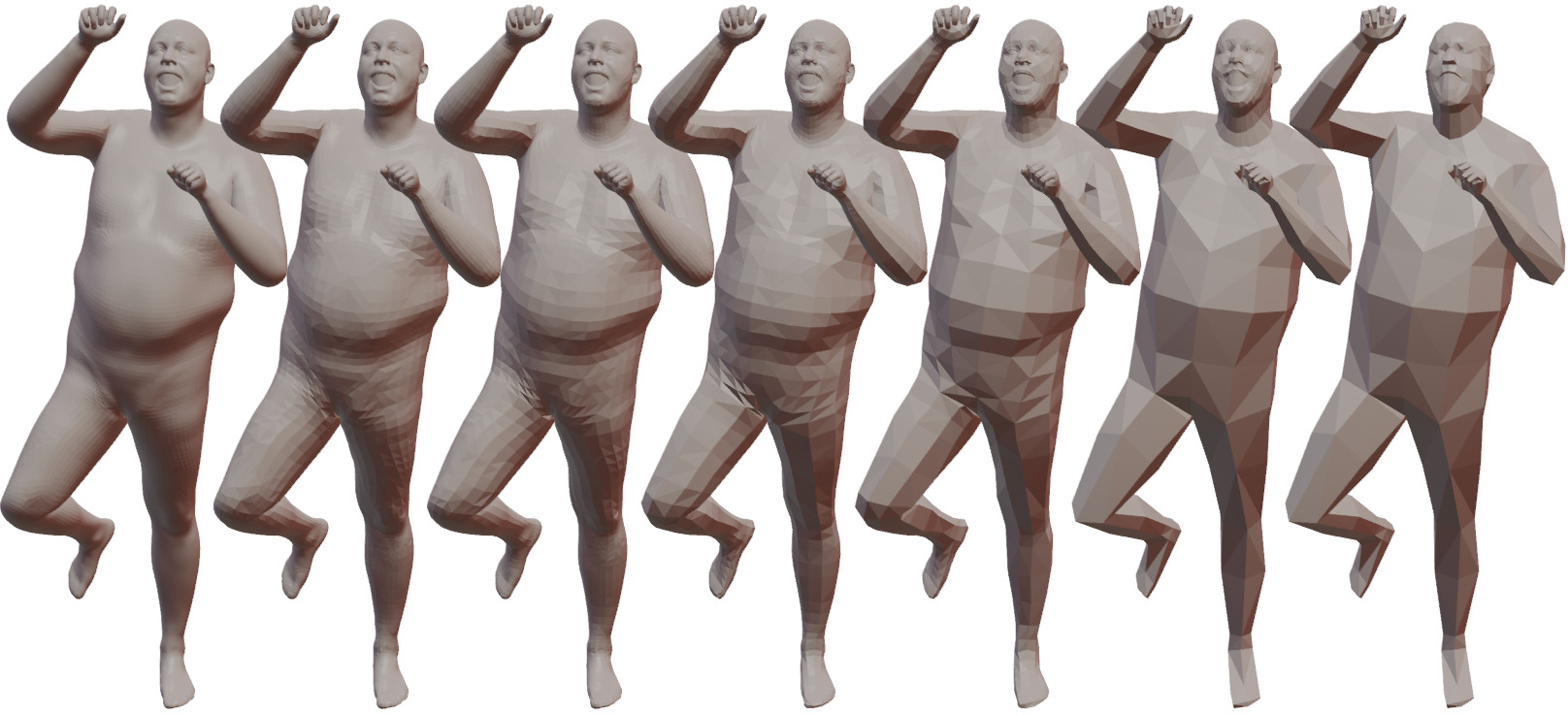
Figure 1: MHR provides precise, decoupled control of skeletal and surface attributes at different LODs.
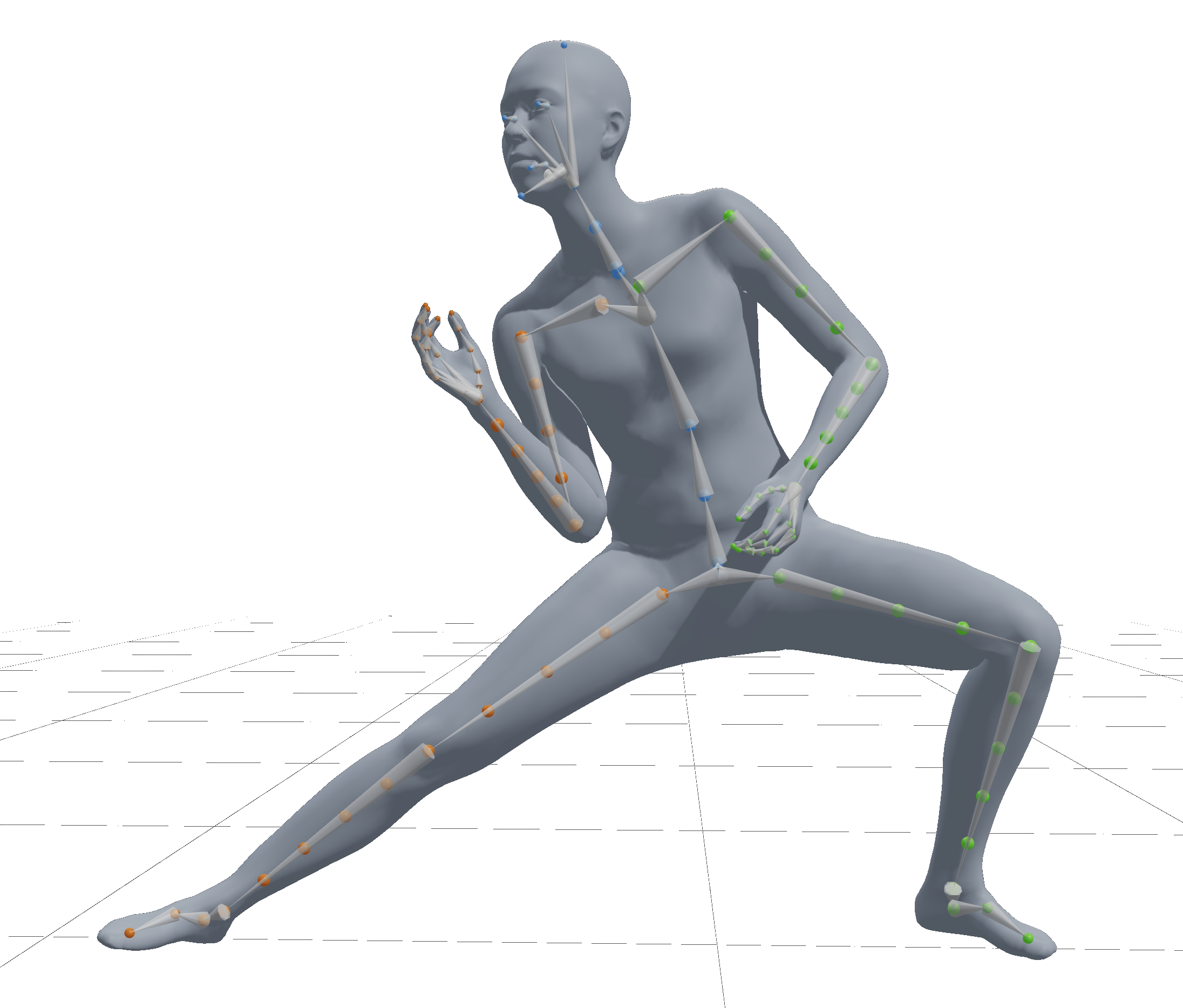
Figure 2: MHR Skeleton: $127$ joints with compact parameterization supporting complex hierarchies.
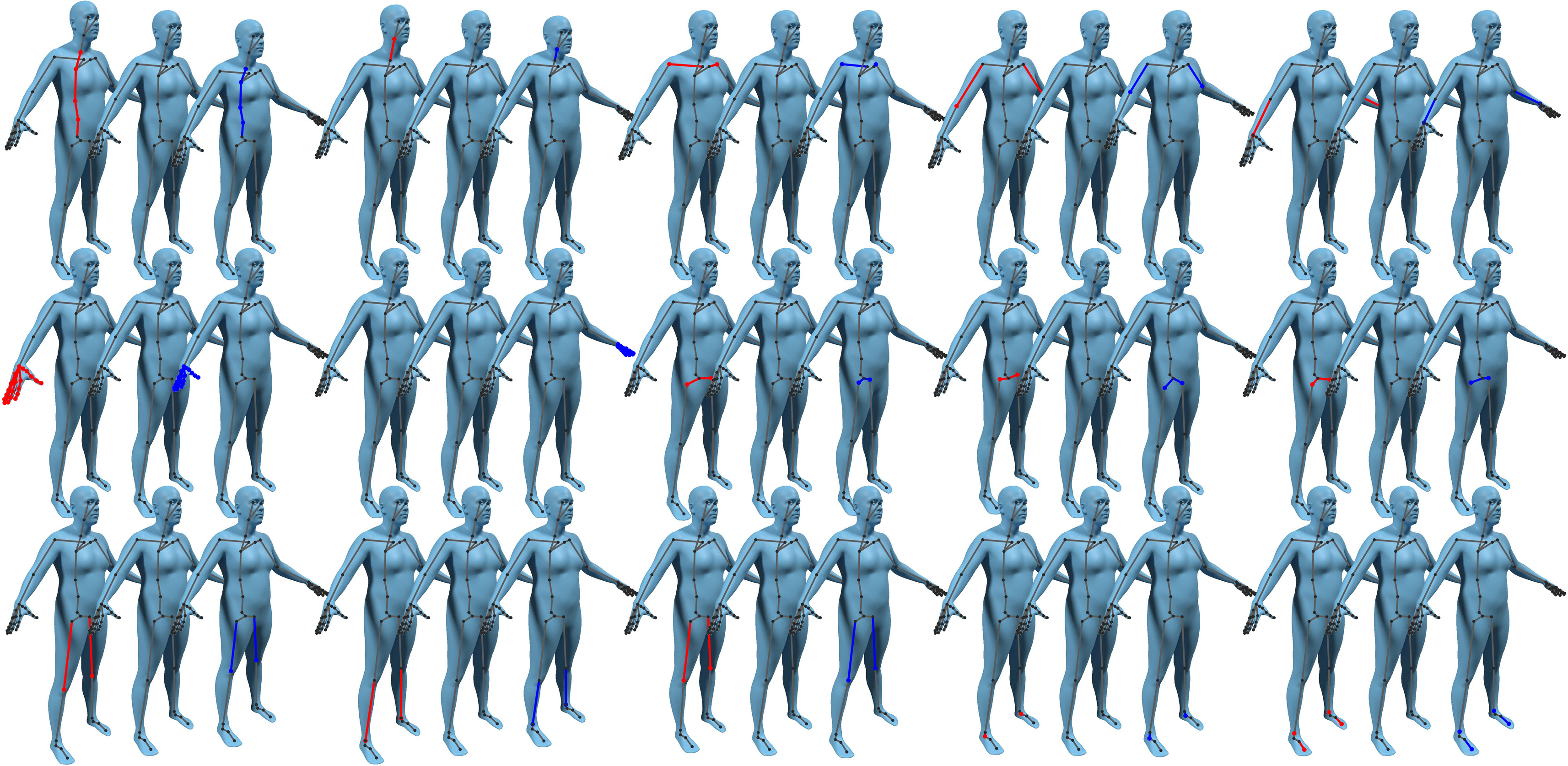
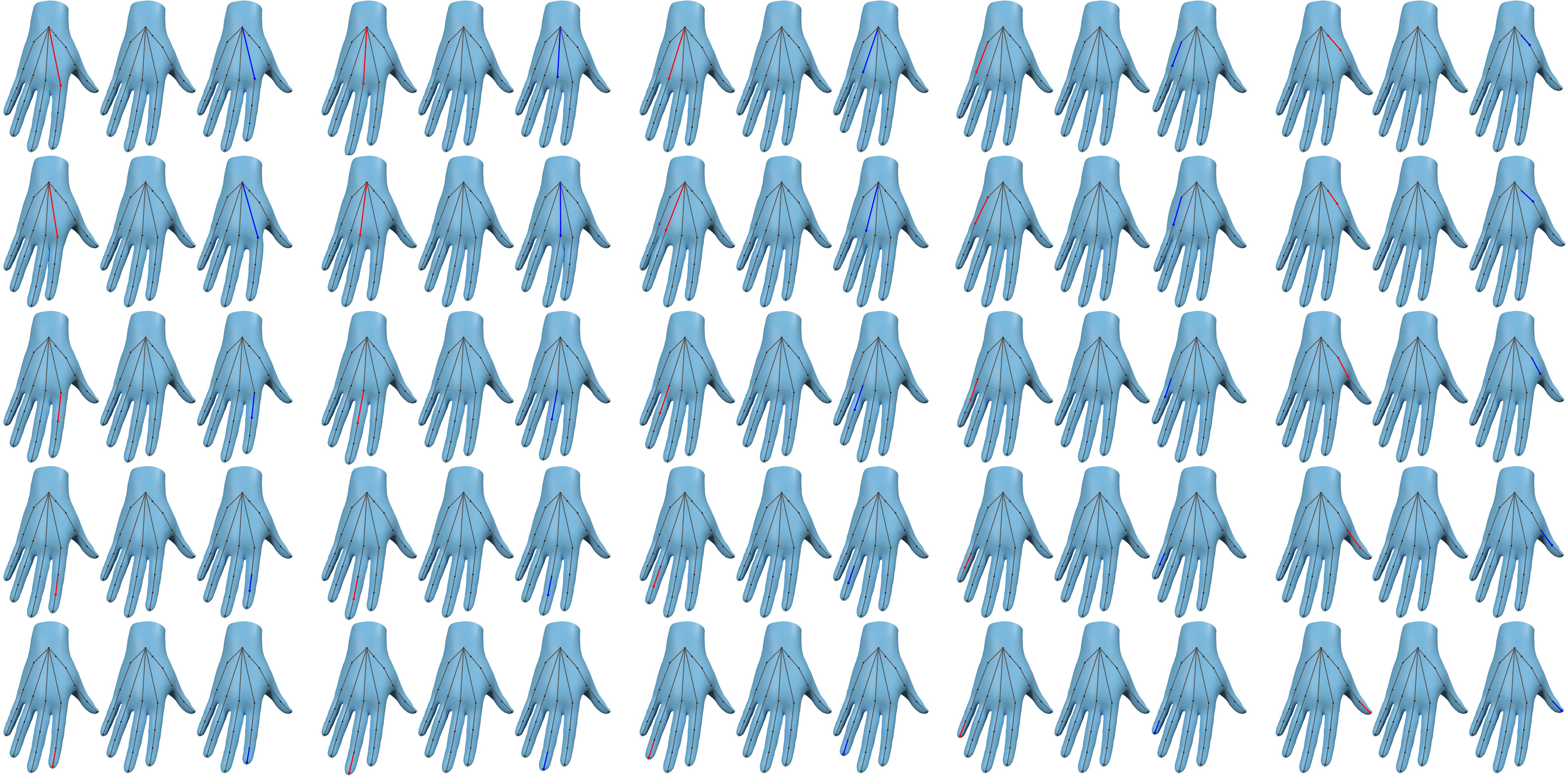
Figure 3: Full body transformations demonstrate independent control of limb lengths and isotropic scaling for extremities.
Artist workflow compatibility is prioritized: pose skinning weights are manually designed to ensure locality and structure over data-optimized weights, enabling seamless integration into production rigs.
Expression and Identity Spaces
MHR leverages a sparse, semantic blendshape set for facial expressions, sculpted according to the Facial Action Coding System (FACS), rectifying issues of pose-expression entanglement and providing artist-intuitive controls. The $72$ expression blendshapes eradicate spurious correlations (e.g., blink-pose coupling), streamlining synthetic data generation and animation pipelines.
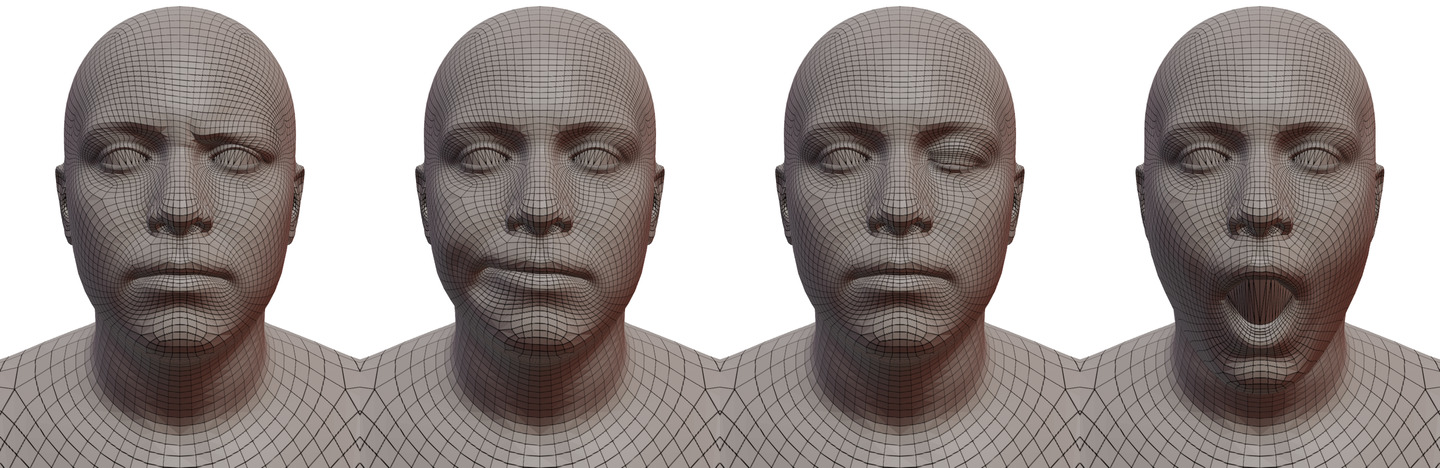
Figure 4: Example of four fully activated, semantic MHR facial expressions illustrating isolatable FACS units.
The identity space is partitioned into separate PCA bases for body, head, and hands, constrained by soft masks (Figure 5). This segmentation empowers differential control and conditioning, facilitates leveraging disparate high-quality datasets, and yields smooth transitions at identity-part interfaces.
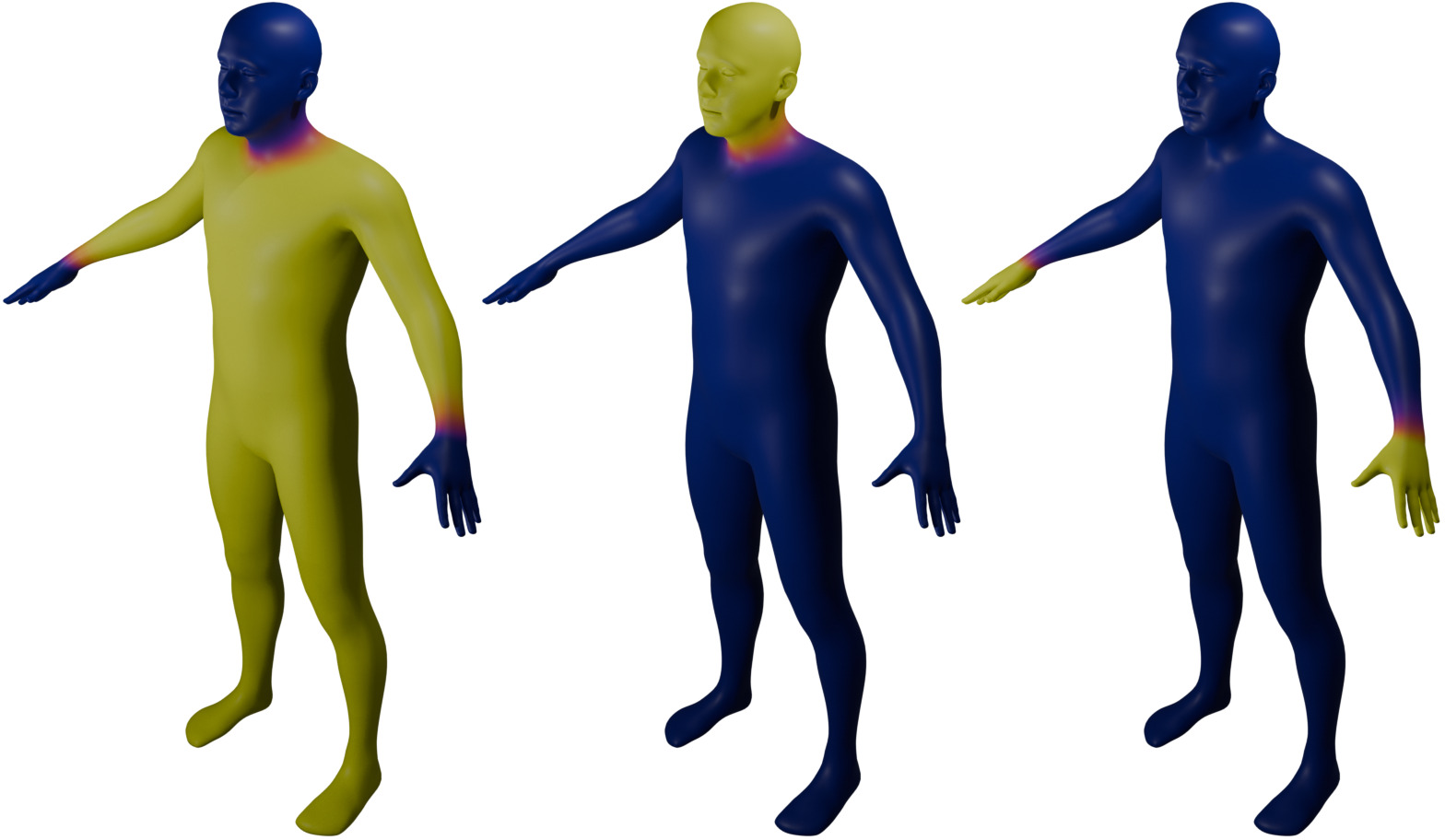
Figure 5: Partitioned body, head, and hand masks for construction of disjoint identity spaces.
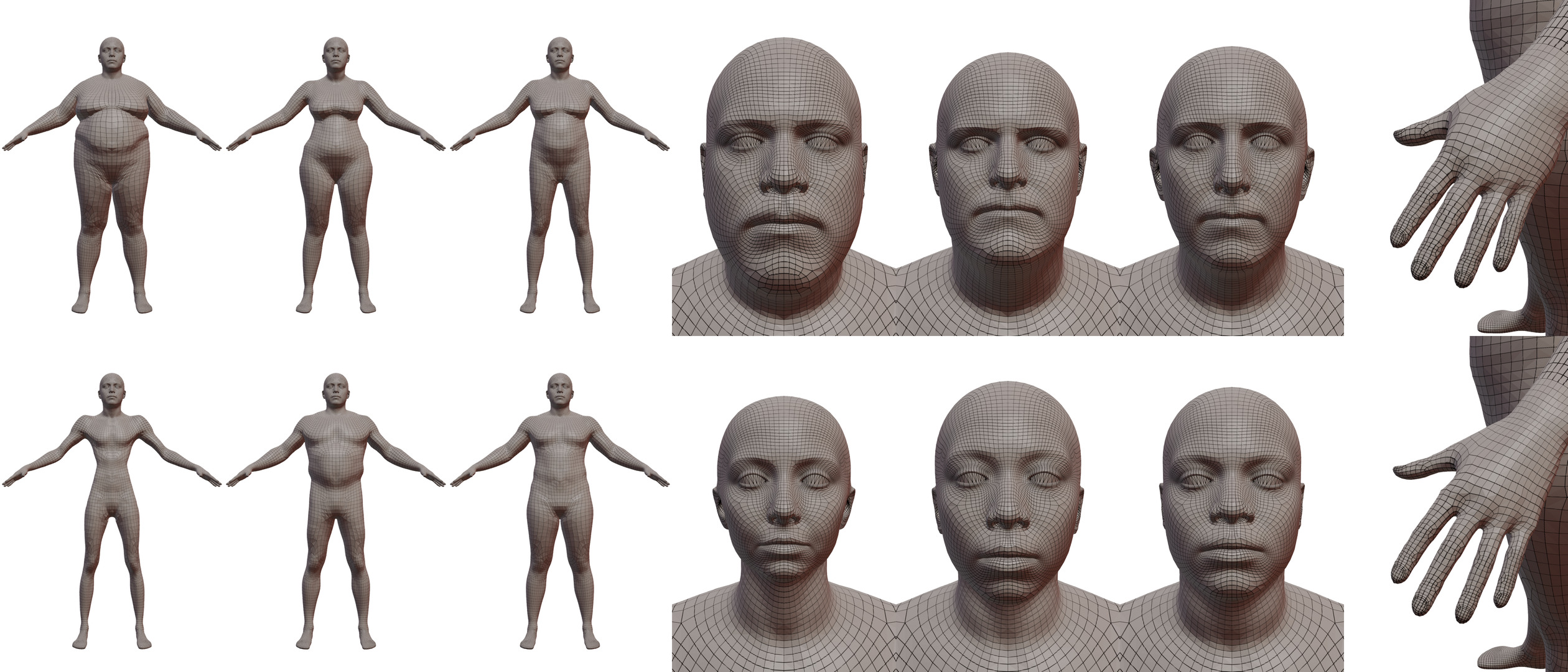
Figure 6: Variations in body, face, and hand components (±3 standard deviations) from the mean shape, demonstrating the expressivity of MHR's identity bases.
Pose Corrective System
MHR reconstructs pose correctives via joint-centric, sparse, non-linear operations. Each joint’s corrective is modeled by a lightweight MLP over its and its neighbors’ 6D rotation deviations, multiplied by geodesically localized masks. An L1 penalty enforces sparsity, constraining corrective influence to physiological localities.
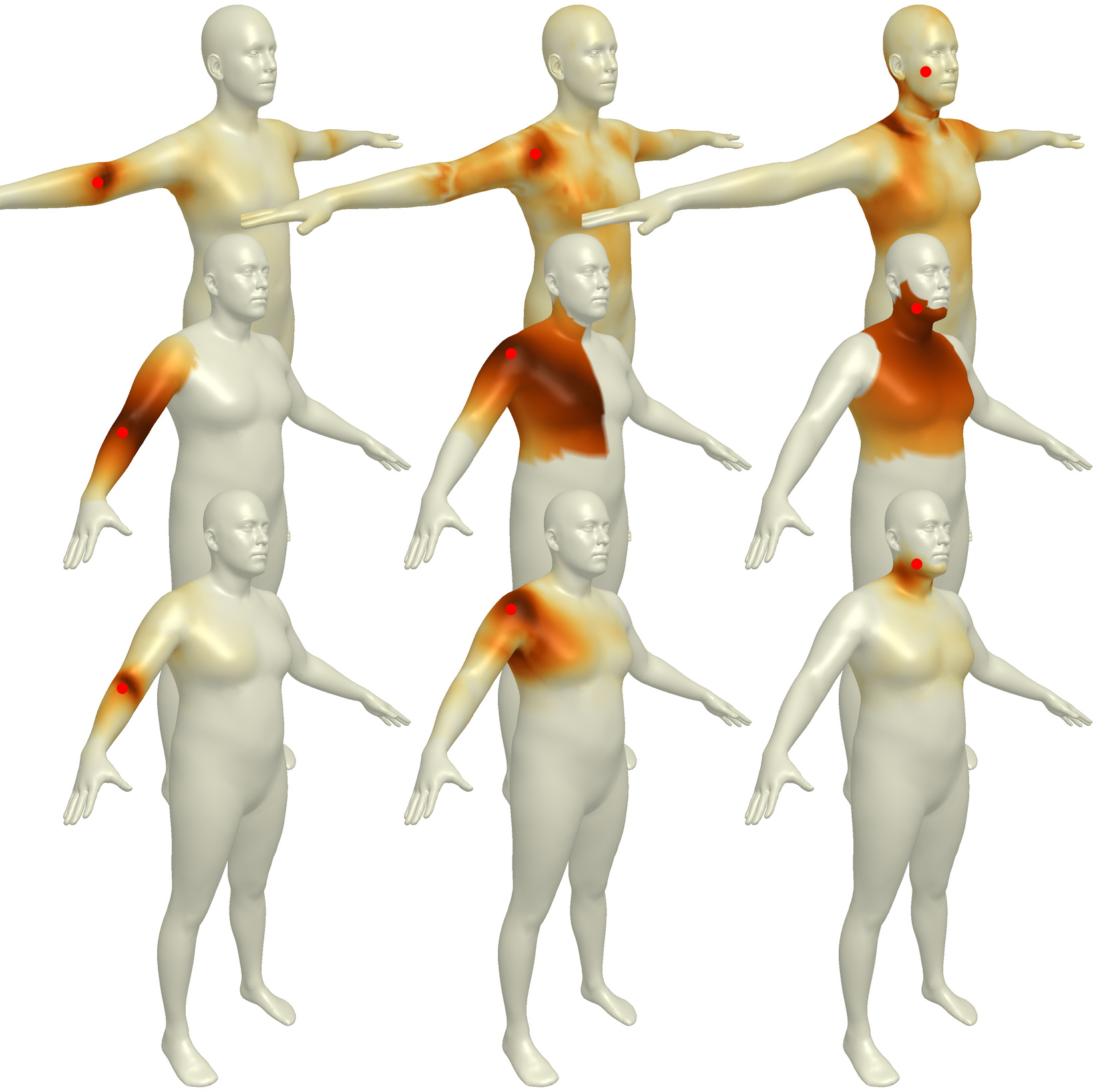
Figure 7: Evolution of pose corrective activations: (row 1) SMPL-X baseline, (row 2) geodesic initialization, (row 3) sparse concentration post-training.
This design yields anatomically plausible deformation, circumventing “candy wrapper” artifacts and enabling independent corrective blending per joint, particularly advantageous for highly articulated regions.
Quantitative and Qualitative Evaluation
MHR is benchmarked on 3DBodyTex with $200$ subjects over two poses. Using scan-vertex and keypoint fitting with Adam, MHR is compared against SMPL and SMPL-X across varying numbers of components, with face, hand, and hair masked out for reliability.
MHR achieves lower surface fitting error with fewer blendshape components, underscoring improved generalization and succinct representation capacity, particularly at joint extremities and complex surface regions.
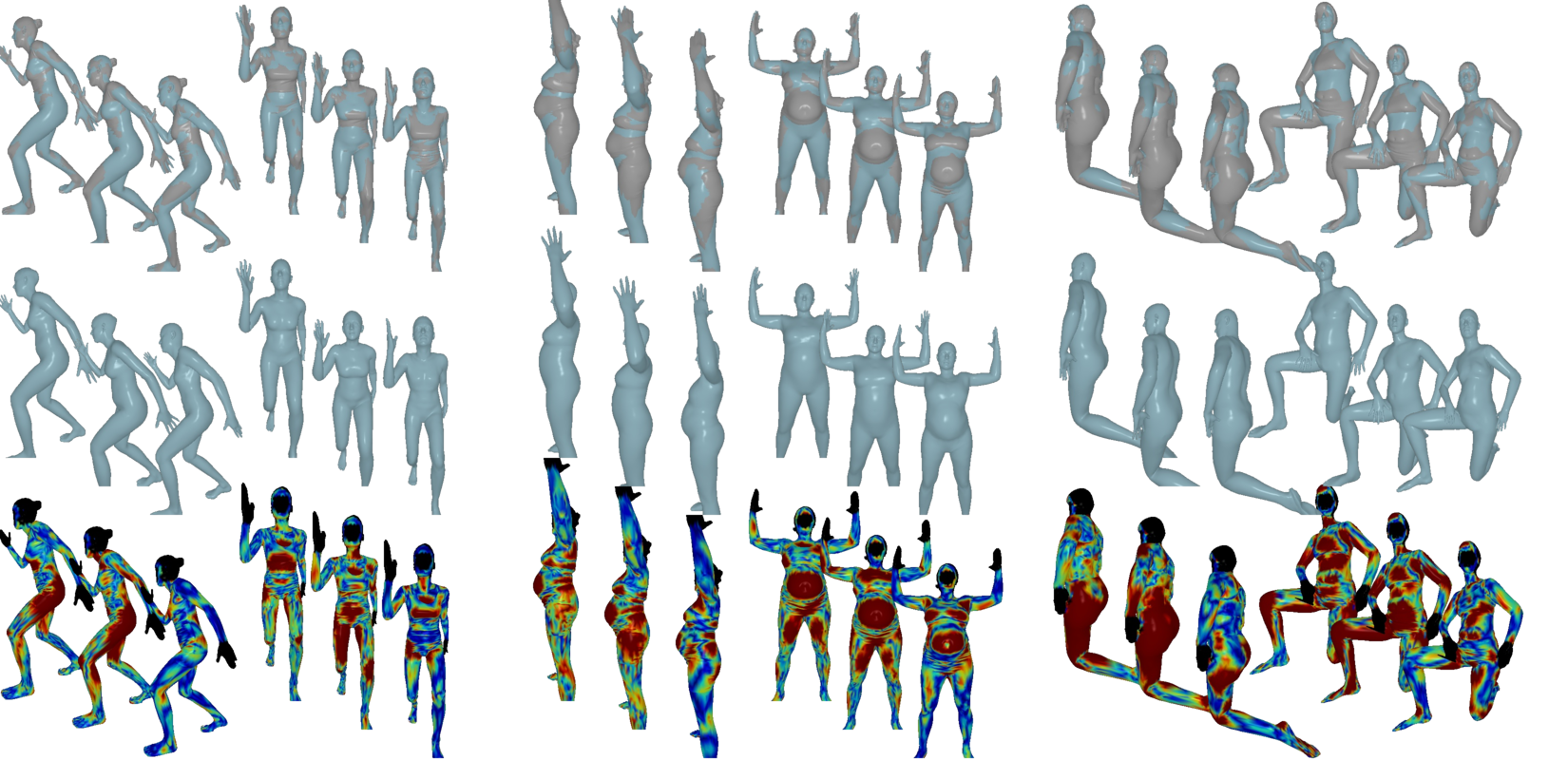
Figure 8: Qualitative results on 3DBodyTex dataset: overlapping scan-model fits, pure model output, and error heatmaps for SMPL, SMPL-X, and MHR.
Implications and Prospects
MHR’s architecture formalizes a modular, artist-amenable standard for digital human rigs, decoupling skeletal, soft-tissue, and facial semantics at multiple LODs. This framework offers robust compatibility for AR/VR pipelines, graphics and animation, and machine learning systems requiring precise control or semantic labeling. Its capacity for multi-resolution deployment, real-time optimization, and compliance with commercial licensing expands practical utility in both research and production environments.
The independent blending of identity, pose, and expression—coupled with sparse, anatomically localized correctives—paves the way for future expansion: incorporating explicit eye and mouth geometry, conditioning pose correctives on body shape, integrating cloth simulation, soft-tissue dynamics, and extension to stylized or non-human morphologies. Furthermore, the open-source release via Momentum library and PyTorch integration broadens accessibility for downstream applications.
Conclusion
MHR represents a substantive advancement in parametric human modeling, converging the decoupled skeleton/shape principle with artist-centric blendshape protocols and modular pose correctives. The resultant rig delivers precise, expressive control suitable for rigorous animation, immersive vision, and AR/VR scenarios, and lays the foundation for further integration with AI-driven generative pipelines and real-time rendering architectures.
Reference: "MHR: Momentum Human Rig" (2511.15586)