- The paper presents a novel approach using federated learning and Gramian Angular Field transformation to achieve 95.18% ECG classification accuracy while protecting patient data.
- The methodology transforms 1D ECG signals into 2D images, enabling efficient CNN-based feature extraction across heterogeneous IoT devices.
- Experimental results using the MIT-BIH Arrhythmia dataset confirm improved training efficiency and robustness against non-IID data in decentralized deployments.
Federated Learning with Gramian Angular Fields for Privacy-Preserving ECG Classification on Heterogeneous IoT Devices
Introduction
This paper addresses the challenge of privacy-preserving electrocardiogram (ECG) classification in Internet of Things (IoT)-enabled healthcare environments using Federated Learning (FL). The proposed solution involves transforming 1D ECG signals into 2D Gramian Angular Field (GAF) images, facilitating feature extraction via Convolutional Neural Networks (CNNs) while ensuring that sensitive data remains localized to the device, thereby preserving patient privacy across heterogeneous IoT systems.
Methodology
Federated Learning Framework
The framework employs a federated learning setup consisting of a server and multiple clients, including a resource-constrained Raspberry Pi, a laptop, and a server (Figure 1). The system enables decentralized model training by distributing the global model to clients, who then perform local updates. These updates are subsequently aggregated by the server to refine the global model, facilitating efficient distributed learning despite the computational diversity among clients.
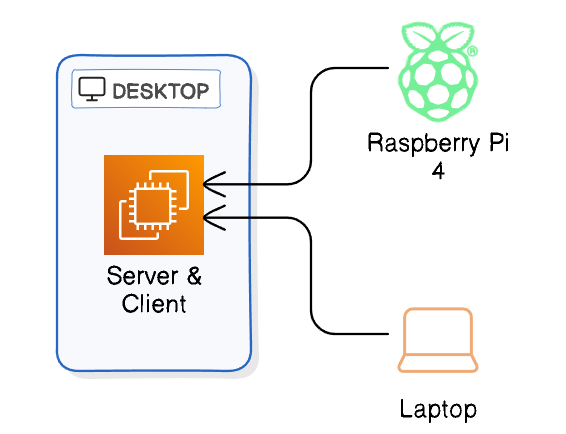
Figure 1: Proposed Federated Learning Framework.
The GAF transformation method converts 1D ECG signals into 2D images by capturing temporal dynamics as spatial correlations (Figure 2). This transformation allows CNNs to better exploit spatial features inherent in ECG signals, yielding improved classification performance. The GAF-imaged ECG data can leverage deep learning models' strong feature extraction capabilities, essential for accurate cardiac anomaly detection.
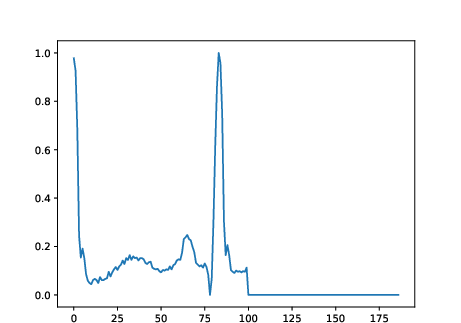
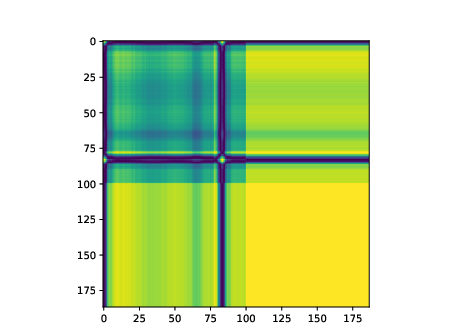
Figure 2: Example of transforming a 1D ECG signal (of a sample) to a 2D GAF image: (a) 1D vector, and (b) ECG 2D GAF image.
Model Architecture
The architecture utilizes a 2D CNN designed for effectively extracting features from the GAF-transformed ECG images. The network incorporates several convolutional layers with pooling operations, culminating in fully connected and softmax layers for classification. This model, although computationally lightweight, maintains high accuracy, making it suitable for deployment across the spectrum of device capabilities, from high-performance servers to low-power IoT devices like the Raspberry Pi.
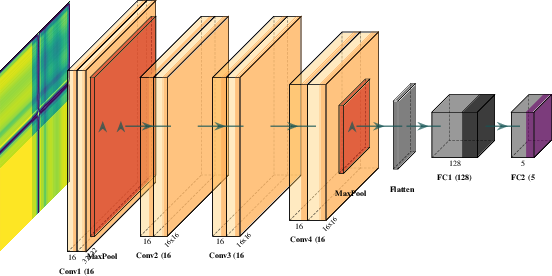
Figure 3: Architecture Diagram for the proposed CNN model.
Experimental Setup
Evaluation was conducted using the MIT-BIH Arrhythmia dataset, partitioning data amongst clients to simulate real-world IoT healthcare environments. The heterogeneous setup included devices varying in computational capacity and energy efficiency. The experimental framework aimed to measure not only classification accuracy but also communication overhead and resource utilization, key parameters for real-world applicability.
Results and Discussion
Results demonstrated that the federated learning framework with GAF-transformed ECG signals achieved a high classification accuracy of 95.18% in a multi-client setup, significantly outperforming a single-client baseline. The distribution of the training workload across multiple devices improved overall training efficiency, with reduced total computation time compared to a centralized approach. Despite the increased communication overhead in the federated setup, the performance gains validate the approach's efficacy for IoT-based healthcare systems.
Additionally, the results underscore the feasibility of high-accuracy ECG signal classification even on low-power devices, supporting scalable edge-based deployments. The study confirms the potential of GAF as an effective feature representation method for distributed healthcare analytics, facilitating secure and efficient ECG analysis.
Conclusion
This paper proposes a robust federated learning framework for ECG classification using GAF transformations, safeguarding data privacy and enhancing diagnostic accuracy across heterogeneous devices. The findings underscore the viability of integrating spatial feature extraction via GAF with decentralized learning for scalable IoT healthcare systems. Future work will focus on optimizing communication and computational efficiency further, exploring adaptive model compression and client-specific updates to enhance model robustness to non-IID data distributions while expanding this approach to broader healthcare applications.