- The paper presents the discovery and characterization of AT2022kak, a rapidly evolving Population II dwarf nova candidate with a >3.3 mag rise in one night.
- It employs high-cadence multi-filter photometry and time-resolved spectroscopy to capture the transient’s fast outburst rise and decline.
- The observations yield key parameters, including t2 fade rates of ~1.16–1.28 days and an orbital period of 1.4±0.2 hr, informing accretion disk models.
AT2022kak: An Extremely Fast Fading Population II Dwarf Nova Candidate
Introduction
The study presents the discovery and multi-epoch characterization of AT2022kak, a rapidly evolving optical transient identified by the KiloNova and Transients Program (KNTraP). The transient exhibits a large-amplitude, blue outburst with a rise of >3.3 magnitudes in a single night and a rapid return to quiescence over the subsequent two nights. The event is notable for its extremely fast photometric evolution, faintness, and its inferred location in the Galactic thick disk, suggesting a Population II dwarf nova (DN) system. The work combines high-cadence photometry, multi-wavelength follow-up, and time-resolved spectroscopy, including the rare capture of the system during the rise of a recurrent outburst.
Observational Campaign and Data
Photometric Discovery and Follow-up
AT2022kak was discovered in February 2022 by KNTraP using DECam on the Blanco 4m telescope, with nightly cadence and multi-filter coverage to m∼25.4. The transient was identified post-facto due to its non-compliance with kilonova search criteria, resulting in a delay in rapid follow-up. The light curve shows a sharp rise and fall, with the outburst peaking at mg=19.32 and mi=19.81, and fading by over three magnitudes within two nights.
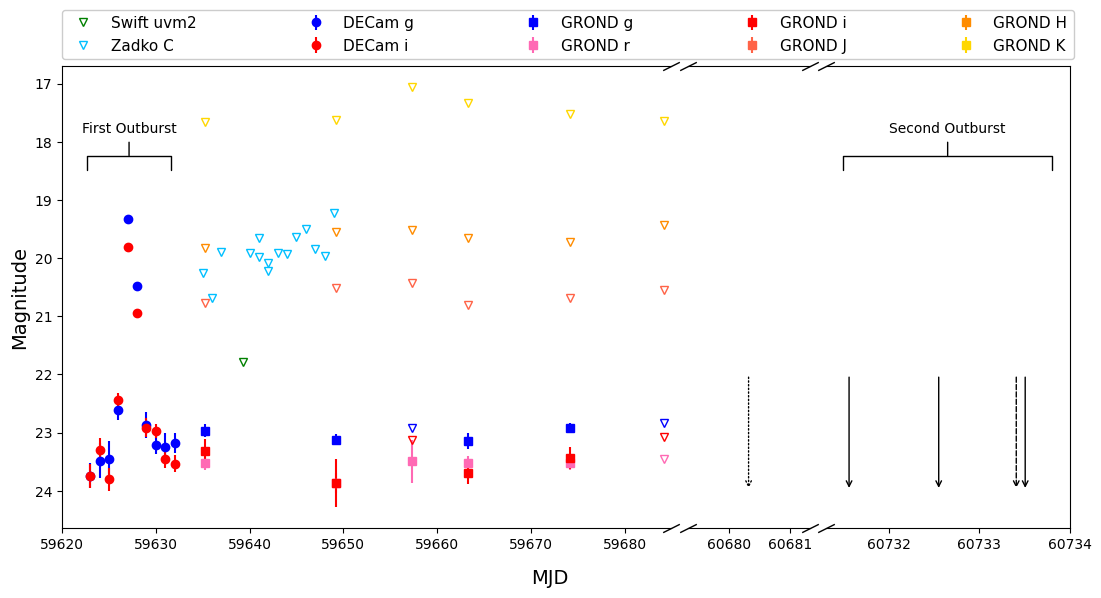
Figure 1: The optical-infrared light curve and spectroscopic follow up of AT2022kak over ∼3 years, showing the rapid outburst and subsequent quiescence, with epochs of spectroscopic observations indicated.
The initial outburst is further illustrated by difference imaging, confirming the transient nature and spatial localization of the event.
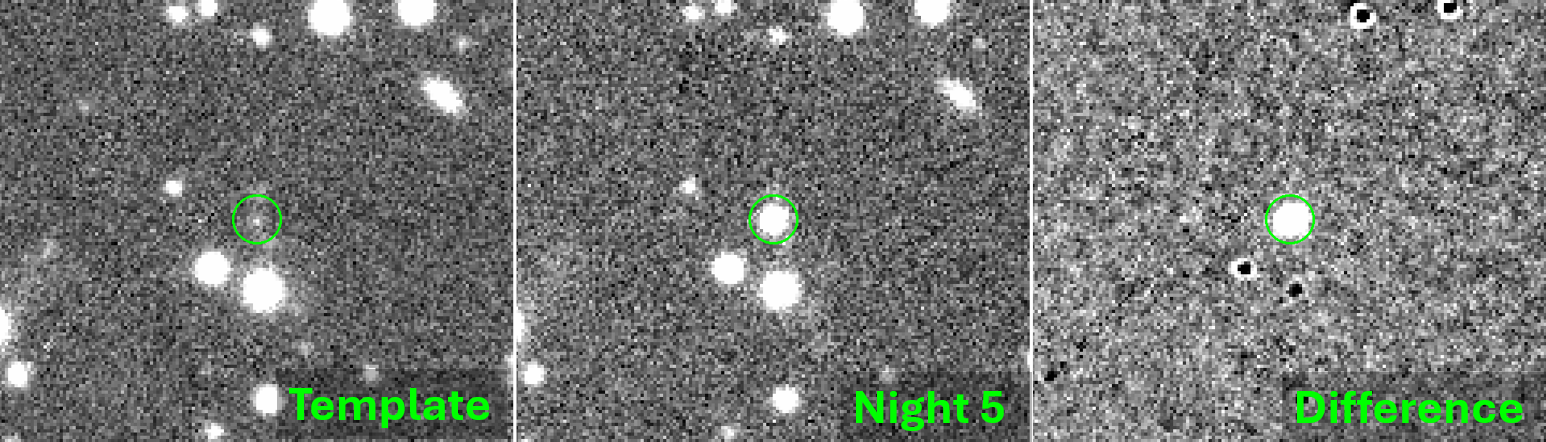
Figure 2: KNTraP images of AT2022kak during its initial outburst, showing the template, science, and difference images.
Subsequent follow-up with GROND, Zadko, and Swift provided multi-band photometry and upper limits in the optical, NIR, and high-energy bands. No recurrent outbursts were detected in the two months following the initial event, and the persistent source remained at m∼23 in g, r, and i bands.
Spectroscopic Observations
A unique aspect of this study is the acquisition of time-resolved spectroscopy during a serendipitous second outburst in 2025. Spectra were obtained with KOALA on the AAT and RSS on SALT, capturing the rise, peak, and decline phases of the outburst. The spectral series enables direct observation of the evolution of accretion signatures in a DN outburst.
Photometric and Color Evolution
The light curve of the 2022 outburst was modeled with a fourth-order polynomial, yielding a rise rate of Δmg=3.4 mag day−1 and a fade rate of $2.12$ mag day−1. The t2 parameter (time to fade by two magnitudes) is $1.16$ days in g and $1.28$ days in i, placing AT2022kak among the fastest fading DNe known.
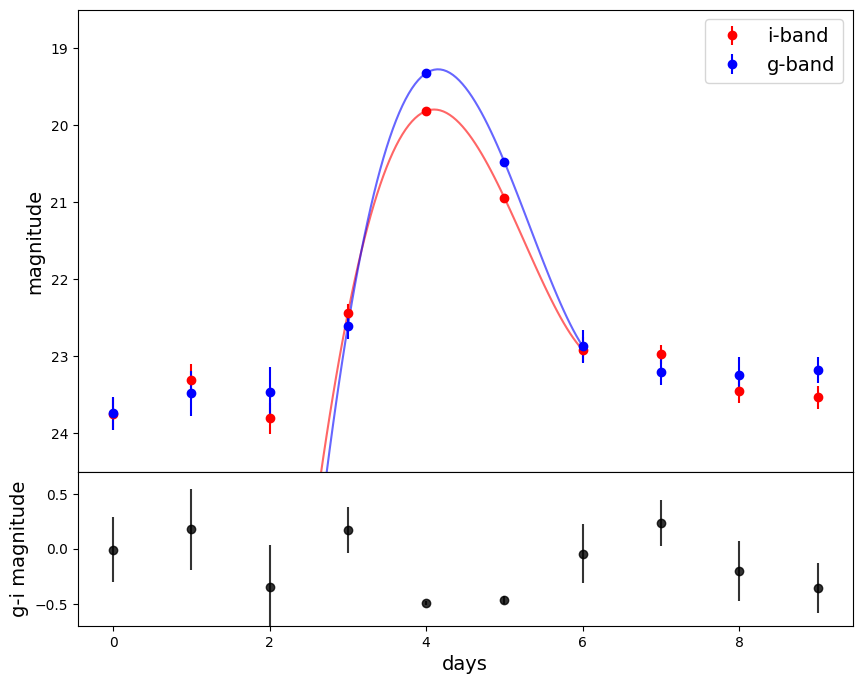
Figure 3: Light curve of the February 2022 outburst with polynomial fits and (g-i) color evolution, showing a blue peak and reddening during decline.
The (g-i) color at peak is −0.49, consistent with DN outbursts dominated by hot, optically thick accretion disks.
Comparison with the ASAS-SN DN population demonstrates that AT2022kak is an extreme outlier in both amplitude and t2, in the top <0.3% of fastest DNe.
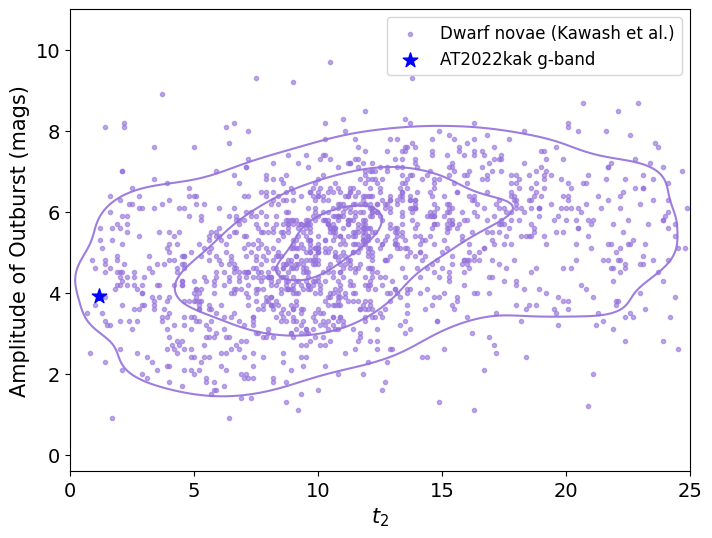
Figure 4: Distribution of dwarf novae amplitude versus t2; AT2022kak is marked as a star, highlighting its extreme rapidity and faintness.
Spectroscopic Evolution
The KOALA and SALT spectra during the 2025 outburst display Balmer absorption features (notably Hβ, Hγ, Hδ) and weak or absent He II λ4686, consistent with DN outburst states. The time-resolved KOALA data reveal the spectral evolution through the outburst, with the onset of the outburst apparent by the fourth exposure.
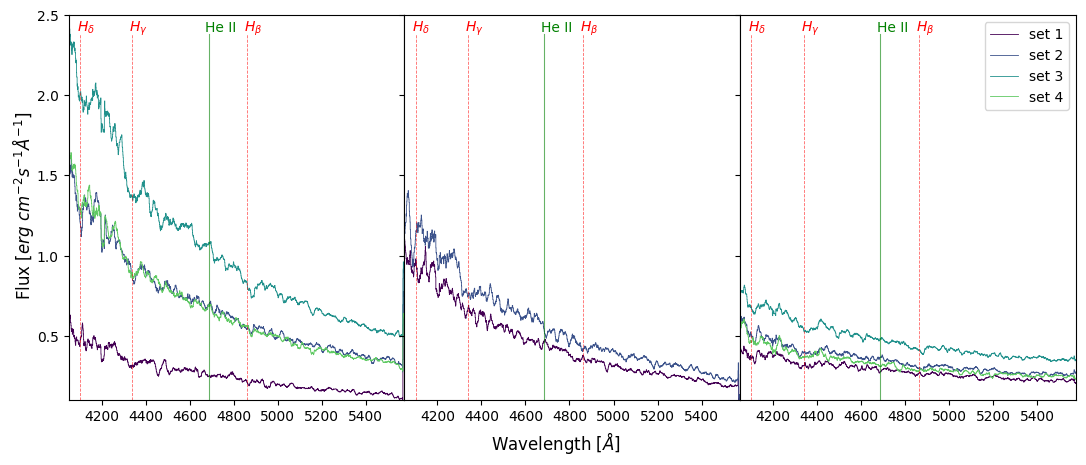
Figure 5: KOALA spectra showing nightly evolution and zoomed-in views of Balmer and He II features during the outburst.
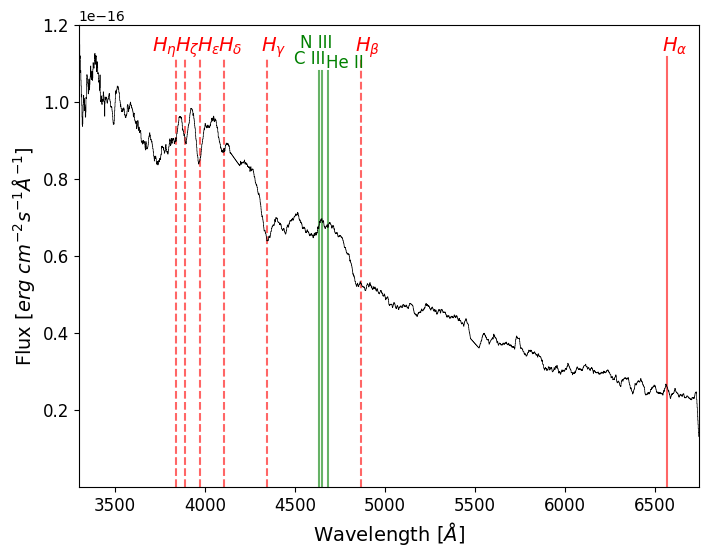
Figure 6: SALT spectrum during the 2025 outburst, with DN absorption and emission features labeled.
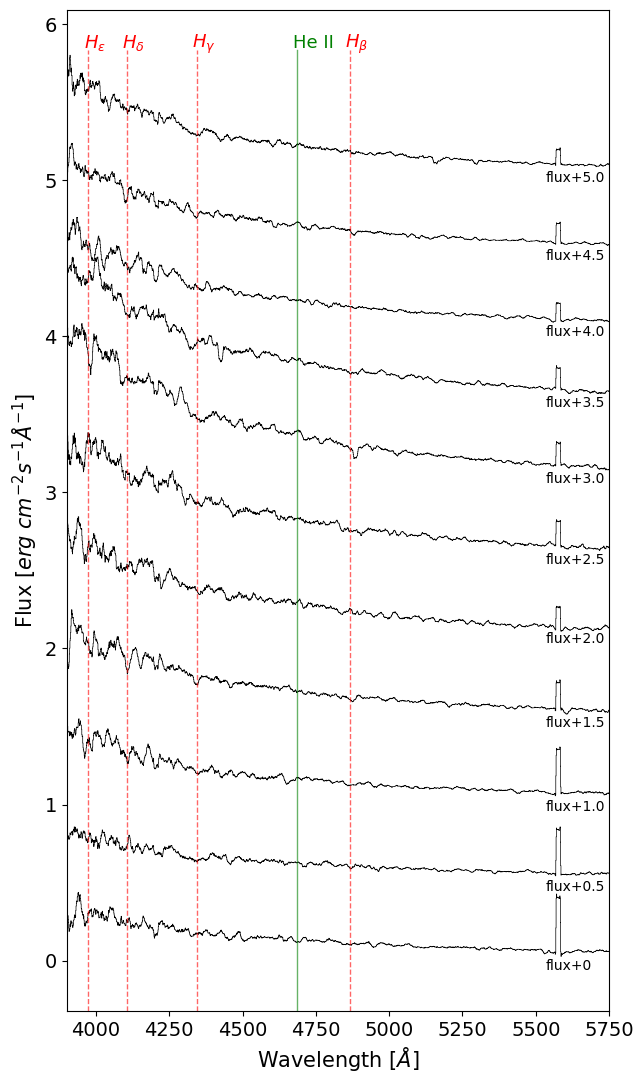
Figure 7: Spectral evolution of AT2022kak on 25 February 2025, showing the onset and progression of the outburst in 20-minute exposures.
The spectral morphology and evolution are consistent with the disk-instability model for DNe, with the outburst likely triggered in the inner disk ("inside-out" outburst), as inferred from the symmetric light curve.
Physical Properties and Galactic Context
The outburst duration and empirical relations yield an estimated orbital period of 1.4±0.2 hr. Using established calibrations, the system's distance is 6.2±0.5 kpc from the Sun and 1.9±0.2 kpc above the Galactic plane, placing it in the thick disk. The absolute magnitude at peak (MV=5.3±0.2) and the faint quiescent counterpart are consistent with a low-mass, short-period CV.
The location and period are consistent with theoretical expectations for Population II DNe, which are rare due to their faintness and high Galactic latitude. The only other well-characterized Galactic Population II DN candidate with photometric light curves is KSP-OT-201611a.
Spectral Energy Distribution and Archival Constraints
A coarse SED constructed from KNTraP, archival DECam, DELVE, and GROND photometry shows variability at the ∼1 mag level, likely reflecting intrinsic source variability and instrumental differences.
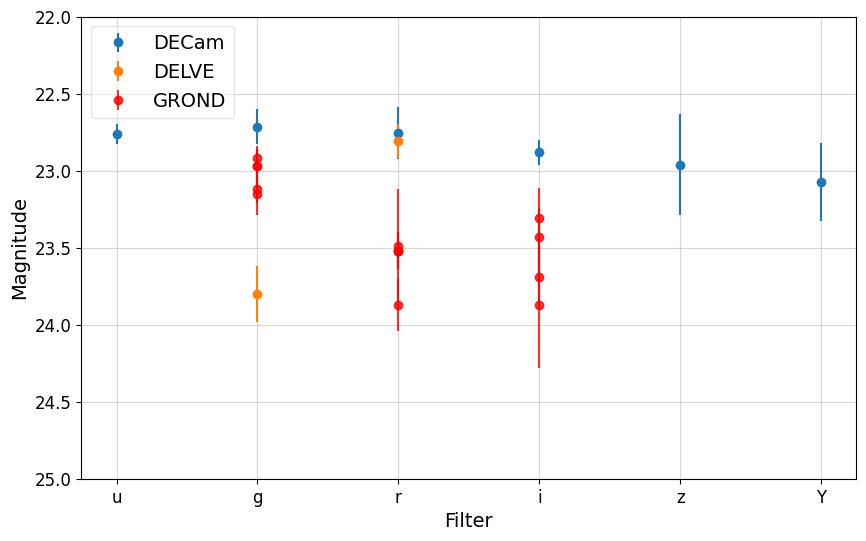
Figure 8: Coarse SED of AT2022kak from combined DECam, NOIRLab, DELVE, and GROND data.
Archival ATLAS forced photometry does not reveal credible prior outbursts, and no detections are found in TESS, SkyMapper, or ASAS-SN, consistent with the faintness and rapidity of the event.
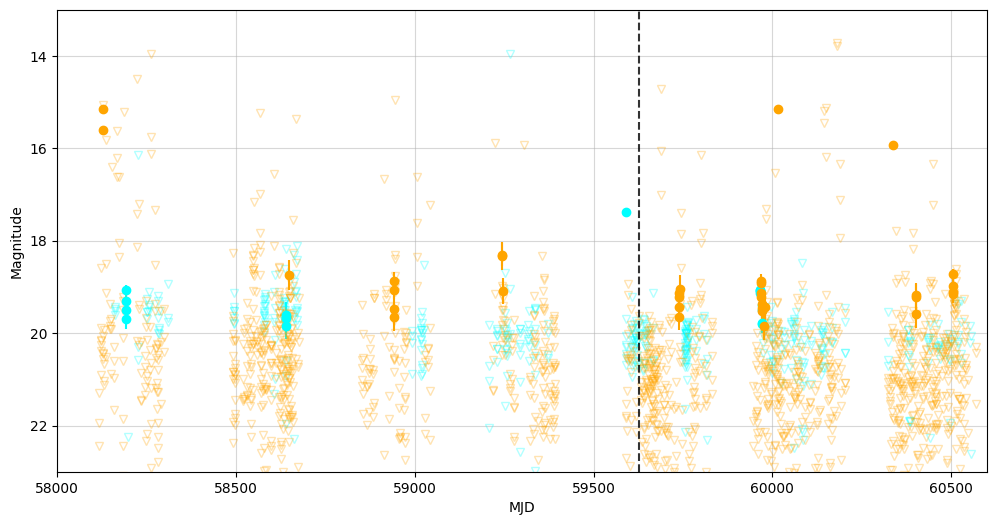
Figure 9: ATLAS forced photometry light curve at the location of AT2022kak, with the KNTraP burst epoch indicated.
Implications and Future Prospects
The identification of AT2022kak as an extremely fast, faint, and distant DN with thick disk kinematics has several implications:
- Population II DNe: The event adds to the sparse sample of Population II DNe, providing a rare opportunity to probe accretion physics in low-metallicity environments and test population synthesis models for CVs in the thick disk and halo.
- Accretion Disk Physics: The rapid timescales and spectral evolution constrain the disk instability model, particularly for systems with short orbital periods and low mass transfer rates.
- Survey Strategy: The detection demonstrates the necessity of deep, high-cadence surveys (e.g., KNTraP, Rubin LSST, Roman) for uncovering the faint and fast transient population. KNTraP's daily cadence is critical for capturing such rapid events, which would be missed by lower-cadence surveys.
- Spectroscopic Capture of Outburst Rise: The time-resolved spectroscopy during the rise phase is exceptionally rare for DNe and provides direct constraints on the physical conditions and evolution of the accretion disk during instability onset.
Conclusion
AT2022kak represents one of the fastest fading and faintest DNe observed, with t2 values of $1.16$ days (g) and $1.28$ days (i), and a location in the Galactic thick disk at 1.9±0.2 kpc above the plane. The system is a strong candidate for a Population II DN, with implications for the demographics and evolution of CVs in the Galaxy. The combination of high-cadence photometry and time-resolved spectroscopy, including the rare capture of the outburst rise, provides a comprehensive view of the event and sets a benchmark for future studies of faint, fast transients in the era of deep, wide-field time-domain surveys.