From Active to Battery-Free: Rydberg Atomic Quantum Receivers for Self-Sustained SWIPT-MIMO Networks
Published 17 Oct 2025 in eess.SP | (2510.15784v1)
Abstract: In this paper, we proposed a hybrid simultaneous wireless information and power transfer (SWIPT)-enabled multiple-input multiple-output (MIMO) architecture, where the base station (BS) uses a conventional RF transmitter for downlink transmission and a Rydberg atomic quantum receiver (RAQR) for receiving uplink signal from Internet of Things (IoT) devices. To fully exploit this integration, we jointly design the transmission scheme and the power-splitting strategy to maximize the sum rate, which leads to a non-convex problem. To address this challenge, we first derive closed-form lower bounds on the uplink achievable rates for maximum ratio combining (MRC) and zero-forcing (ZF), as well as on the downlink rate and harvested energy for maximum ratio transmission (MRT) and ZF precoding. Building upon these bounds, we propose an iterative algorithm relying on the best monomial approximation and geometric programming (GP) to solve the non-convex problem. Finally, simulations validate the tightness of our derived lower bounds and demonstrate the superiority of the proposed algorithm over benchmark schemes. Importantly, by integrating RAQR with SWIPT-enabled MIMO, the BS can reliably detect weak uplink signals from IoT devices powered only by harvested energy, enabling battery-free communication.
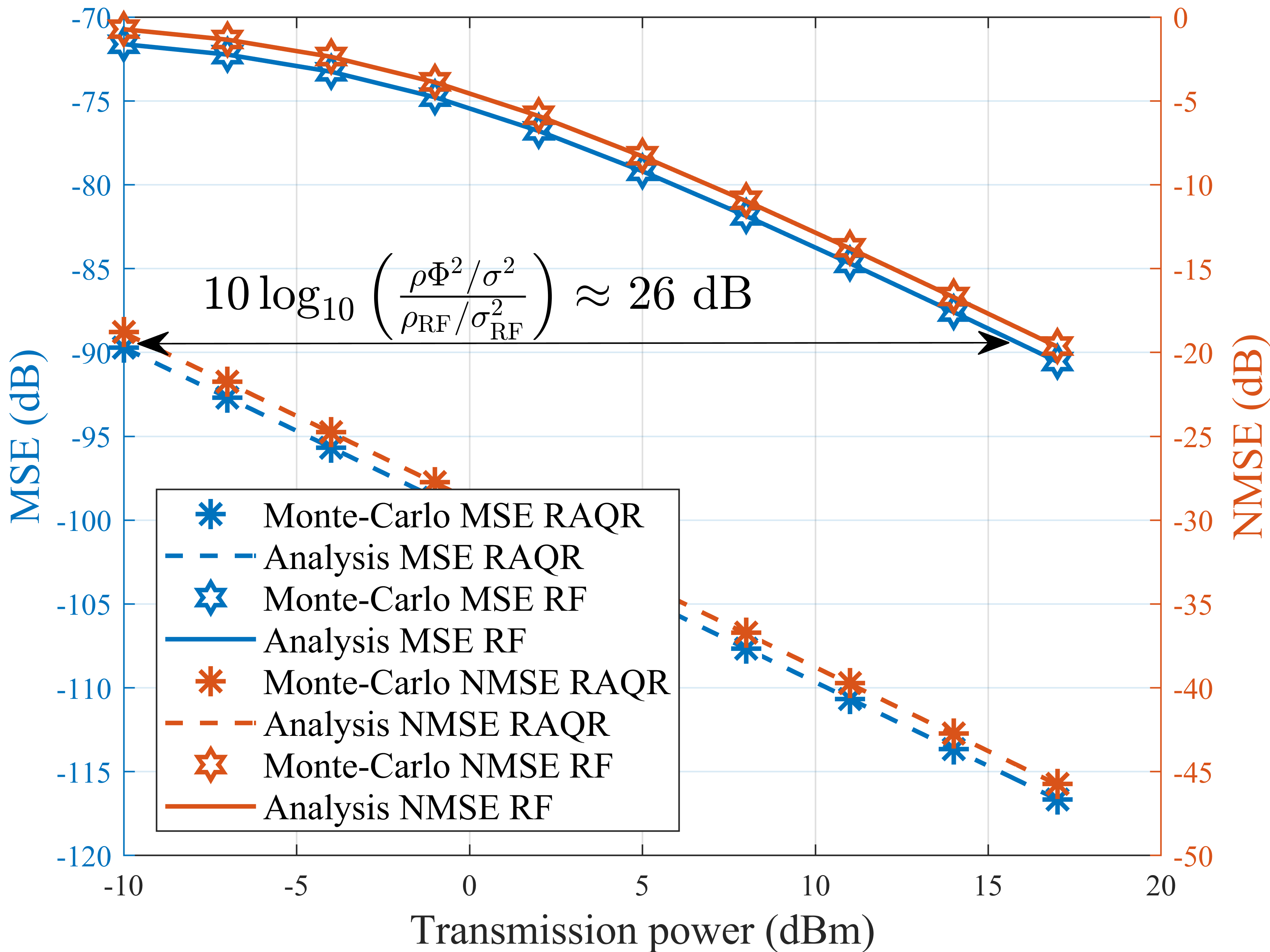
The paper demonstrates a 26 dB power gain in channel estimation accuracy using RAQRs over conventional RF MIMO systems.
It derives closed-form lower bounds for uplink/downlink rates and energy harvesting, employing geometric programming for joint optimization.
Simulations confirm that RAQRs enable battery-free operation with robust spectral efficiency, ideal for massive IoT deployments.
Rydberg Atomic Quantum Receivers for Self-Sustained SWIPT-MIMO Networks
Introduction and Motivation
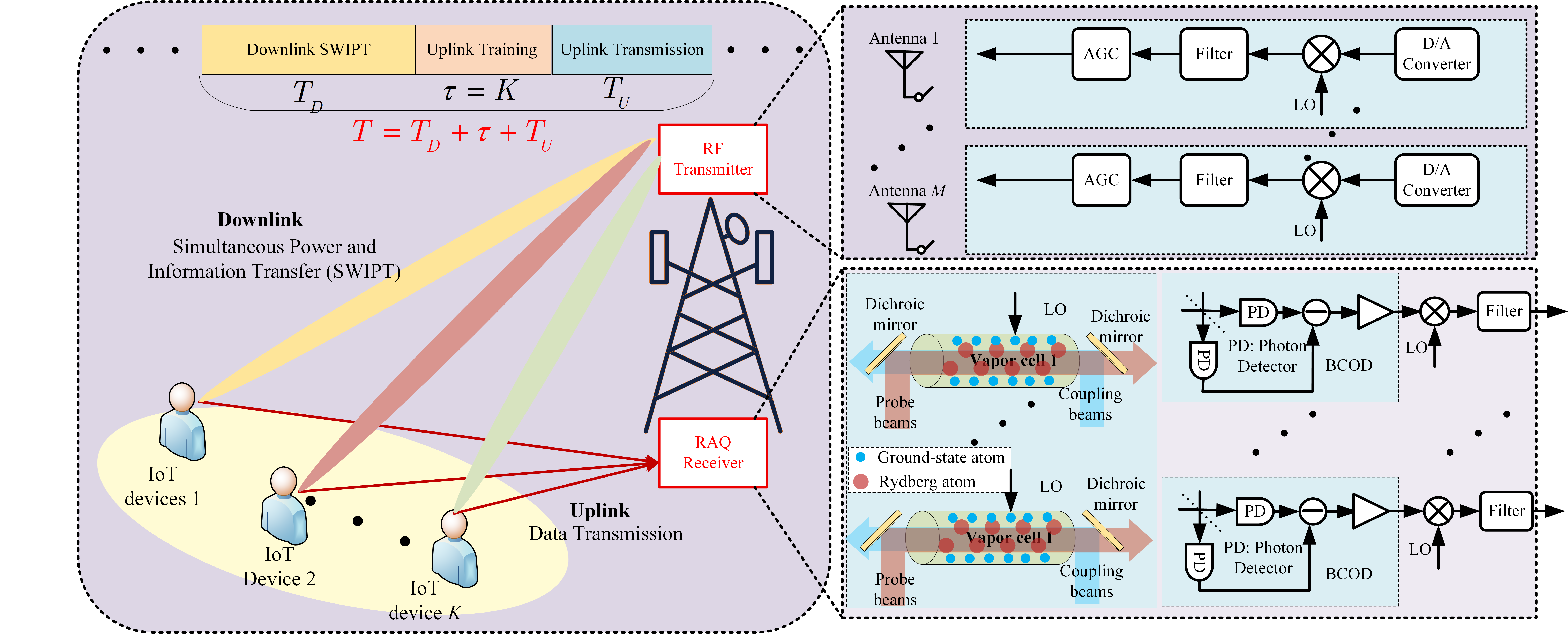
The paper presents a hybrid SWIPT-MIMO architecture integrating conventional RF transmitters with Rydberg Atomic Quantum Receivers (RAQRs) at the base station (BS), targeting battery-free operation for massive IoT deployments. The motivation stems from the impracticality of battery maintenance in large-scale or inaccessible IoT networks and the limitations of conventional SWIPT systems, where harvested energy is insufficient for reliable communication due to propagation losses. RAQRs, leveraging quantum phenomena such as electromagnetically induced transparency (EIT) and Autler-Townes splitting (ATS), offer ultra-high sensitivity and broadband tunability, enabling the detection of extremely weak RF signals and facilitating battery-free uplink communication.
Figure 1: SWIPT-enabled MIMO system with a hybrid architecture, where RF transmitter with M antennas sends the power and information to K IoT devices and RAQR with M atomic cells receive the signal from K IoT devices.
System Model and Channel Estimation
The proposed system comprises a BS equipped with M antennas for downlink SWIPT and M vapor cells for RAQR-based uplink reception. IoT devices harvest energy from the downlink and utilize it for uplink pilot and data transmission. The channel model incorporates quantum-specific parameters, notably the phase shift matrix Φ and effective gain ρ, which distinguish RAQRs from conventional RF receivers.
where pkp is the pilot power, τ is the pilot length, and βk is the large-scale fading coefficient. The analysis demonstrates that RAQRs enable reliable channel estimation even with severely limited pilot power, a regime where conventional RF MIMO fails due to high noise floors.
Figure 2: MSE under various pilot powers with M=100.
Achievable Rate and Energy Harvesting Analysis
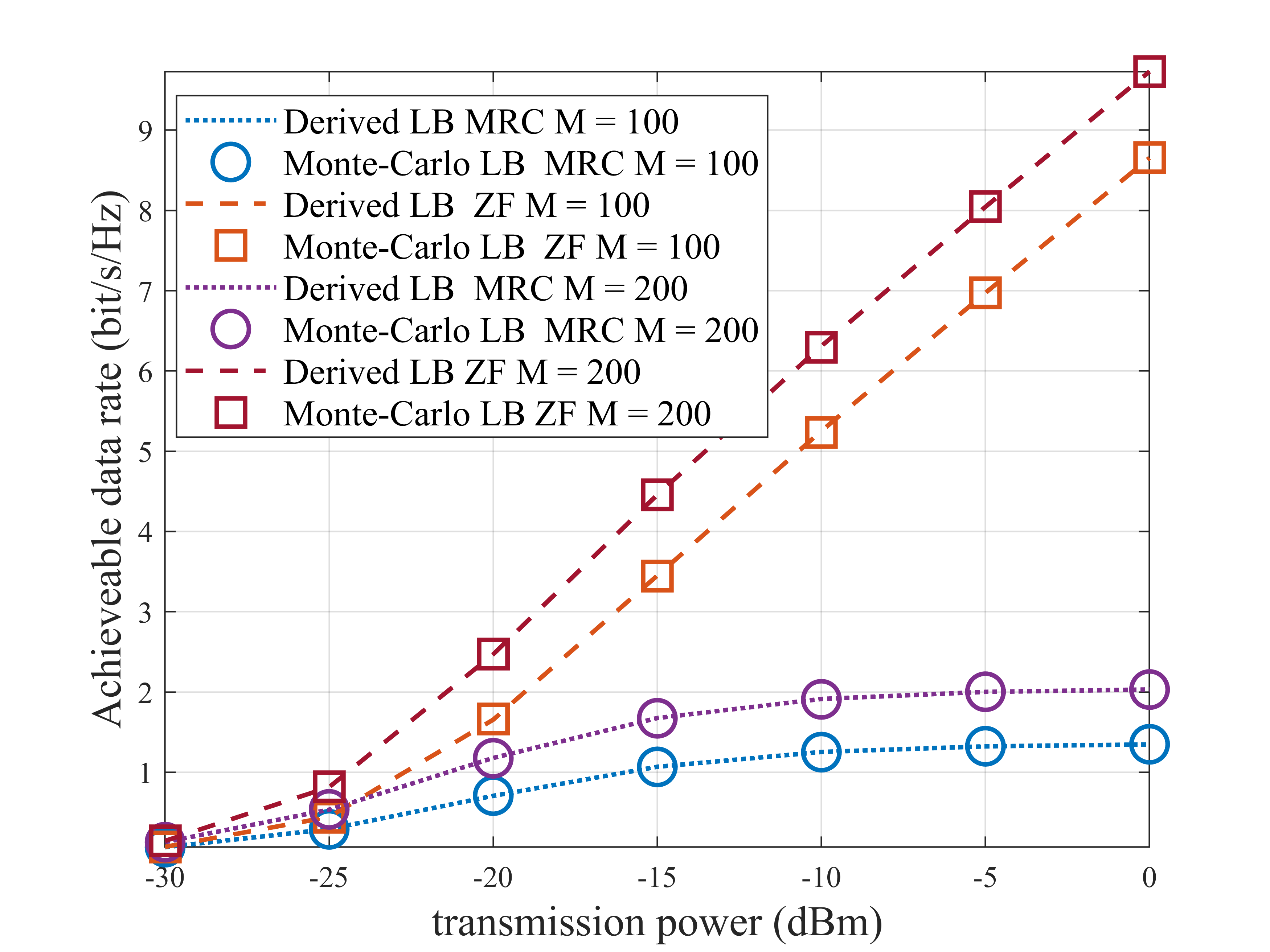
Closed-form lower bounds for uplink and downlink rates, as well as harvested energy, are derived for both MRC/MRT and ZF precoding/detection schemes. For uplink, the ergodic achievable rate lower bound for MRC is:
where pkd is the uplink data power and TU is the uplink block length.
The analysis reveals a "squaring effect" in the low-power regime, where the rate gain of RAQRs over RF receivers is proportional to ρ2∣Φ∣4/σ4, resulting in substantial performance improvements for battery-free devices.
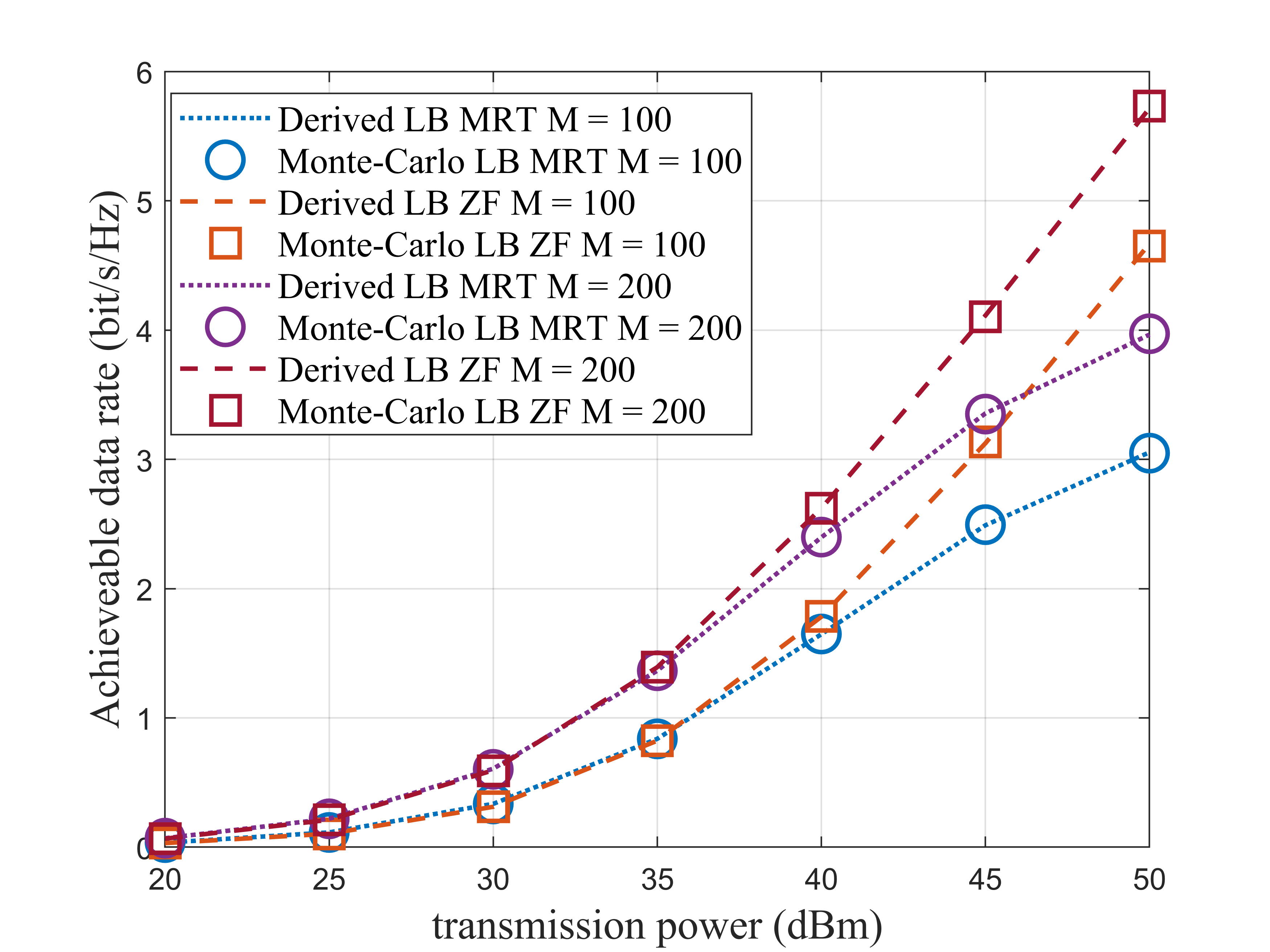
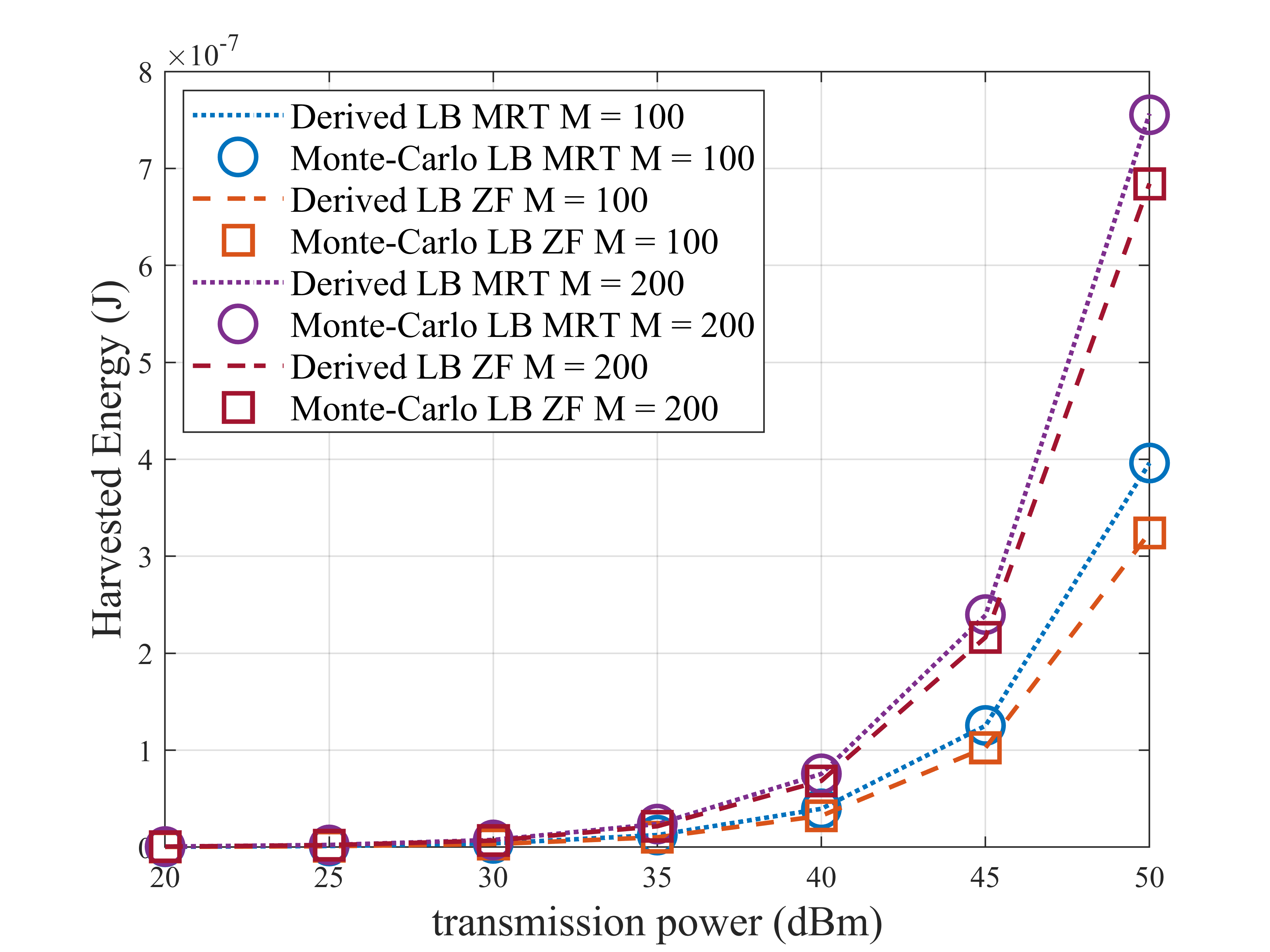
Figure 3: Derived lower bounds under various conditions.
For downlink SWIPT, the harvested energy lower bound for MRT is:
where αk is the power-splitting coefficient, pks is the SWIPT power, and ek is the channel estimation error.
Joint Uplink-Downlink Optimization
The sum-rate maximization problem is formulated under SWIPT and feasibility constraints, involving joint optimization of pilot/data/SWIPT powers, power-splitting coefficients, and block durations. The problem is non-convex due to the coupling between uplink pilot and payload powers, both constrained by harvested energy.
To address tractability, the authors employ best monomial approximations and geometric programming (GP), iteratively solving for locally optimal solutions. Auxiliary variables and block coordinate descent are used to decouple the optimization, and mixed-integer programming is applied for block duration allocation.
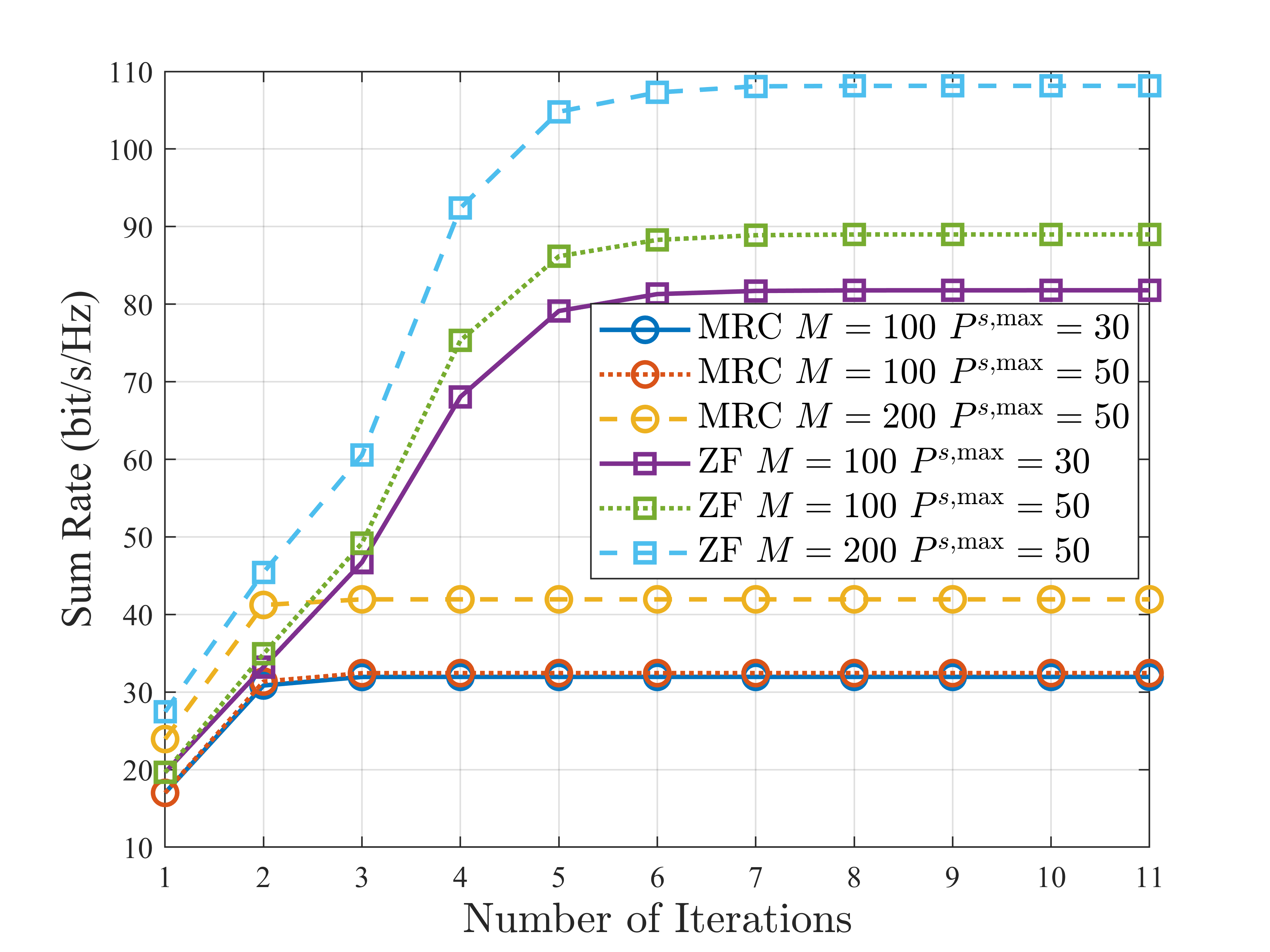
Figure 4: Convergence of proposed algorithm.
The algorithm is shown to converge rapidly (within 10 iterations) and is computationally efficient, with complexity dominated by the GP subproblems.
Simulation Results and Performance Evaluation
Monte Carlo simulations validate the tightness of the analytical lower bounds and demonstrate the superiority of the proposed RAQR-based architecture over conventional RF MIMO, especially in the low-power regime. Key findings include:
Channel Estimation: RAQRs achieve a 26 dB power gain in channel estimation accuracy over RF MIMO, enabling reliable operation with minimal pilot power.
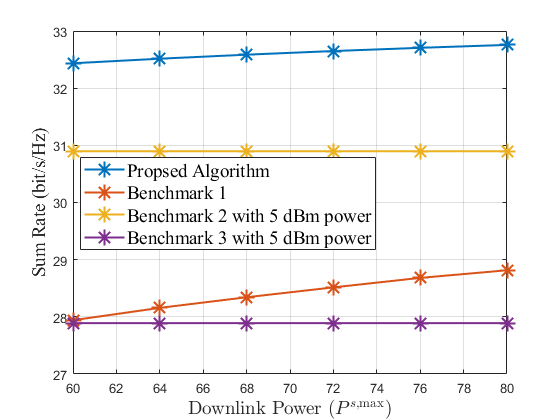
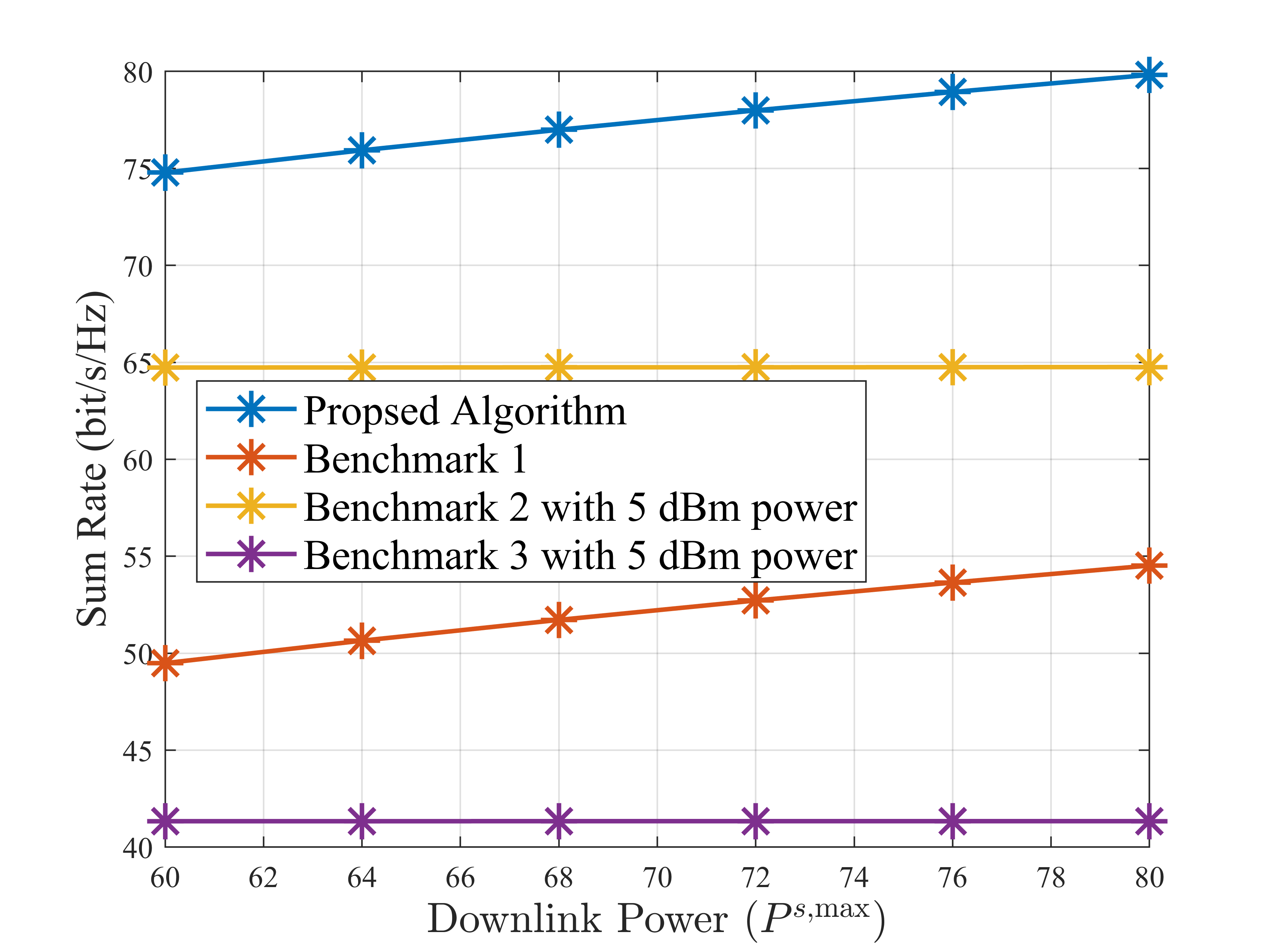
Sum Rate vs. Downlink Power: RAQR-based systems exhibit monotonic sum-rate improvement with increasing BS power, while RF MIMO saturates due to battery limitations.
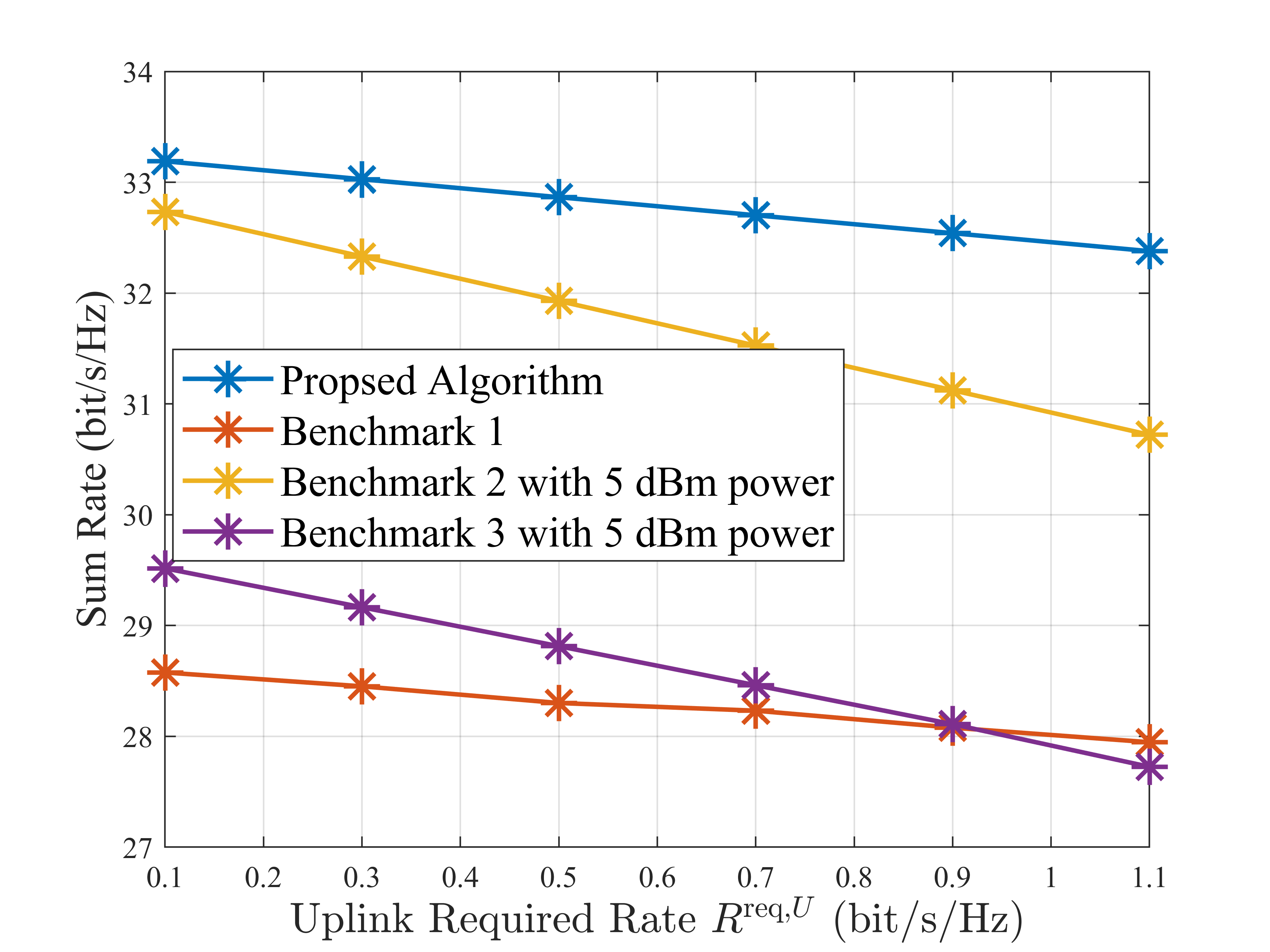
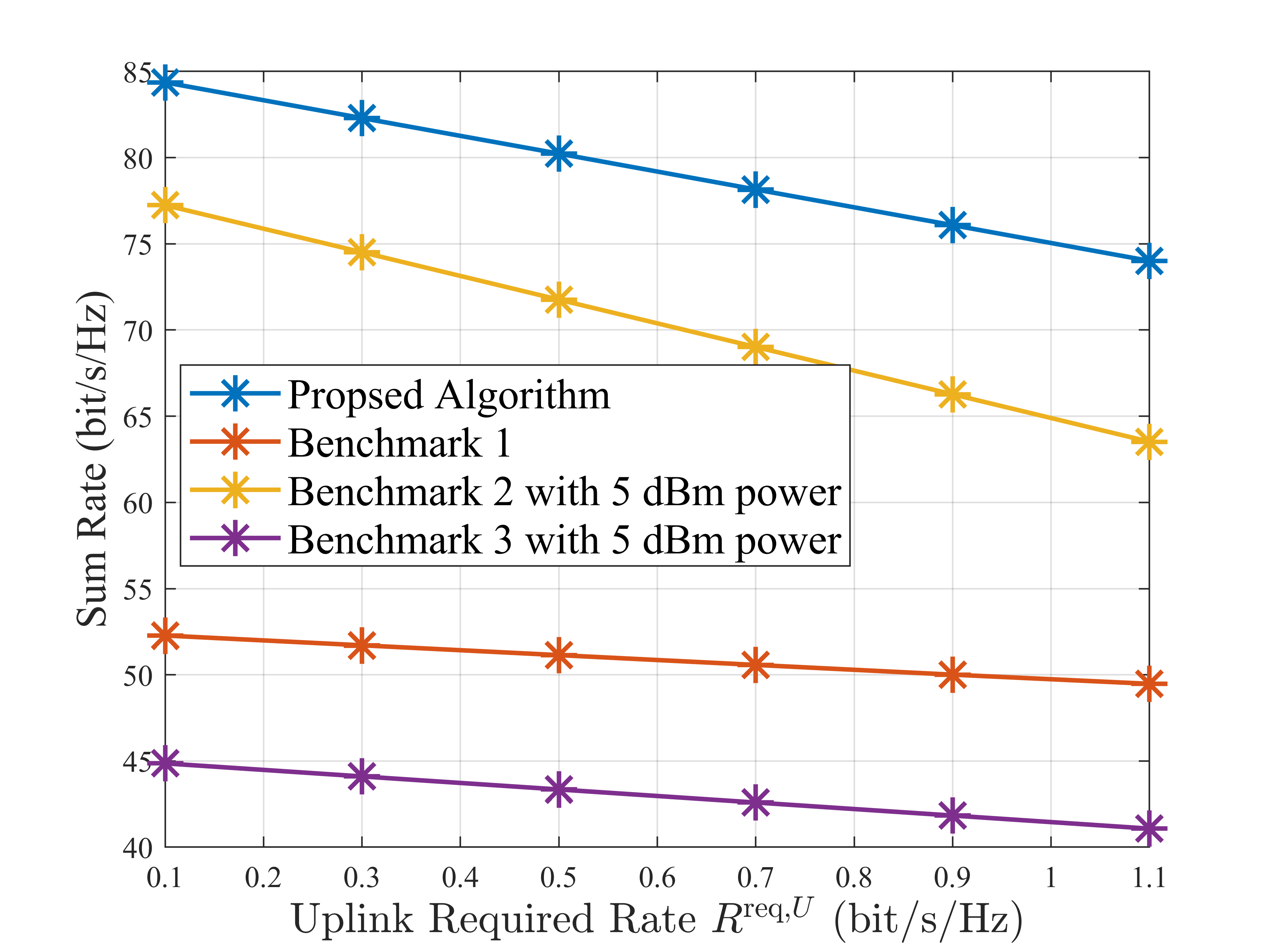
Sum Rate vs. Required Uplink Rate: RAQRs maintain stable communication using only harvested energy, whereas RF MIMO requires additional battery power to meet uplink rate constraints.
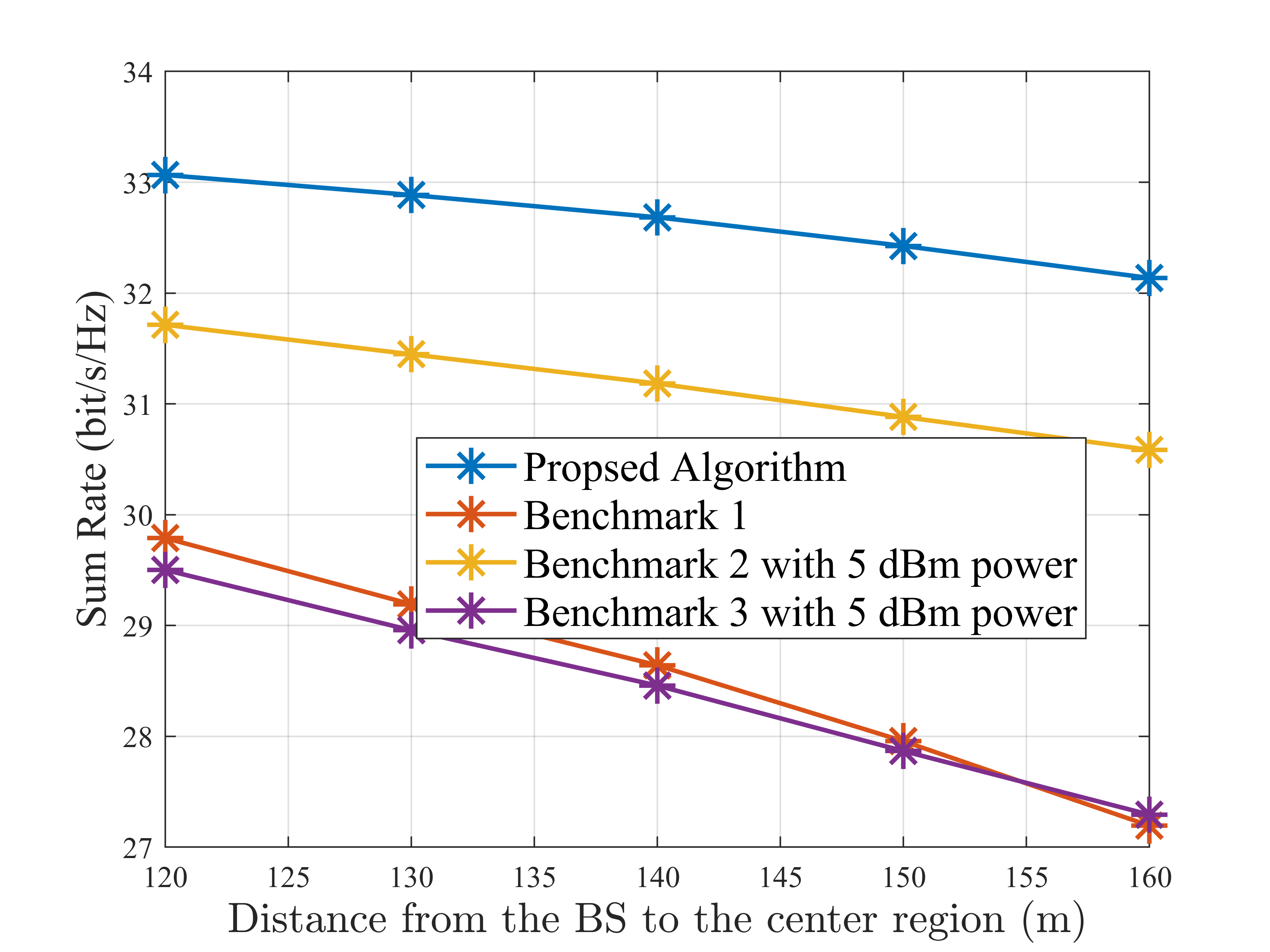
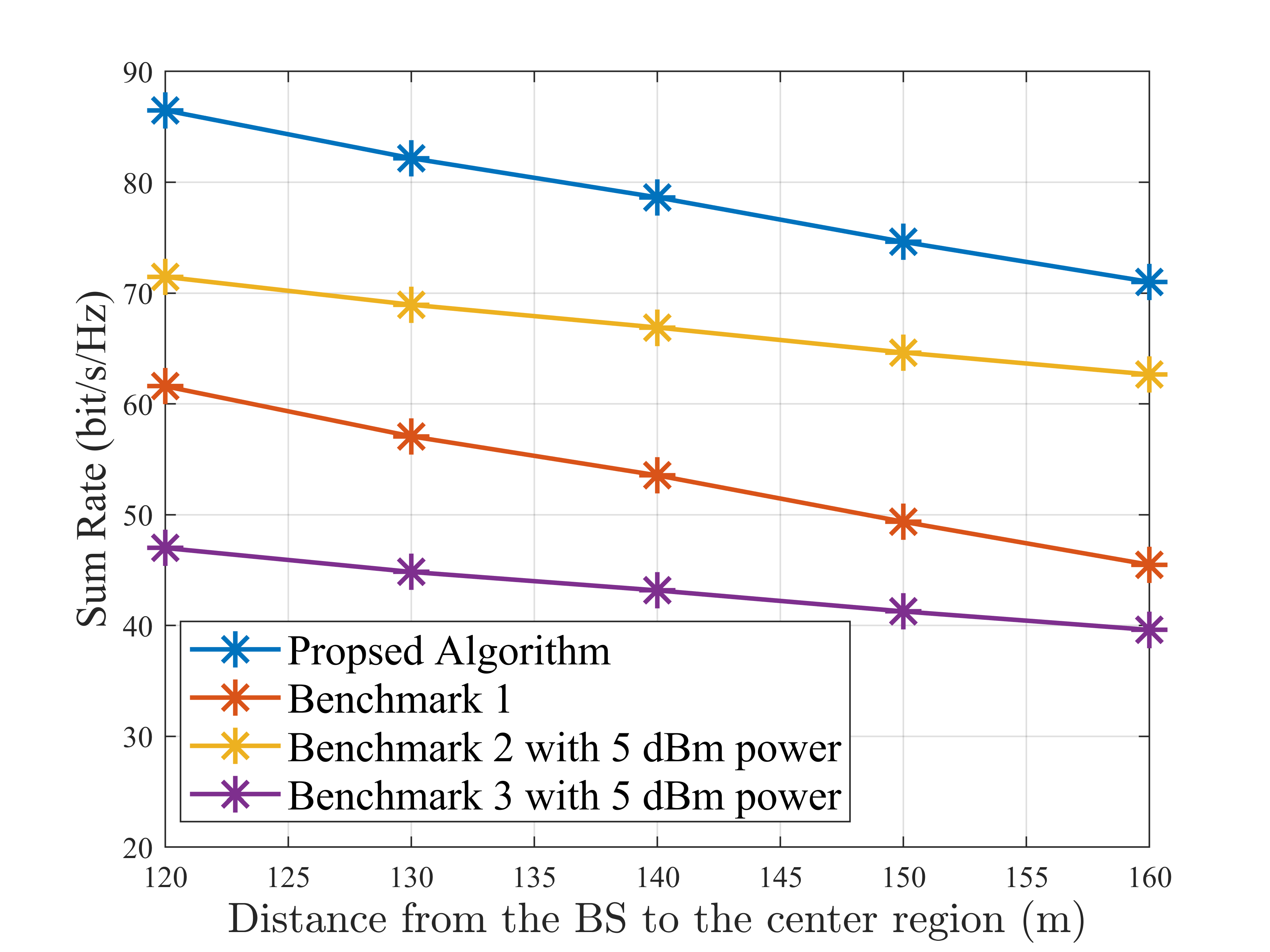
Sum Rate vs. Propagation Distance: The performance gap between RAQR and RF MIMO narrows with increasing distance, as harvested energy diminishes, but RAQRs consistently outperform benchmarks.
Figure 5: Sum rate under various downlink power Ps,max.
Figure 6: Sum rate under various downlink power Ps,max.
Figure 7: Sum rate under various propagation distance.
Practical and Theoretical Implications
The integration of RAQRs into SWIPT-MIMO architectures fundamentally shifts the design paradigm for IoT networks, enabling battery-free operation without sacrificing spectral efficiency. The quantum-limited sensitivity of RAQRs allows for reliable detection of ultra-weak signals, drastically reducing the energy requirements for uplink transmission. This has direct implications for the deployment of massive, maintenance-free IoT networks in remote or inaccessible environments.
Theoretically, the work establishes tractable lower bounds and optimization frameworks for quantum-assisted wireless systems, providing a foundation for future research in quantum-enhanced communications. The demonstrated "squaring effect" and noise background reduction are critical for understanding the limits of quantum receiver performance in practical settings.
Future Directions
Potential avenues for further research include:
Extension to cell-free massive MIMO and RIS-assisted architectures, leveraging RAQRs for distributed quantum sensing and communication.
Investigation of non-linear energy harvesting models and hardware impairments in RAQRs.
Security and privacy analysis in quantum-assisted SWIPT networks, considering quantum eavesdropping and jamming scenarios.
Conclusion
The paper provides a comprehensive framework for integrating Rydberg Atomic Quantum Receivers into SWIPT-enabled MIMO systems, enabling battery-free IoT communication with robust spectral efficiency. Theoretical analysis, optimization algorithms, and simulation results collectively demonstrate the feasibility and advantages of RAQRs in overcoming the energy limitations of conventional wireless systems. This work lays the groundwork for quantum-assisted wireless networks, with significant implications for the future of sustainable, large-scale IoT deployments.