- The paper introduces a novel sub-optimality estimator that measures the gap between the best experience and the learned policy in deep RL.
- Evaluation across discrete and continuous tasks reveals that optimization, not exploration, is the dominant challenge in complex environments.
- Findings show that exploration bonuses and larger network architectures exacerbate exploitation issues, highlighting the need for improved optimization methods.
Exploration vs. Optimization in Deep Reinforcement Learning: A Quantitative Perspective
Introduction
The paper "Is Exploration or Optimization the Problem for Deep Reinforcement Learning?" (2508.01329) addresses a central question in the development of deep reinforcement learning (DRL): whether the primary bottleneck in solving complex tasks is the agent's ability to explore the environment or its capacity to exploit and optimize the experience it collects. The work introduces a practical sub-optimality estimator that quantifies the gap between the best experience generated by an agent and the performance of its learned policy. This metric enables a rigorous analysis of whether performance limitations stem from insufficient exploration or from optimization failures in deep neural policy learning.
Sub-optimality Estimation: Methodology
The core contribution is the definition and empirical evaluation of the "experience optimal policy" (π^∗), which represents the best policy achievable given the agent's collected experience. The practical sub-optimality is then measured as the difference between the value of π^∗ and the value of the learned policy πθ:
Sub-optimality=Vπ^∗(s0)−Vπθ(s0)
This estimator is computed using two approaches:
- Deterministic Replay: In deterministic environments, the best trajectory in the experience buffer is replayed to estimate π^∗.
- Top-k Averaging: In stochastic environments, the average return of the top 5% of trajectories is used to approximate π^∗.
This approach allows for a nuanced analysis of exploitation versus exploration. If the gap between π^∗ and πθ is large, the agent is failing to exploit its experience; if the gap is small, exploration is the limiting factor.
(Figure 1)
Figure 1: Diagram illustrating the practical sub-optimality gap between the best experience, the learned policy, and the optimal policy.
Experimental Setup
The estimator is evaluated across a diverse set of environments, including continuous control tasks (Mujoco: HalfCheetah, Walker2d, Humanoid), discrete control tasks (MinAtar, Atari: SpaceInvaders, Asterix, Montezuma's Revenge, Craftax), and challenging exploration benchmarks.
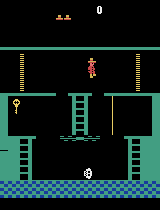
Figure 2: Evaluation environments include examples from Mujoco, MinAtar, and Atari.
Two canonical RL algorithms are analyzed: PPO (on-policy) and DQN (off-policy), with modifications to track every reward, return, and episode termination for accurate sub-optimality estimation.
Empirical Findings
Per-Task Sub-optimality
The analysis reveals that in "easy" environments such as HalfCheetah, the gap between the best experience and the learned policy is negligible, indicating effective exploitation. In contrast, in hard exploration environments (e.g., Montezuma's Revenge, Breakout, SpaceInvaders), the learned policy consistently fails to match the best experiences generated, with the sub-optimality gap often exceeding a factor of 2-3×.
(Figure 3)
Figure 3: Comparisons of different measures for global optimality and the learned policy πθ across environments. Large exploitation gaps are observed in complex exploration tasks.
Notably, the gap does not decrease with additional training, suggesting that the bottleneck is not data quantity but the optimization process itself.
Impact of Exploration Bonuses
Adding exploration bonuses (e.g., RND) increases the diversity and value of experiences collected. However, the sub-optimality gap also increases, indicating that while agents discover higher-reward trajectories, they are less able to exploit them. This demonstrates that improvements in exploration can exacerbate optimization challenges in deep RL.
(Figure 4)
Figure 4: Practical sub-optimality increases with the addition of exploration bonuses, highlighting aggravated exploitation issues.
Scaling Network Architectures
Scaling up network architectures (e.g., using ResNet-18 instead of a 3-layer CNN) leads to higher-value experiences but also a larger sub-optimality gap. This trend is consistent across both discrete and continuous environments, suggesting that optimization difficulties are amplified with increased model capacity.
(Figure 5)
Figure 5: Sub-optimality gap increases with network size, indicating scaling exacerbates exploitation limitations.
Aggregate Algorithm Analysis
Aggregated across multiple environments, both PPO and DQN achieve only about 30% of the performance of their best experience, indicating substantial exploitation limitations. The rliable optimality gap metric, which compares to a theoretical optimal policy, fails to capture this nuance, often misrepresenting the relative strengths of algorithms.
(Figure 6)
Figure 6: Aggregate sub-optimality analysis across Atari-5 environments for PPO and DQN.
Theoretical and Practical Implications
The findings challenge the prevailing focus on exploration in RL research, demonstrating that optimization and exploitation of experience are the dominant limitations in current deep RL algorithms. The practical sub-optimality estimator provides a robust diagnostic tool for researchers and practitioners to identify whether performance bottlenecks are due to exploration or exploitation. This has direct implications for algorithm development, evaluation, and benchmarking.
The results also indicate that scaling up model architectures and adding exploration bonuses can unintentionally worsen exploitation issues, suggesting that future work should prioritize advances in optimization under non-iid data distributions, representation learning, and stability in deep policy training.
Future Directions
Potential avenues for future research include:
- Development of optimization techniques tailored for non-iid, off-policy data in deep RL.
- Investigation of representation learning methods that facilitate better exploitation of high-value experiences.
- Integration of sub-optimality estimation into RL benchmarking suites for more informative algorithm comparisons.
- Exploration of curriculum learning and data selection strategies to mitigate exploitation gaps.
Conclusion
This paper provides compelling evidence that optimization and exploitation, rather than exploration, are the primary challenges in deep reinforcement learning for complex tasks. The proposed practical sub-optimality estimator offers a quantitative framework for diagnosing and addressing these limitations. The results suggest that future progress in deep RL will depend on advances in optimization methods capable of fully leveraging the rich experience generated by modern exploration techniques and large-scale models.