- The paper details enhancing a bee monitoring system by integrating a Raspberry Pi with a Pico to offload continuous sensor readings.
- It replaces sensors (DHT10 with DHT20) and adds a HX711 amplifier with load cells, effectively improving environmental measurement fidelity.
- The system employs MQTT, InfluxDB, and Grafana for efficient data transmission, storage, and visualization, enabling real-time beehive analysis.
Overview of the Raspberry Pi Bee Health Monitoring Device
The paper lays out the modifications and enhancements made to an IoT-based bee health monitoring system designed to encourage remote data logging and analysis of beehive environments. The aim is to improve the real-time monitoring of honeybee colonies using an improved data acquisition device based on a Raspberry Pi, facilitating efficient data logging for subsequent analysis.
Data Acquisition Device Enhancements
The research builds on previous work by upgrading an existing data acquisition system to better accommodate the comprehensive task of monitoring weather and atmospheric conditions within beehives. The original system, which utilized a Raspberry Pi and various sensors to capture beehive traffic and environmental data, has been substantially improved. The integration of a Raspberry Pico offloads continuous sensor data reading, reducing the Raspberry Pi’s computational load and enhancing reliability in data capture tasks, such as bee traffic monitoring via a camera module.
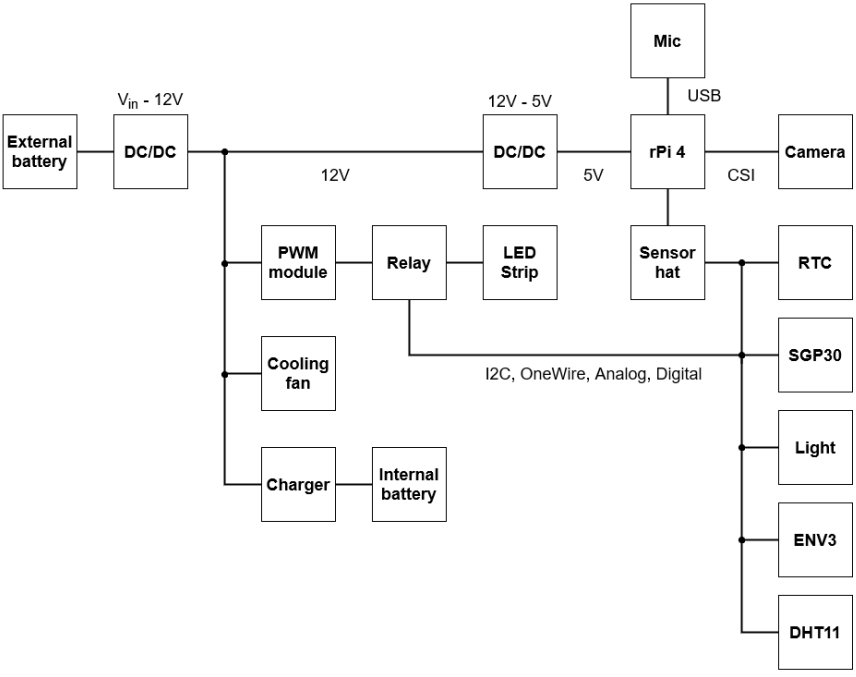
Figure 1: Original data acquisition device.
The updated data acquisition chain also includes enhancements like the replacement of the DHT10 sensor with the more accurate DHT20, and the addition of a HX711 amplifier with load cells for gauging beehive weight fluctuations. These modifications are aimed at increasing the fidelity and scope of the environmental data collected, essential for downstream analysis tasks.
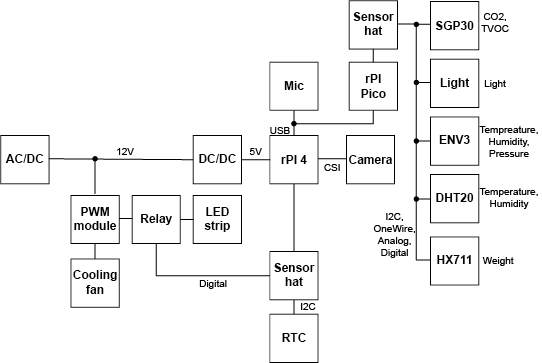
Figure 2: Modified data acquisition device.
Remote Data Logging System
Internet Connection
The study recognizes the limitations of deploying such systems in remote locations devoid of conventional internet connectivity. Despite Wi-Fi being available at their deployment site, alternative connectivity solutions such as GSM modules or LoRaWAN are also acknowledged as viable options in more isolated settings.
MQTT Messaging Protocol
To achieve seamless data transmission from remote locations, the paper employs the MQTT protocol, which is renowned for its lightweight architecture suitable for constrained environments. The system architecture includes an MQTT broker that facilitates data exchange between the publishing data acquisition device and subscribing clients configured to log and utilize the sensor data.
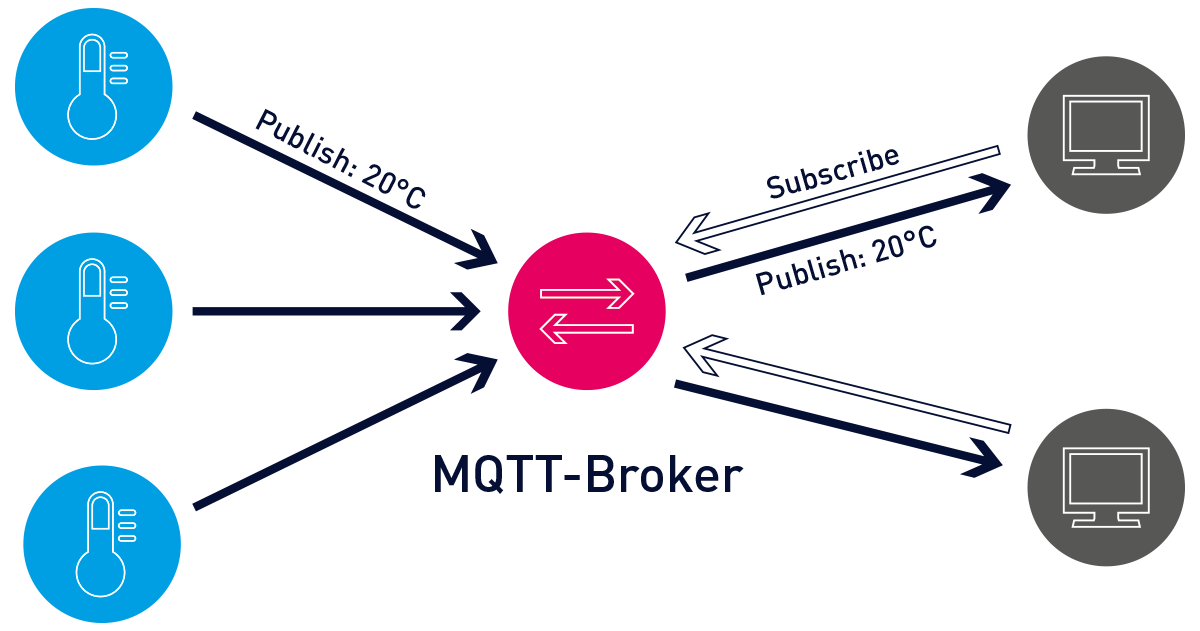
Figure 3: MQTT architecture.
Data Storage and Visualization
Sensor data is managed via an InfluxDB timeseries database, incorporating Telegraf as a data collection agent to sort incoming sensor measurements relayed through MQTT. This configuration capitalizes on the temporal nature of the data, using InfluxDB’s efficient storage and retrieval capabilities to maintain historical data suitable for time-series analysis.
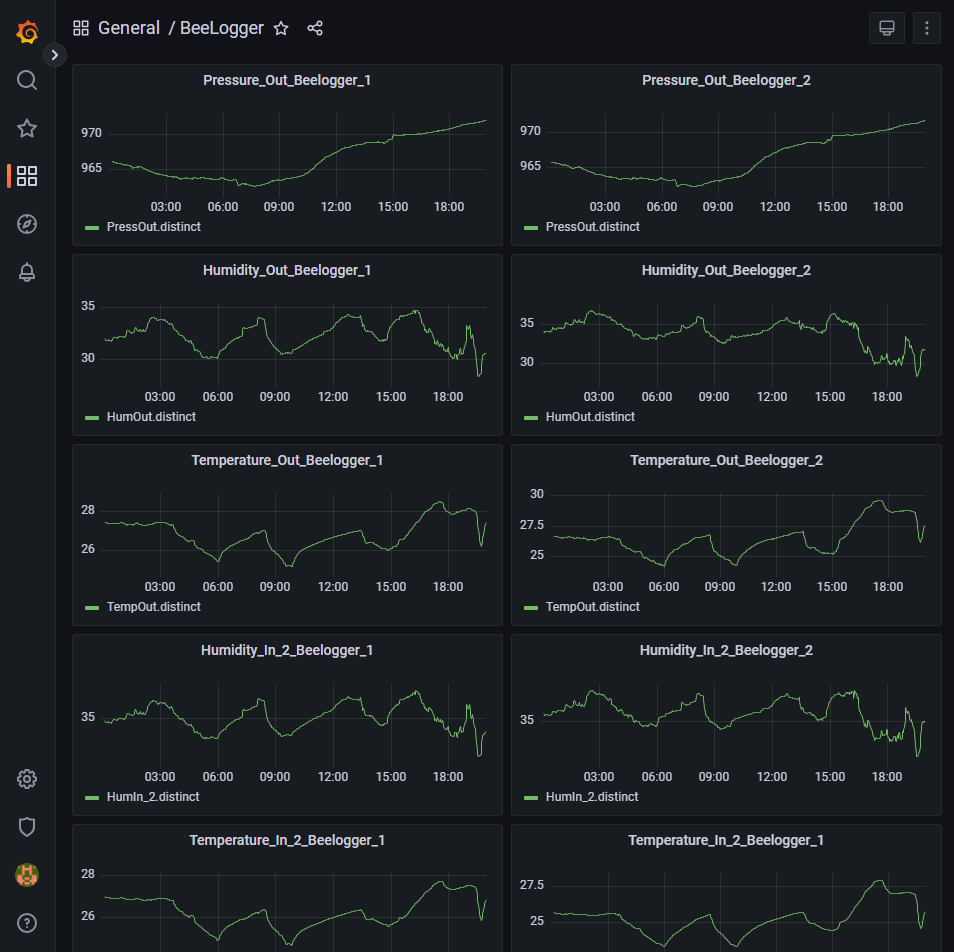
Figure 4: Grafana dashboard.
The system includes a Grafana dashboard to visualize this data, providing beekeepers with real-time monitoring capabilities via browser interfaces. Grafana’s robust alerting capabilities also afford potential integration with machine learning models aimed at automated health assessments and notifications on aberrant beehive conditions.
Conclusion
The modifications described showcase a pragmatic approach to enhancing remote beehive monitoring systems. Through targeted hardware upgrades and a robust data logging and visualization ecosystem, the paper lays the groundwork for advanced analysis using machine learning techniques. Future work will likely focus on deploying and training such models to derive actionable insights from the rich data collected, ultimately contributing to informed beehive management practices and benefiting ecological conservation efforts.

