- The paper presents Rail-5k, a dataset of over 5,000 high-resolution rail images with expert annotations for 13 defect types to support both fully- and semi-supervised learning.
- The methodology employs high-fidelity image capture and fine-grained annotation to address challenges like long-tailed defect distributions and real-world image corruptions.
- Baseline evaluations using models such as YOLOv5 illustrate the dataset's complexity and highlight its potential to drive advances in automated rail defect detection.
Rail-5k: A Comprehensive Dataset for Rail Surface Defects Detection
Introduction
The paper "Rail-5k: a Real-World Dataset for Rail Surface Defects Detection" (2106.14366) introduces a significant advancement in the field of railway infrastructure maintenance by providing a benchmark dataset aimed at visual algorithm development for rail surface defect detection. The Rail-5k dataset comprises over 5,000 high-resolution images sourced from various railway locations across China. Notably, 1,100 of these images have been meticulously annotated to classify 13 common types of rail defects, delineating two primary use scenarios: fully-supervised learning and semi-supervised learning. This work addresses challenges inherent to the existing datasets, such as limited size, image quality, and annotation types, and aims to facilitate the development of robust visual algorithms capable of effectively tackling rail infrastructure maintenance challenges.
Dataset Characteristics and Acquisition
The Rail-5k dataset distinguishes itself with its sufficient volume and high-quality images, allowing the effective training of deep learning models for defect detection. Images were captured using specialized cameras mounted on inspection vehicles, maintaining a consistent distance from the rail surfaces to ensure image fidelity. Each image is of high resolution (3648×2736 pixels), covering various scenarios such as tunnels, bridges, and rail curves. The dataset's labeled section poses a long-tailed distribution challenge, where the imbalance ratio between the most frequently and least frequently observed defect classes is substantial.
Furthermore, the unlabeled subset, comprising 4,000 images, introduces additional complexity by incorporating real-world image corruptions and domain shifts, uncommon in prior semi-supervised learning datasets. This characteristic is anticipated to challenge existing semi-supervised learning algorithms, pushing the boundaries of their robustness and adaptability to real-world data imperfections.
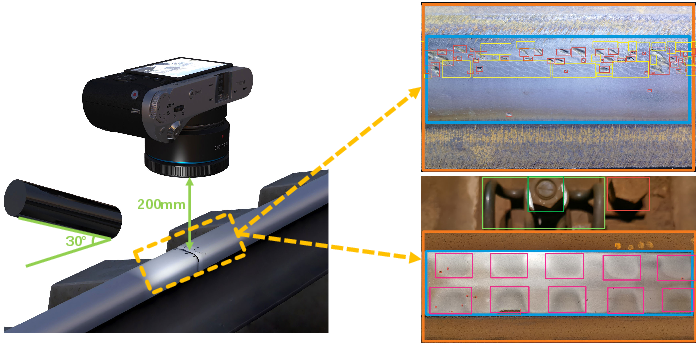
Figure 1: Typical image capture and annotations.
Fine-Grained Annotation and Defect Classification
Annotations in Rail-5k were executed by a team of railway experts, adhering to fine-grained, instance-level annotation standards which align with industry norms. This meticulous approach ensures precise detection and classification of defects, which are crucial for actionable railway maintenance insights. The dataset supports a robust training environment for object detection algorithms by providing accurate bounding boxes and segmentation masks tailored to defect characteristics such as size, boundary clarity, and material characteristics.
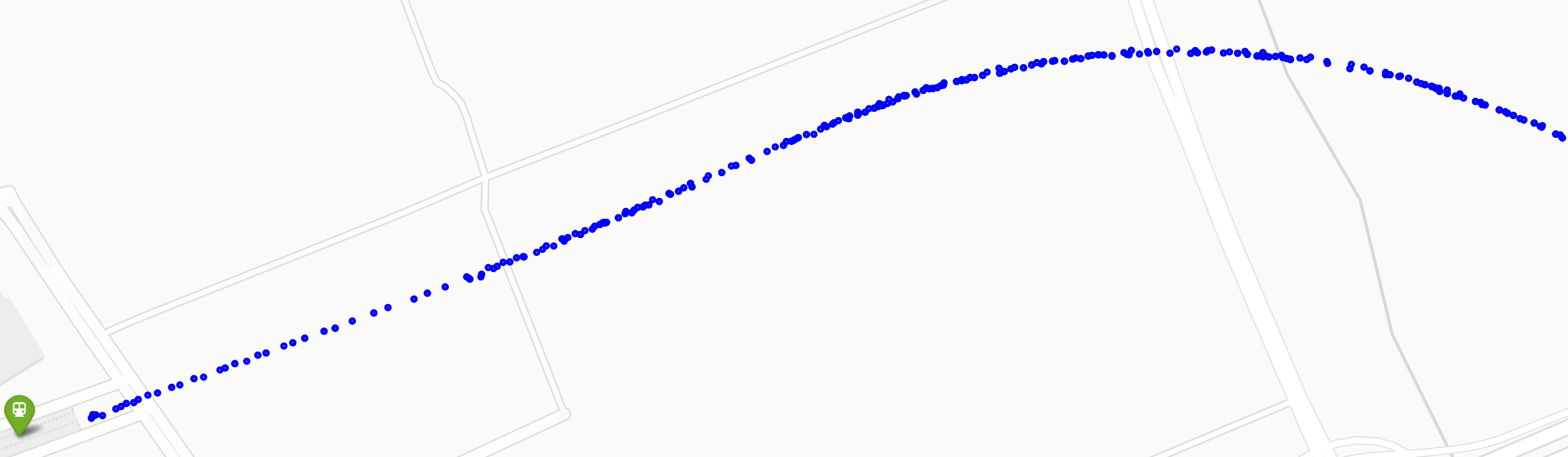
Figure 2: Map of typical sample points.
Pilot Studies and Baseline Models
The paper conducted exploratory experiments employing state-of-the-art detection and segmentation models as baselines on the Rail-5k dataset. The pilot studies revealed the dataset's inherent challenges due to its diversity and complexity. For instance, the YOLOv5 model, when trained on the dataset, highlighted the difficulties posed by the elongated distribution and dense clustering of certain defect types. The performance metrics underscored the necessity for advanced algorithmic approaches capable of managing such dataset characteristics.
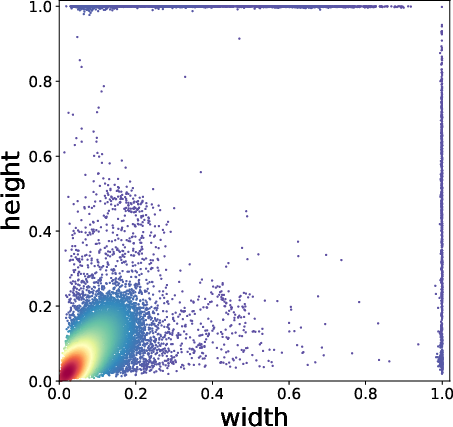
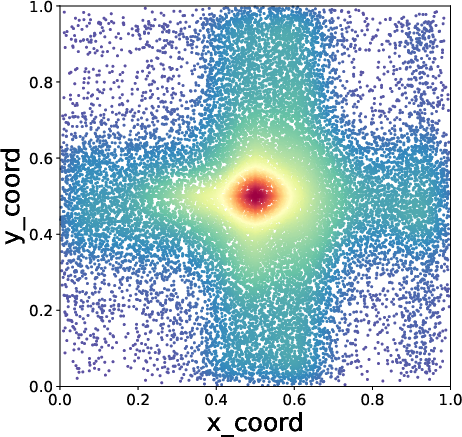
Figure 3: Width-height ratio of all annotations.
Implications and Future Directions
The introduction of the Rail-5k dataset holds significant implications for both theoretical research and practical applications in railway maintenance. The dataset facilitates the development and evaluation of novel visual algorithms that could significantly enhance real-time and automated rail defect detection capabilities, contributing to improved safety and efficiency in rail transport systems.
Looking ahead, the authors suggest potential expansions to the dataset, which may include additional images, defect types, and diverse data modalities such as 3D scans or eddy current measurements. Such enhancements would further cement Rail-5k's status as a holistic real-world benchmark for both supervised and semi-supervised algorithms in visual recognition tasks.
Conclusion
The paper offers a comprehensive overview of the Rail-5k dataset, establishing a new standard for rail surface defect detection research. By addressing previous datasets' limitations and presenting various practical challenges, Rail-5k stands as a pivotal resource for advancing research and development in intelligent railway maintenance systems. Future iterations of the dataset propose to broaden its applicability and utility, reinforcing its role in driving methodological innovations in defect detection and classification within complex environments.