- The paper introduces a system that leverages commodity WiFi hardware and CSI variations with Fresnel theory for non-intrusive, real-time monitoring of breathing and heart rate.
- It employs adaptive antenna selection and robust signal processing techniques, such as FFT and bandpass filtering, achieving sub-1 bpm error for respiration and sub-4 bpm error for heart rate.
- Empirical results confirm system resilience across diverse sleep postures, highlighting its potential for scalable, home-based health monitoring applications.
WiFi-based Real-time Vital Sign Monitoring During Sleep: A Technical Analysis
Motivation and Problem Definition
Continuous, non-intrusive monitoring of respiratory and cardiac activity during sleep is clinically relevant for detecting disorders such as sleep apnea, SIDS, and nocturnal cardiac events. Traditional methods for vital sign monitoring (e.g., polysomnography, ECG, PPG) rely on body contact or controlled environments, limiting their acceptance in home settings due to inconvenience and cost. The work addresses these limitations by leveraging commodity WiFi hardware and channel state information (CSI) to achieve real-time, contactless, and posture-invariant estimation of breathing and heart rate.
System Overview and Theoretical Rationale
The proposed system exploits the Fresnel zone model to optimize the antenna placement for enhanced sensitivity to minute thoracic and abdominal movements associated with respiration and cardiac activity. Theoretical analysis establishes that reflection-induced CSI variations are maximized when the monitored subject is optimally positioned within critical Fresnel zones.
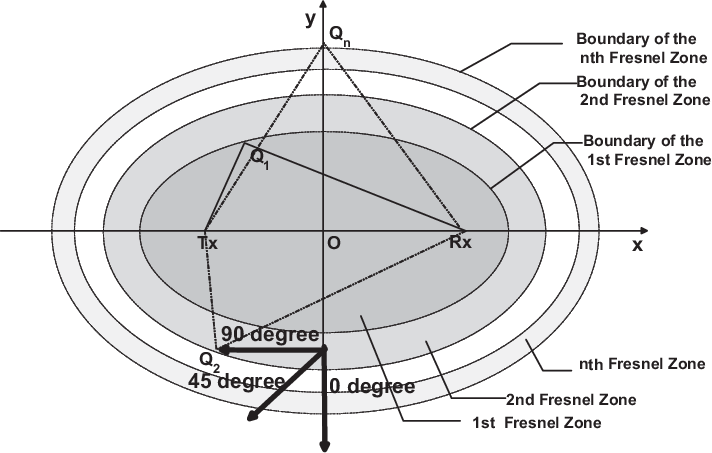
Figure 1: The Fresnel zone geometry determines the regions of constructive and destructive interference relevant to CSI variation sensitivity.
Prototype implementations consider several antenna deployment paradigms, as illustrated by three empirical configurations. Each configuration examines signal path geometry, line-of-sight relevance, and the correspondence between motion orientation and effective displacement captured through WiFi signal perturbation.
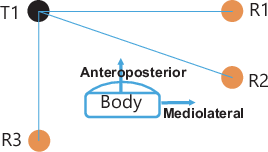
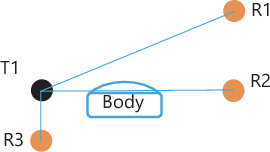
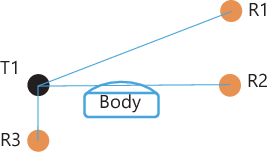
Figure 2: Experimental antenna arrangements and postures enable assessment of Fresnel model predictions in practical settings.
Empirical Insights on Fresnel Zone Guidance
Systematic preliminary experiments across multiple antenna layouts and participant sleeping postures revealed that—even though the Fresnel model provides useful starting points for design—real-world factors such as obstacles, environmental multipath, and antenna SNR disparities significantly influence detection efficacy. Contrary to Fresnel-only predictions, in some configurations the optimal data stream emerges not just from Fresnel proximity but also from environment-specific enhancements (e.g., obstructed LOS increasing motion sensitivity).
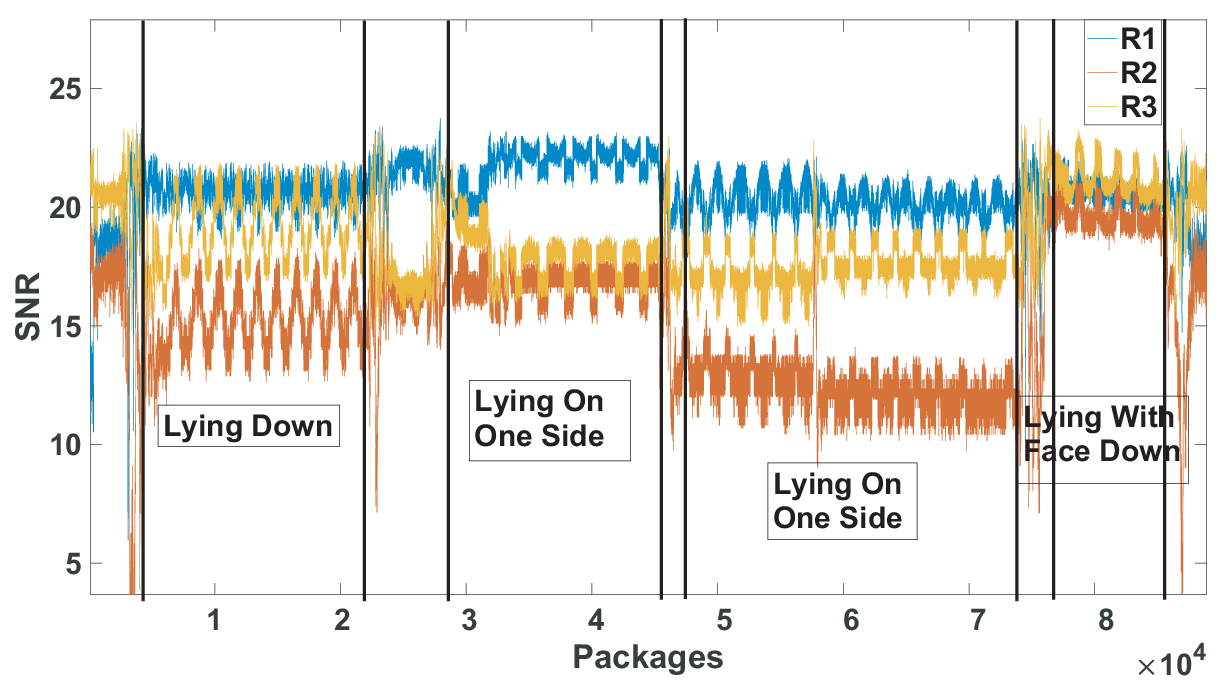
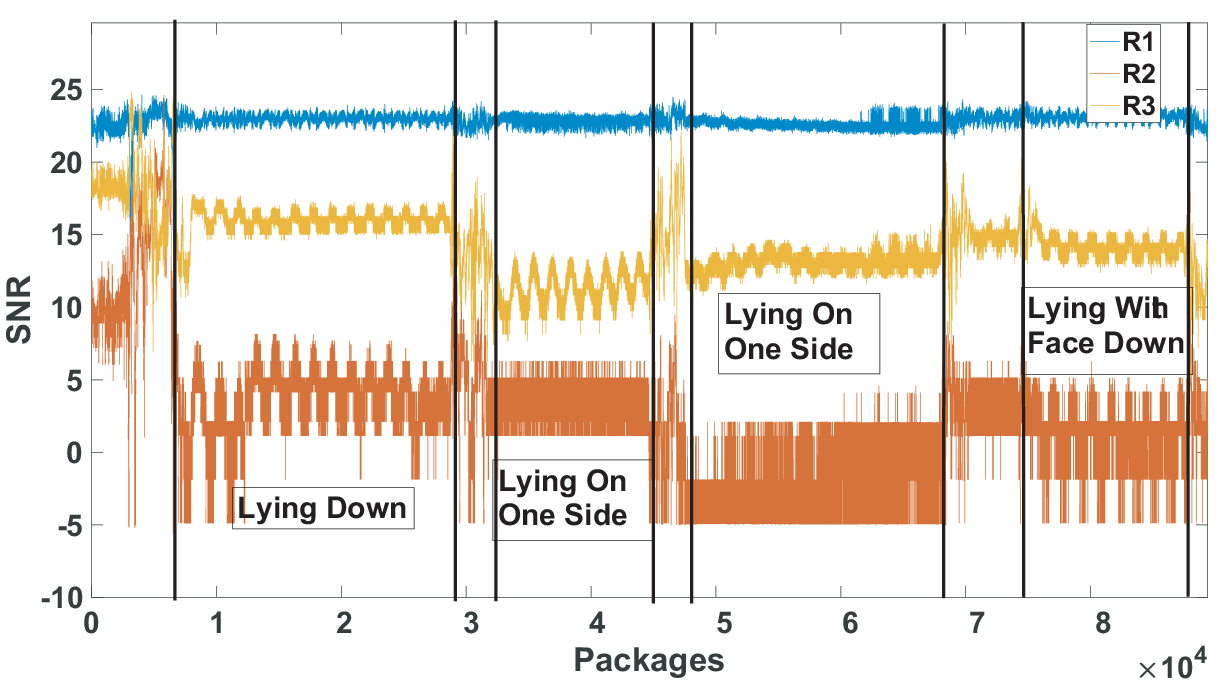
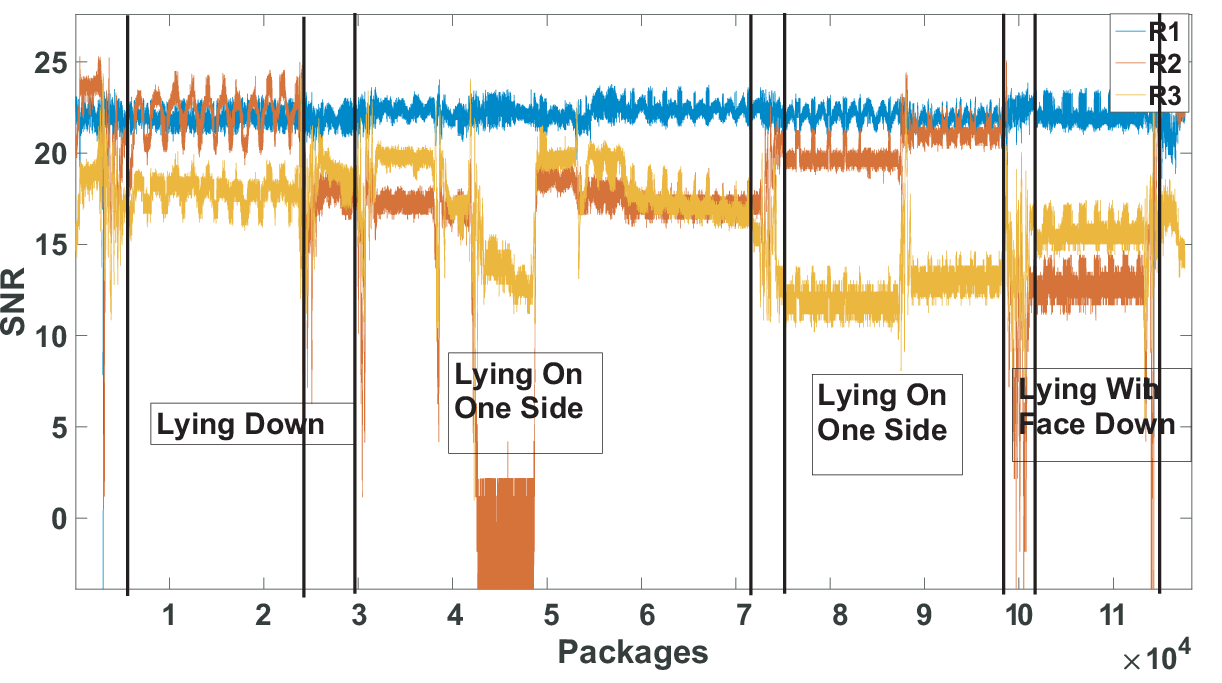
Figure 3: Detection performance varies across antenna/posture settings; CSI streams not predicted as optimal by Fresnel theory can outperform under certain conditions.
These findings support an adaptive, empirically-tuned antenna selection protocol, with the system dynamically choosing the most informative CSI subcarrier via variance-based ranking and applying robust bandpass filtering.
System Architecture and Signal Processing Pipeline
The final system implementation combines hardware selection (Intel 5300 NICs, miniPCs), antenna placement guided by comprehensive Fresnel analysis, CSI capture at high sampling rates (500 Hz), and a signal processing pipeline optimized for real-time operation.
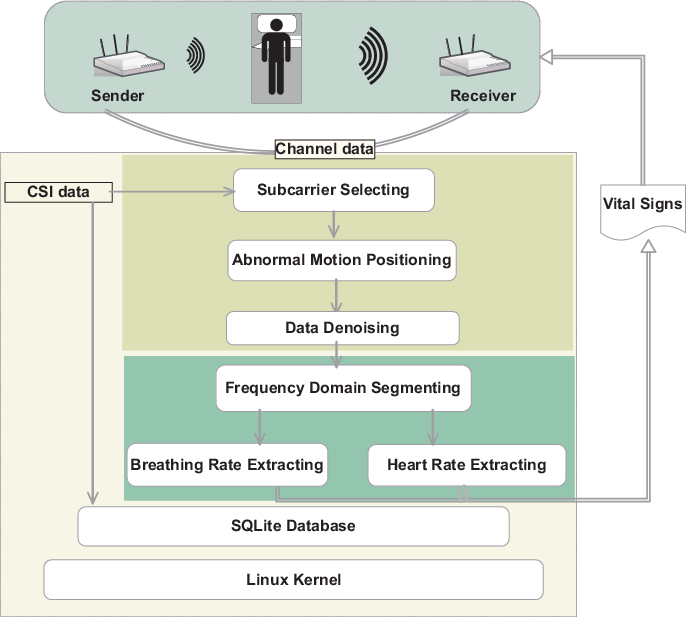
Figure 4: System architecture comprises CSI acquisition, subcarrier selection, denoising, bandpass filtering, and FFT-based rate extraction.
The pipeline addresses several challenges:
- Subcarrier selection: Selection based on signal variance increases detection reliability.
- Outlier rejection: Hampel filtering reduces environmental and device-induced noise.
- Frequency segmentation: Butterworth bandpass filters isolate respiratory (0.25–0.5 Hz) and cardiac (1–2 Hz) bands.
- Vital sign extraction: FFT-based estimation enables low-complexity, real-time rate calculation.
Empirical validation against accelerometer and pulse-oximeter gold standards demonstrates high temporal correspondence between WiFi CSI-derived signals and ground truth for both respiration and heartbeat, with minimal lag or distortion.
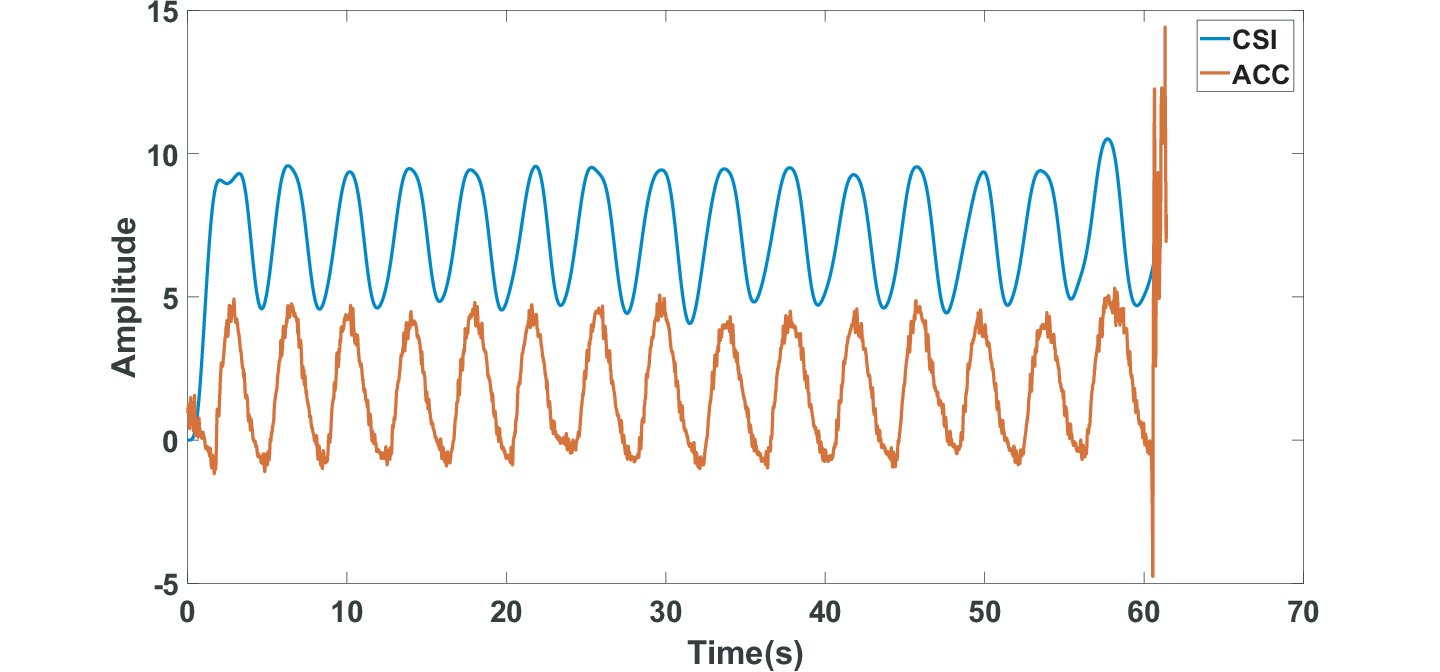
Figure 5: Processed CSI measurements for breathing display temporal alignment with reference accelerometer data.
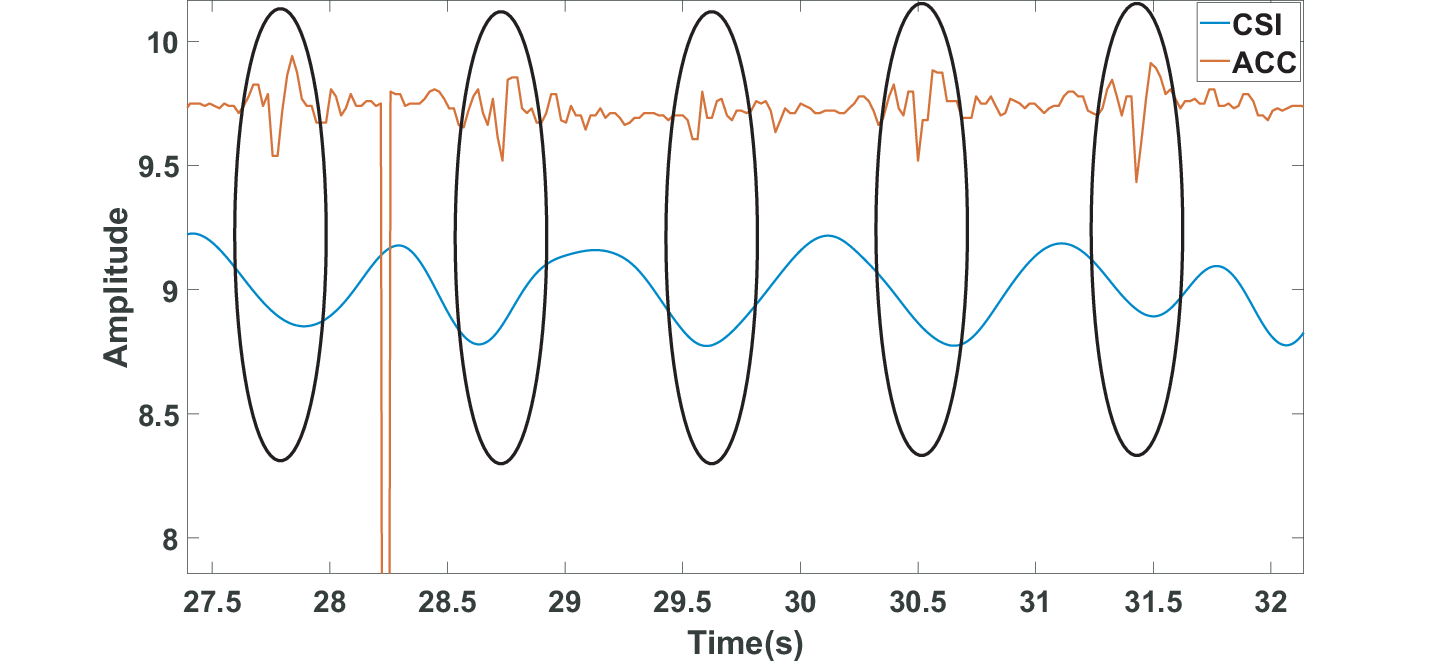
Figure 6: Processed CSI heart rate signals closely match event markers from a chest-placed accelerometer.
Experimental Verification
Testing involved five participants, four common postures (prone, supine, left-recumbent, right-recumbent), and unconstrained activity in ambient lab conditions—no synthetic breathing control or directional antennas were required. The system achieved average absolute errors of 0.575 bpm (breathing) and 3.9 bpm (heart rate), corresponding to accuracies of 96.6% and 94.2% relative to references.
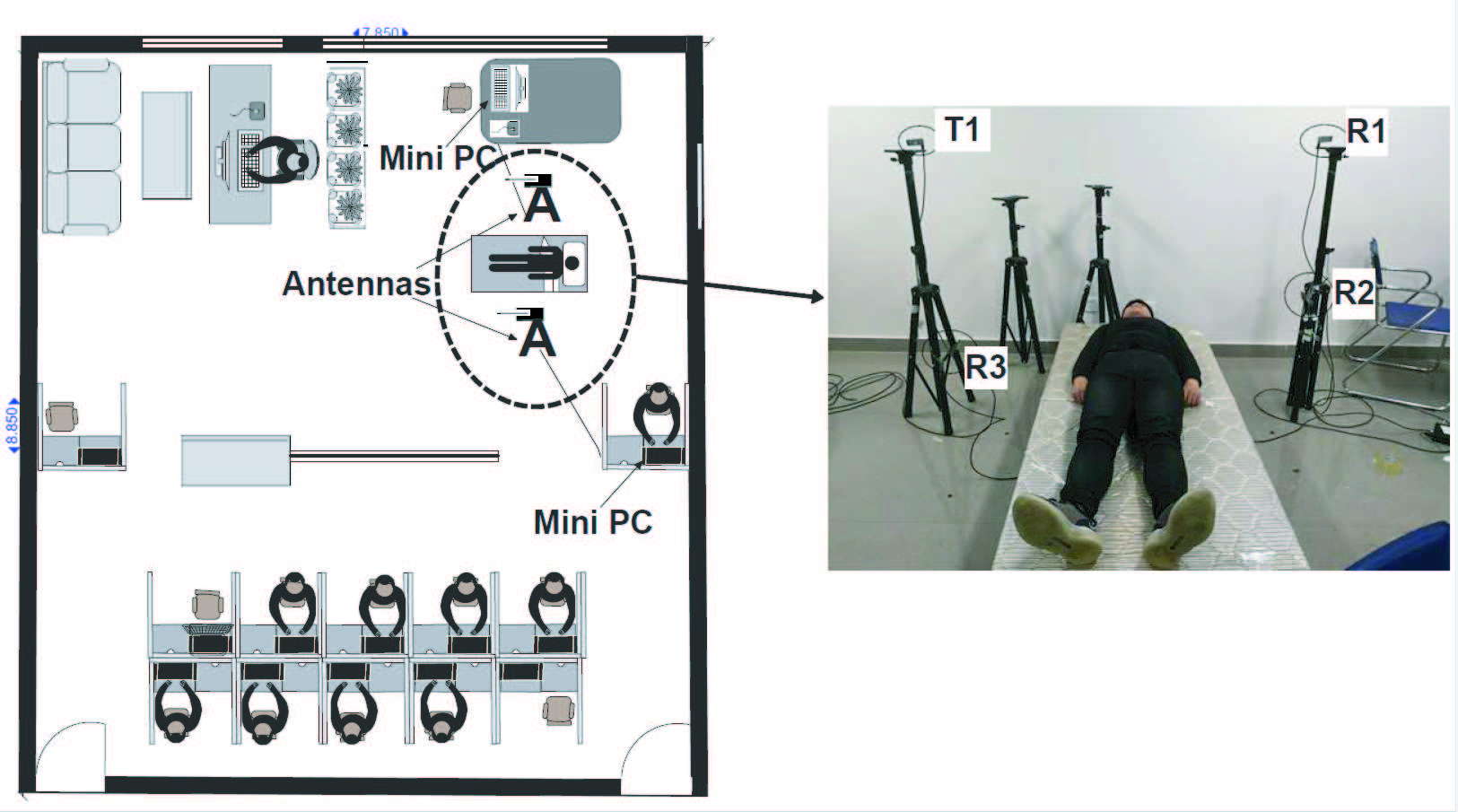
Figure 7: The hardware prototype demonstrates practicality and ease of deployment using off-the-shelf devices.
Subject-wise analysis indicates robustness across diverse body types, while a posture-resolved assessment shows minimal performance degradation except in highly suboptimal postures (e.g., left recumbent for heart rate). These results validate system resilience to intra- and inter-subject variability.
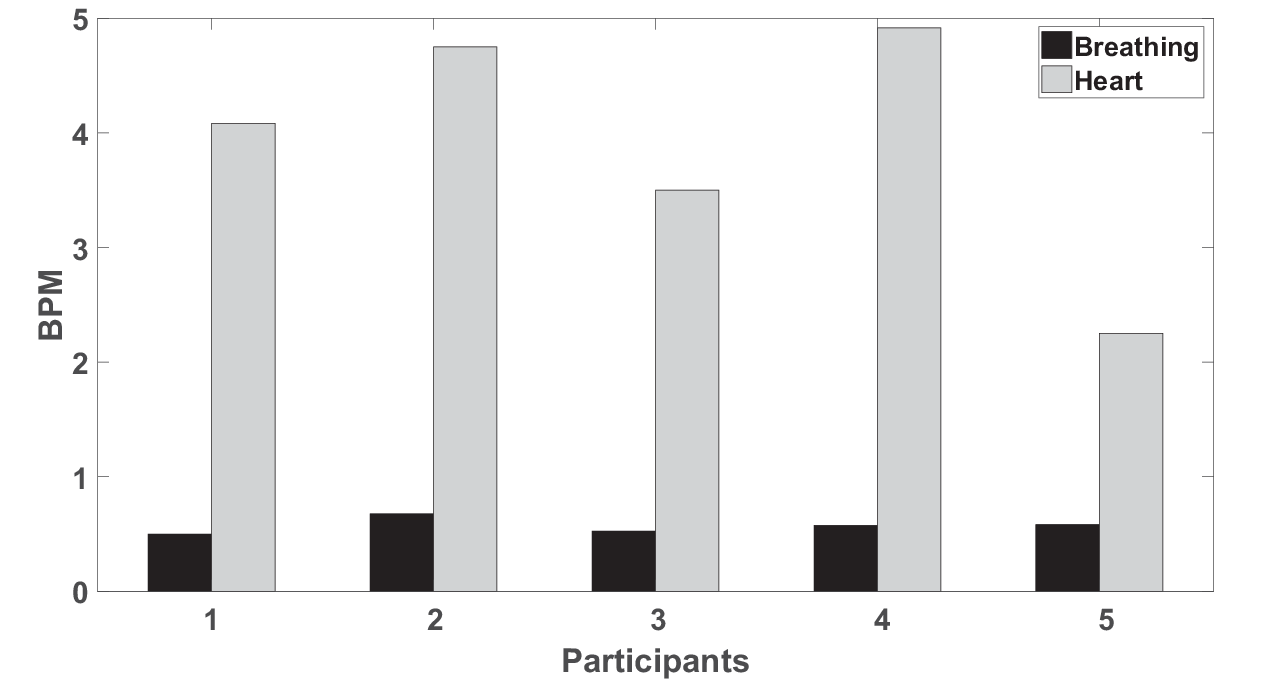
Figure 8: Inter-subject vital sign monitoring errors for respiration and heart rate remain within clinically relevant bounds.
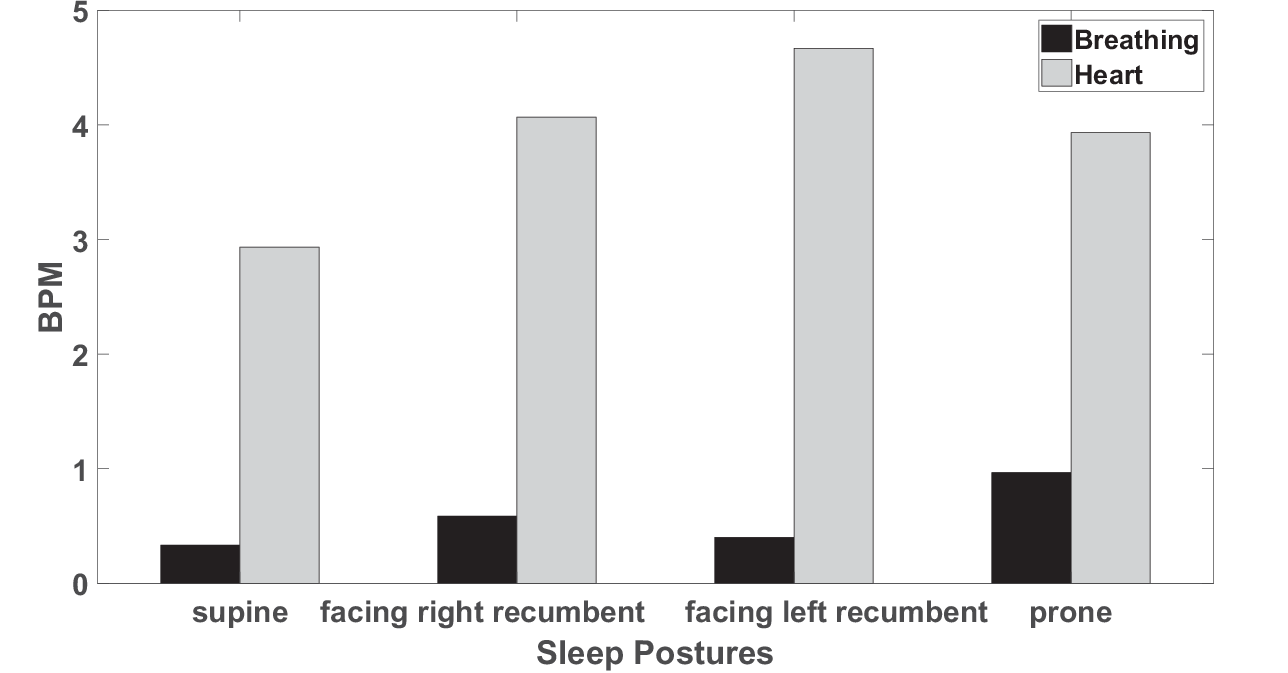
Figure 9: Monitoring accuracy as a function of sleep posture; supine yields lowest errors while recumbent/prone induce higher but still acceptable inaccuracies.
Implications and Future Directions
The presented system substantiates the feasibility of deploying contactless, real-time respiratory and cardiac monitoring using commodity WiFi hardware under realistic home-use constraints. Critical numerical results, namely, sub-1 bpm error for breathing and sub-4 bpm error for heart rate, combined with the capability to handle various postures and dynamic environments, position this approach as a candidate for large-scale home health monitoring and longitudinal vital signs assessment.
From a theoretical perspective, the work underscores the necessity of integrating propagation theory with empirical validation due to the limitations of Fresnel-zone-based guidance in complex environments. Practically, findings on antenna selection and environmental influence recommend adaptive, system-level tuning rather than sole reliance on analytic models.
Advancements are expected in algorithmic robustness (e.g., to further minimize false positives in motion-interrupted segments), integration with abnormality/liveness detection pipelines, and fusion with other RF or low-cost sensing modalities. Directions for future AI-driven development include individualized model adaptation for robust baselining and integration into broader home health or sleep analytics ecosystems.
Conclusion
This study demonstrates that precise, posture-invariant, real-time monitoring of breathing and heart rate during sleep is achievable using affordable WiFi hardware and tailored CSI signal processing. The joint application of Fresnel theory and empirical optimization yields a system with high numerical accuracy and deployment flexibility. The methodology and empirical findings outlined provide a foundation for wireless, contactless, and scalable vital sign monitoring solutions and direct avenues for extension in unobtrusive at-home health assessment.