- The paper introduces a U-Net-based deep learning approach to rapidly extract gravitational wave signals from LIGO-inspired noise.
- It demonstrates high detection accuracy in high-mass, high-SNR regions, significantly reducing false alarm probabilities.
- The study validates the method on real O1, O2, and O3 LIGO data, underscoring its potential for real-time GW astronomy.
Rapid Identification of Time-Frequency Domain Gravitational Wave Signals from Binary Black Holes Using Deep Learning
Introduction
The detection of gravitational waves (GWs) marks a significant advancement in astrophysics, providing crucial insights into stellar phenomena such as binary black hole (BBH) mergers. Traditional methods of GW detection primarily rely on matched filtering, a computationally intensive approach that correlates signals with known templates. However, with the advent of deep learning (DL), alternative techniques have emerged offering rapid signal identification with reduced computational demands. This paper focuses on utilizing the 2D U-Net architecture, a convolutional neural network (CNN) variant, for identifying time-frequency domain GW signals from BBH mergers within noisy environments characteristic of the LIGO observatory.
Methodology
Dataset Assembly
The study involved generating training datasets that simulate BBH mergers with component masses ranging from $7$ to 50M⊙. Each dataset included 170,000 samples of pure background noise and an equal number of samples combining GW signals with noise. This simulation accounted for the LIGO detector noise, preparing six models tailored to various detector configurations and observing runs. Each sample underwent whitening and a band-pass filter spanning [30,900] Hz before being transformed into the time-frequency domain using short-time Fourier Transform (STFT).
U-Net Architecture
U-Net, originally designed for biomedical segmentation tasks, uniquely facilitates pixel-level classification, beneficial for extracting GWs from noisy backgrounds. The architecture comprises symmetrical contraction and expansion paths, utilizing successive convolutions, ReLU activations, max pooling, and transpose convolutions to preserve spatial information while refining signal detection.
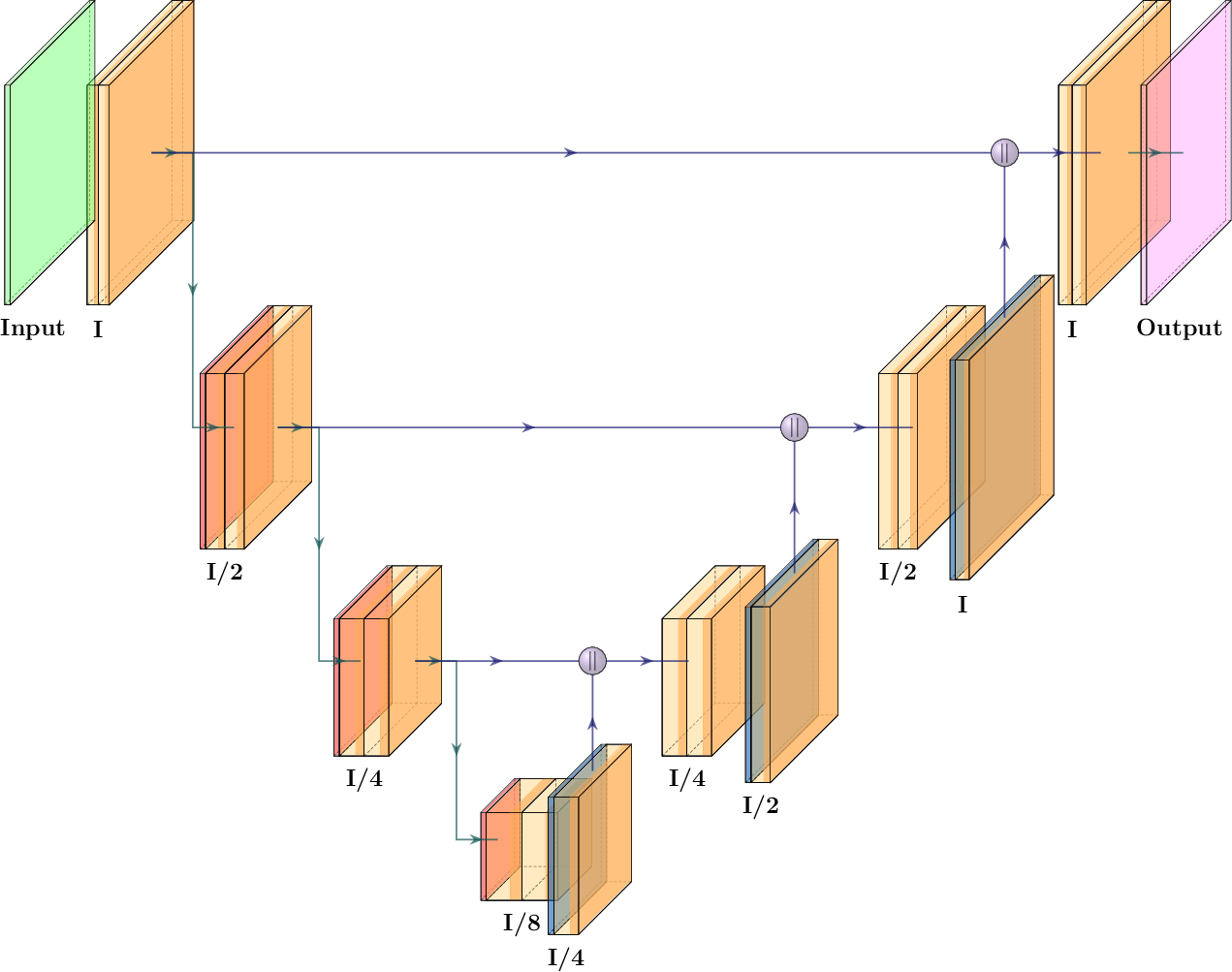
Figure 1: Training of a CNN with U-Net architecture, illustrating convolutional, pooling, and connection layers.
This structure allows U-Net to output images where pixel intensities correlate with the probability of comprising GW signals, enabling intuitive visual assessments.
Training Parameters
Training employed the NAdam optimizer with a learning rate of 10−5 and a dropout rate of 0.2. Batch normalization ensured stability in the input data distribution across layers. The training spanned 200 epochs on a multi-GPU setup, achieving high accuracy with a false alarm probability below 0.1% across all datasets.
Results
Simulation Studies
The U-Net model demonstrated a robust capability to identify GW signals, especially in high-mass and high-SNR regions, where accuracy exceeded 90% for single masses above 9M⊙ and SNR greater than 8. Robustness testing further confirmed the network's capacity to accurately identify signals dispersed across various noise environments and integration times.
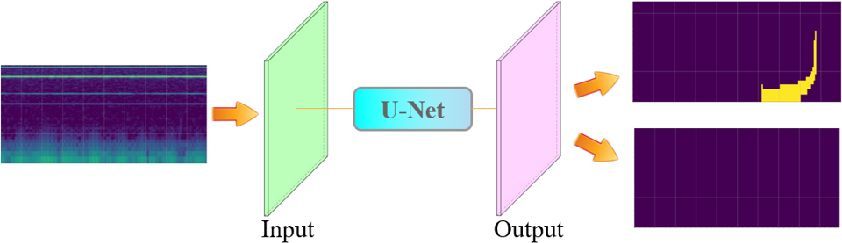
Figure 2: Testing robustness to noise with varying added times of GW signals.
Comparison with Other Methods
U-Net's performance was comparable to existing machine learning frameworks, maintaining sensitivity at FARs as low as 1000 per month, albeit with diminishing sensitivity at lower FARs. Despite these limitations, U-Net remains a competitive choice among contemporary DL-based GW detection methodologies.
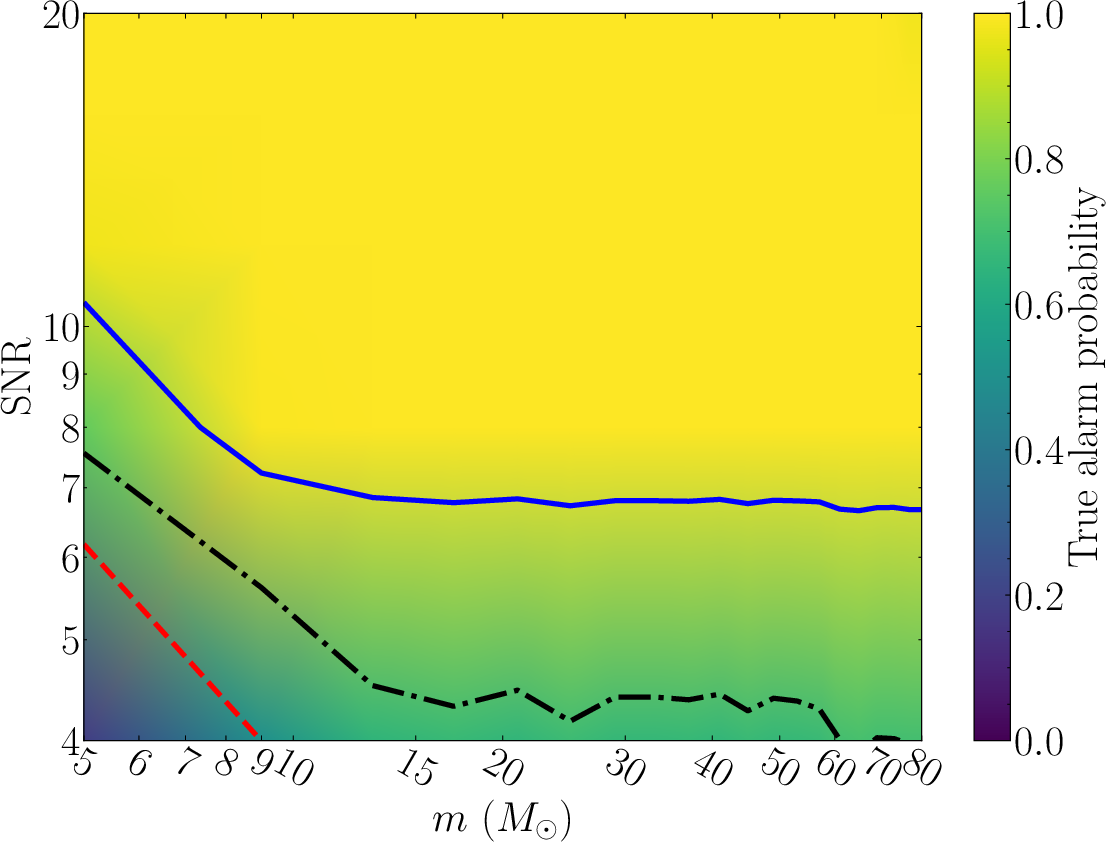
Figure 3: Comparison of sensitive distances across different machine learning methods and false alarm rates.
Application to Real Observations
The trained U-Net models were applied to real O1, O2, and O3 LIGO data. The models successfully identified all GW events within the O1 and O2 datasets, while approximately 80% of the O3 GW events were recognized. This demonstrates U-Net's practicality for rapid signal identification, substantially aiding in field-based data analysis.
(Figures 6–11)
Figures 6–11: Time-frequency domain representations of real GW signals as identified by the U-Net model.
Conclusion
The deployment of U-Net for GW signal detection presents a viable alternative and complement to traditional methods due to its rapid processing capabilities and reduced resource requirements. While challenges remain, particularly regarding low-SNR and glitch-induced false positives, the framework offers promising potential for real-time applications in forthcoming GW observatory runs. Future work will integrate additional source types, expanding model robustness and applicability.
This study affirms that U-Net can facilitate the advancement of GW astronomy, providing a foundation for more intricate analyses of astrophysical phenomena.