- The paper introduces comprehensive techniques for segmenting and flattening 3D shapes with minimal distortion to generate usable developable surfaces.
- It details manufacturing processes, including subtractive and additive methods, highlighting trade-offs in speed, cost, and accuracy.
- The study emphasizes interactive assistance in design and assembly, outlining future research directions using AI for improved physical realization.
A Survey of Developable Surfaces: From Shape Modeling to Manufacturing
Developable surfaces have become an essential concept in various fields such as architecture, manufacturing, and product design. These surfaces offer advantages such as ease of production, low cost, and transportability. The paper "A Survey of Developable Surfaces: From Shape Modeling to Manufacturing" provides a comprehensive overview of the current methodologies and challenges associated with developable surfaces.
Introduction
Developable surfaces are characterized by zero Gaussian curvature and can be easily flattened into a plane without distortion. This property makes them especially useful in applications that require materials to be transported and assembled efficiently. The complexity of transforming 3D shapes into developable surfaces involves several processes, including shape segmentation, surface flattening, manufacturing, and assembly.
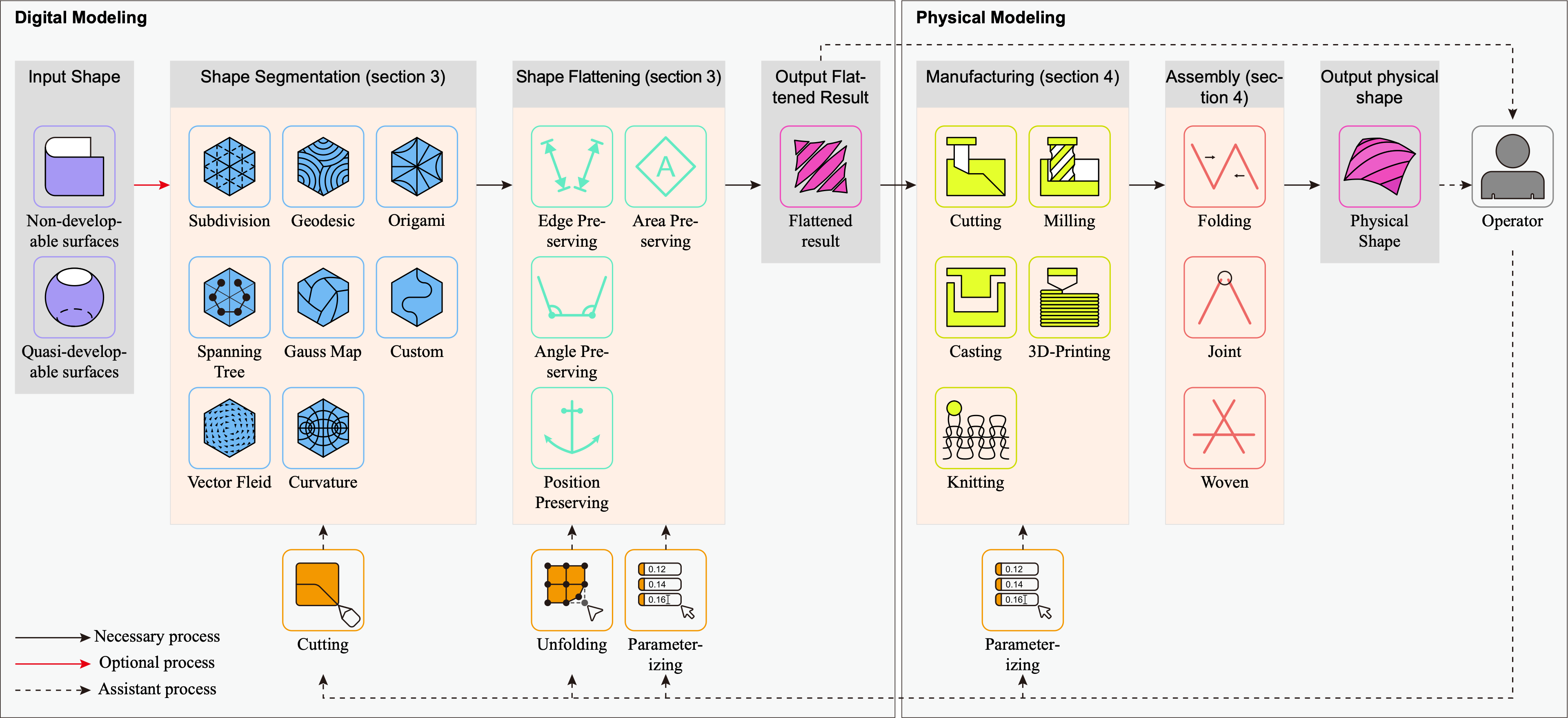
Figure 1: Pipeline of developable surfaces from digital modeling to physical modeling. Shape segmentation, surface flattening, digital and physical modeling, assembly, and interactive assistance.
Digital Modeling
Shape Segmentation
Shape segmentation is a critical step in the digital modeling of developable surfaces. It involves dividing complex shapes into segments that can be flattened with minimal distortion. The paper categorizes shape segmentation methods into several types: subdivision, geodesic, spanning tree, Gauss map, vector field, curvature, origami, and custom. Each method offers unique characteristics optimized for different shape and manufacturing requirements.
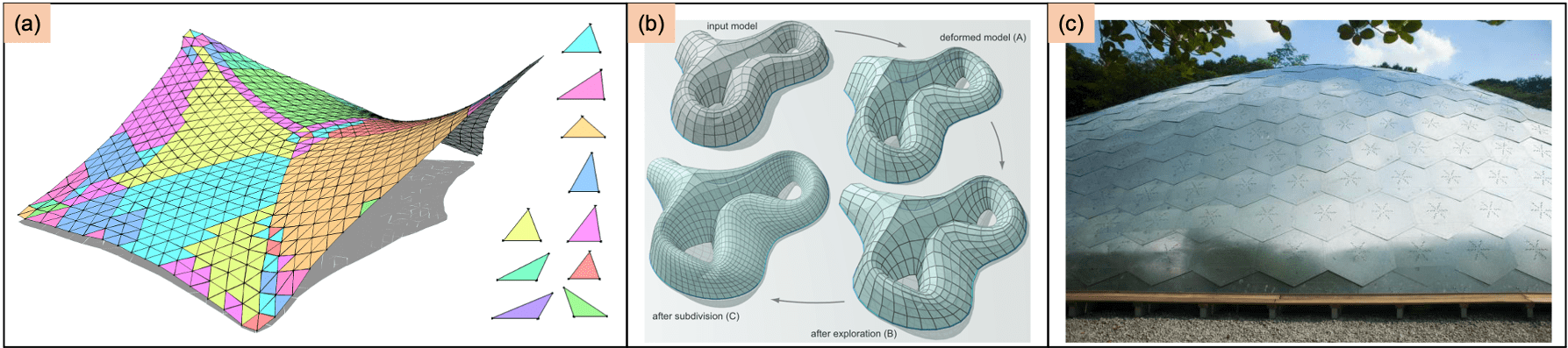
Figure 2: 3D shapes segmentation by subdivision: triangular meshes clustering.
Surface Flattening
Surface flattening seeks to minimize errors when transforming 3D surfaces into 2D planes. The paper discusses various optimization techniques to maintain mesh properties such as edge lengths, positions, angles, and areas. By using techniques like least squares, gradient descent, and Newton's method, researchers can achieve surface flattening with reduced distortion.
Physical Modeling
Manufacturing
The manufacturing process for developable surfaces can be categorized into subtractive and additive methods. Subtractive methods like cutting and milling are effective for flat materials, while additive methods like 3D printing and casting allow for more complex shapes. Each method offers specific trade-offs in terms of speed, cost, accuracy, and material versatility.
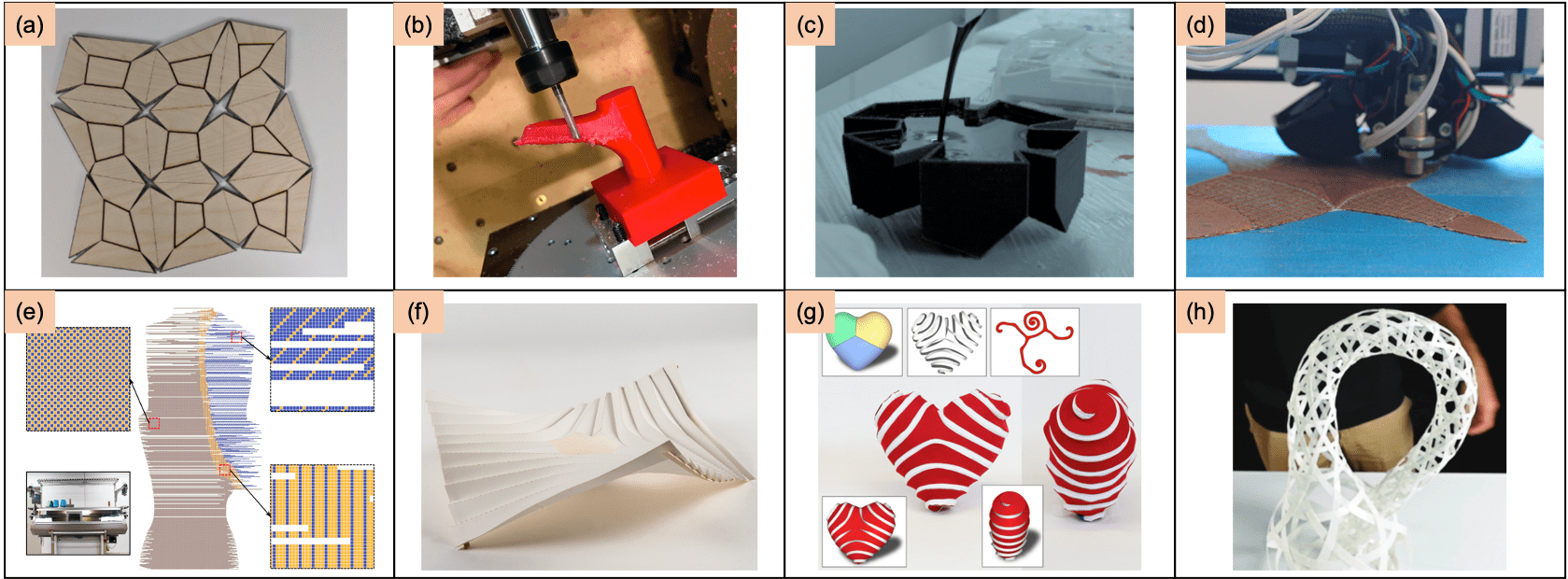
Figure 3: Selected samples of physical modeling: Cutting, Milling, Casting, 3D-printing, Knitting.
Assembly
Assembly processes such as folding, joint, and woven methods enable the construction of complex shapes from planar segments. This approach helps reduce fabrication challenges, allowing the rapid prototyping of intricate designs using simple manufacturing techniques.
Interactive Assistance
Interactive assistance is critical in refining the design process for developable surfaces, enabling precise control over segmentation and flattening through user interaction. Techniques such as cutting, unfolding, and parameterizing help users adjust models for better manufacturing outcomes.
Applications
Developable surfaces are widely applied across various domains. In architecture, they allow the construction of complex freeform structures with discrete panels. In product design, developable surfaces offer new aesthetic and functional possibilities. Additionally, they're explored in arts, garment design, mechanical materials, and data physicalization, showcasing the versatility and potential of developable surfaces in innovative applications.
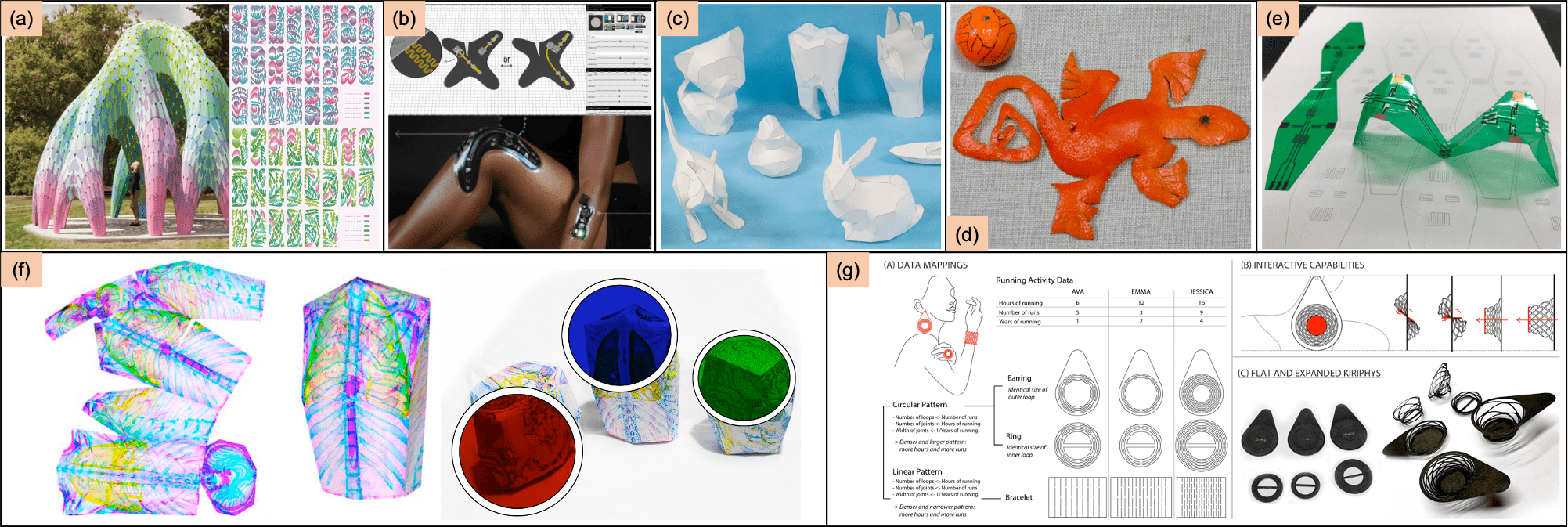
Figure 4: Selected samples of design applications: shell construction, wearable device, origami, peeling art, origami robots, anatomical physical visualization, jewelry design of data physicalization.
Challenges and Future Work
Despite the numerous advantages and applications of developable surfaces, there are challenges concerning segmentation quality, complexity of operations, and digitization to physicalization. Future research directions include exploring new segmentation methods, improving interaction techniques, and bridging the gap between digital models and physical fabrication using AI and machine learning.
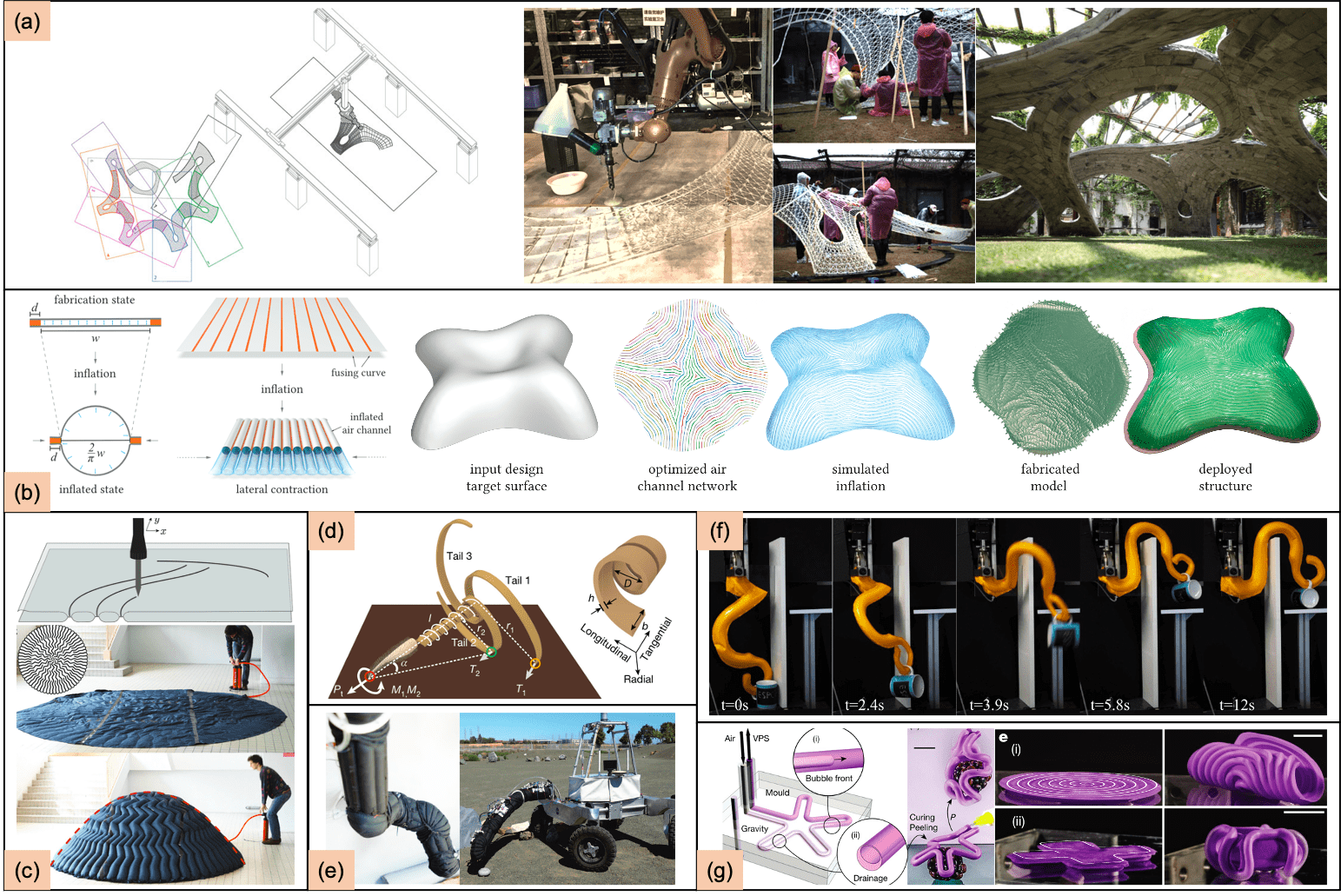
Figure 5: Expanded research based on developable surfaces: path printing by robotics for quick construction of shells.
Conclusion
The paper provides a detailed examination of developable surfaces, their methods, challenges, and applications. Developable surfaces offer significant potential across different sectors by enhancing manufacturing processes and facilitating innovative designs.
This survey represents an important step toward understanding and harnessing the capabilities of developable surfaces in practical applications, providing insights and future directions for researchers and practitioners in the field.