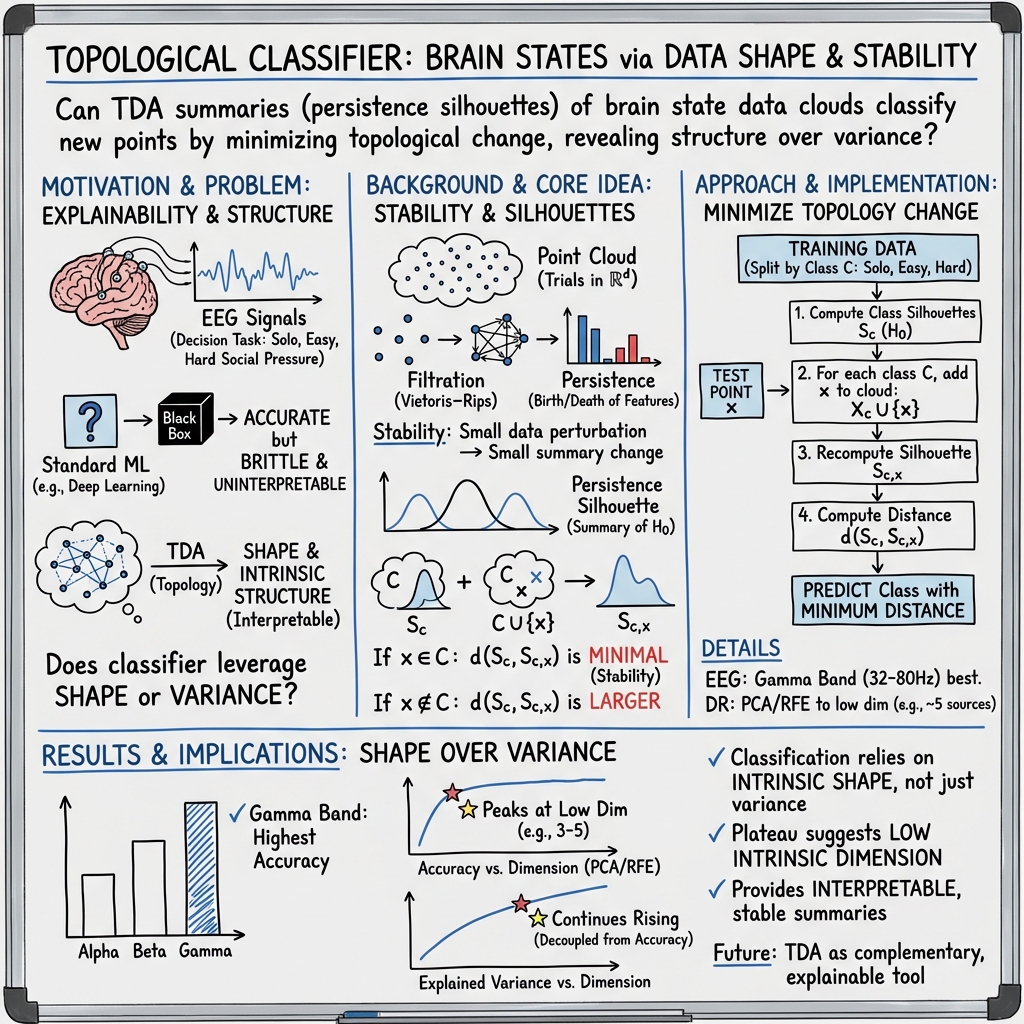
- The paper presents a TDA-based classifier that leverages persistence diagrams to capture data shape over variance for EEG analysis.
- The methodology transforms persistence diagrams into silhouettes, comparing topological distances to achieve competitive accuracy with traditional classifiers.
- Experimental results on EEG data under social pressure reveal enhanced performance in reduced-dimensional γ frequency bands.
A Topological Classifier to Characterize Brain States: When Shape Matters More than Variance
Introduction
The paper "A topological classifier to characterize brain states: When shape matters more than variance" (2303.04231) introduces a novel approach to data classification using Topological Data Analysis (TDA), diverging from traditional machine learning paradigms. Instead of focusing on the variance within datasets, the proposed TDA-based classifier leverages the shape and structure of point clouds in high-dimensional spaces. This technique is applied to electroencephalographic (EEG) data recorded during a decision-making experiment involving social pressure-induced motivational states.
Persistence Summaries and Classifier Design
TDA, particularly persistent homology, provides a framework for capturing the topological features of datasets, such as connectivity and cycles, at various resolution scales. The classifier operates by evaluating changes in topological metrics, using persistence diagrams and landscapes as primary tools. These diagrams are transformed into persistence silhouettes, which serve as summaries for assessing the shape of class-specific data clouds.
The classifier's unique methodology involves comparing the persistence silhouettes of different classes and calculating distances between them. When a new data point is added to a class, minimal changes in topological descriptors indicate correct classification, whereas notable changes suggest misclassification.
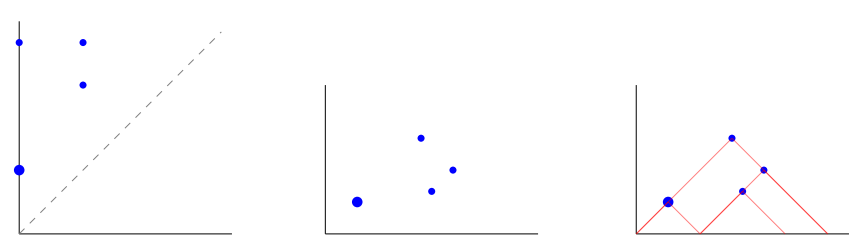
Figure 1: Persistence landscape obtained from a persistence diagram by means of 45-degree rotation and rescaling.
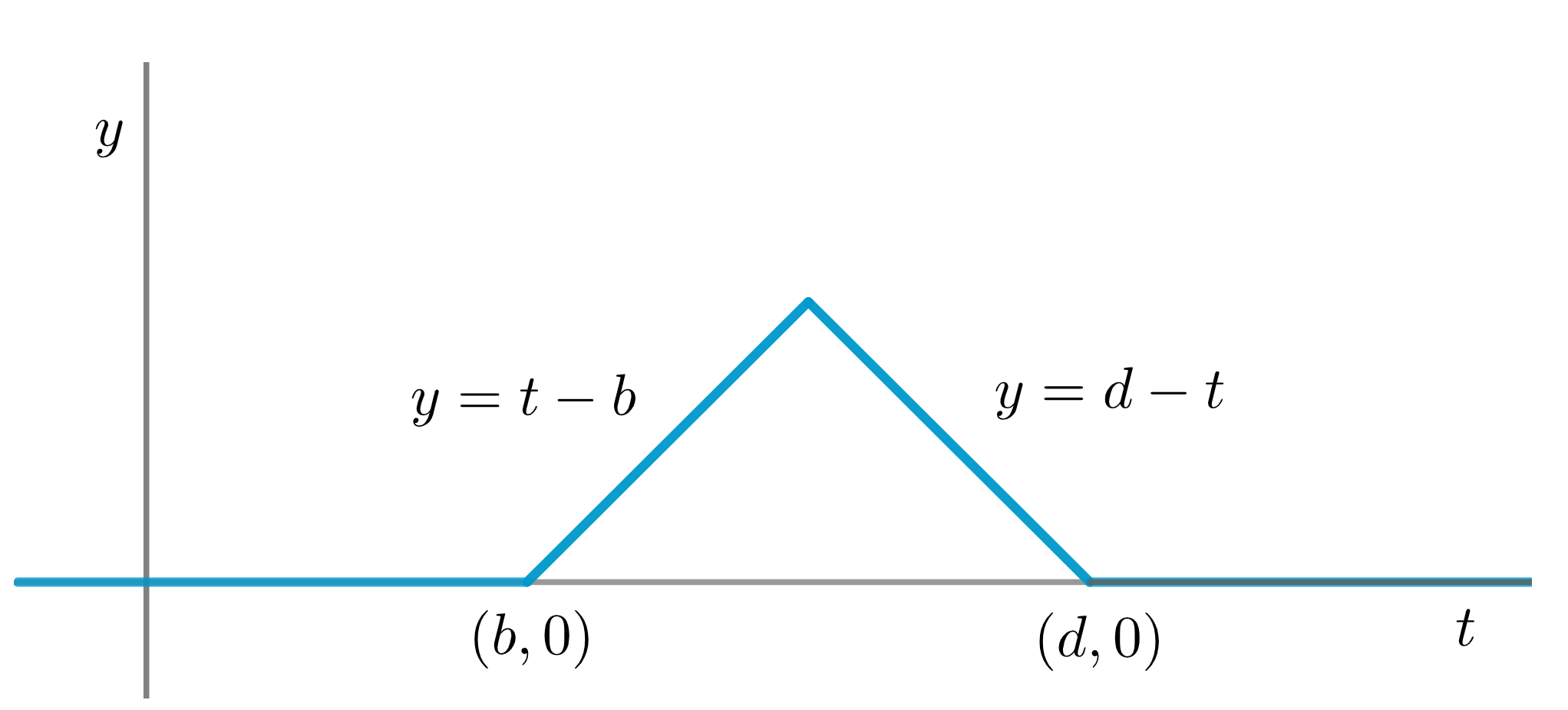
Figure 2: Tent function for a birth parameter b and a death parameter d.
Experimental Setup with EEG Data
The classification task utilized high-dimensional EEG recordings from eleven participants engaged in a decision-making task affected by social pressure. The signals were processed to explore the motivational impact of three conditions: solo, easy, and hard, each corresponding to varying levels of social pressure. Data preprocessing involved filtering the EEG signals into typical frequency bands (α, β, γ) and performing a dimensionality reduction using methods like PCA and RFE.
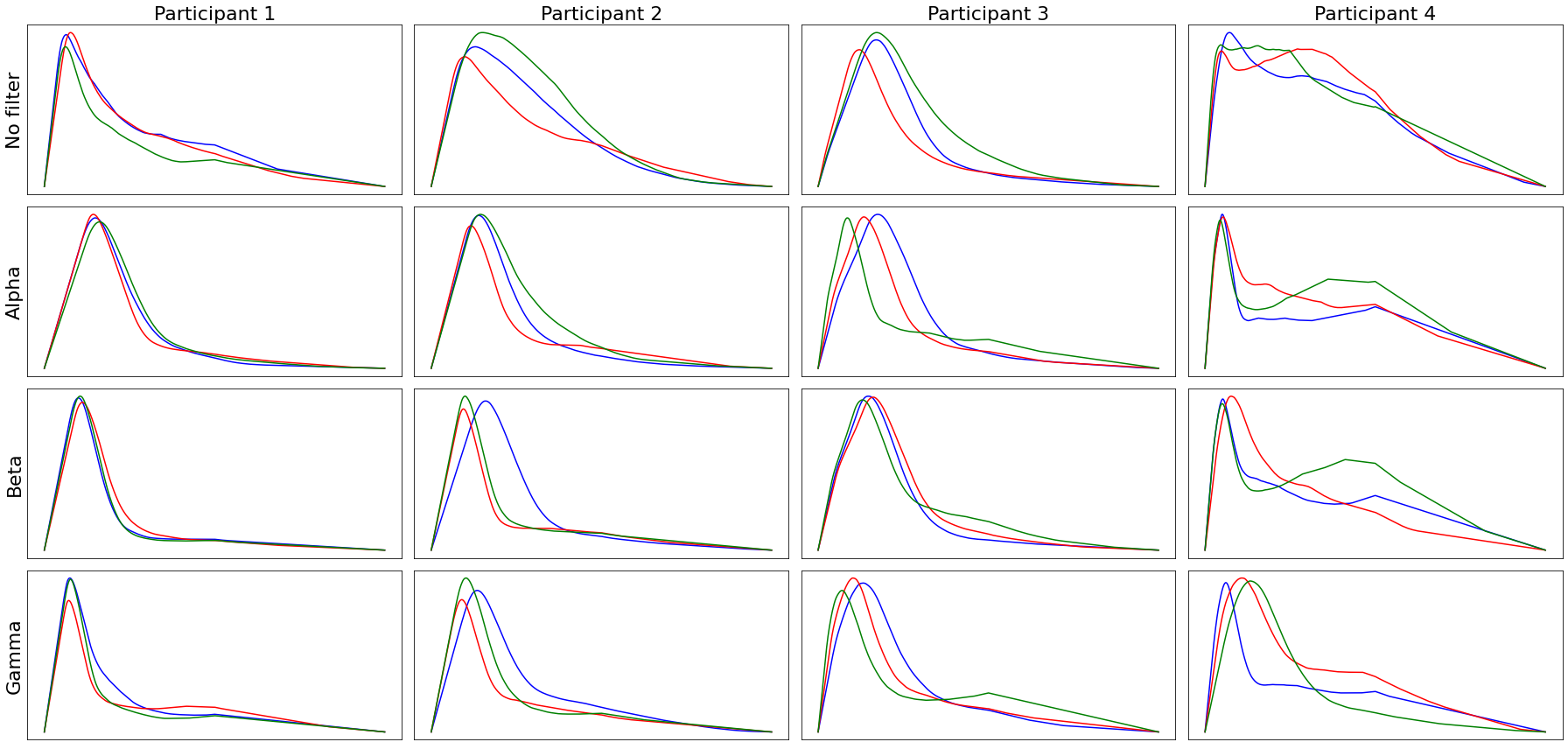
Figure 3: Silhouettes from persistence diagrams in dimension zero for each motivational state for each frequency band and unfiltered dataset.
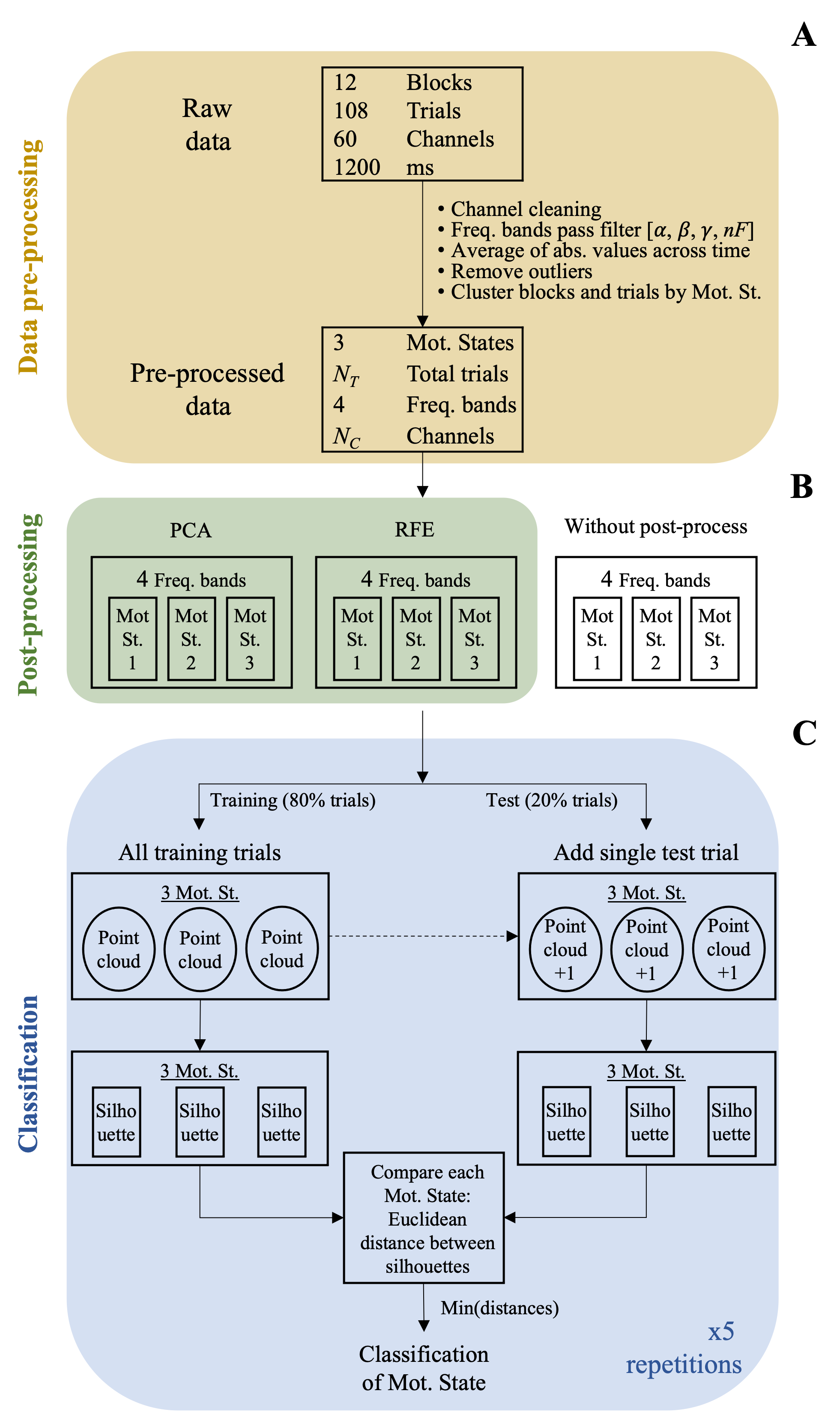
Figure 4: Pre-processing schematic showing data filtering and classification setup.
Results: Influence of Dimensionality Reduction and Frequency Bands
The study assessed classification accuracies across source and electrode spaces, employing different dimensionality reduction techniques. It was found that TDA classifier performance peaked within reduced dimensionality spaces, particularly in the γ frequency band, revealing the classifier's sensitivity to shape rather than variance.
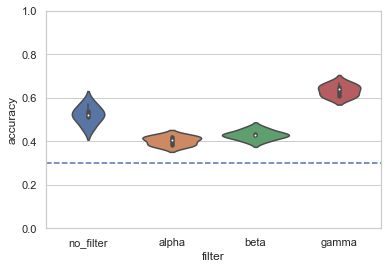
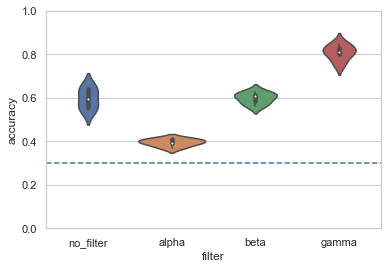
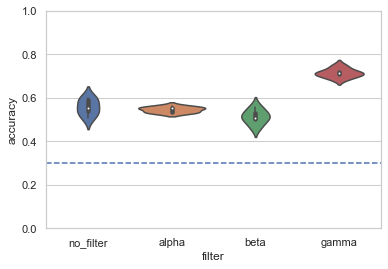
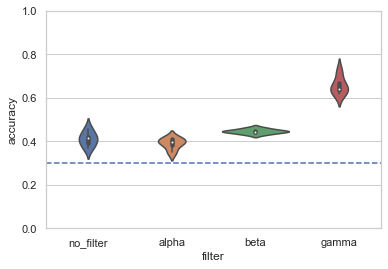
Figure 5: Accuracies of the topological classifier on source space by frequency band without dimensionality reduction for selected participants.
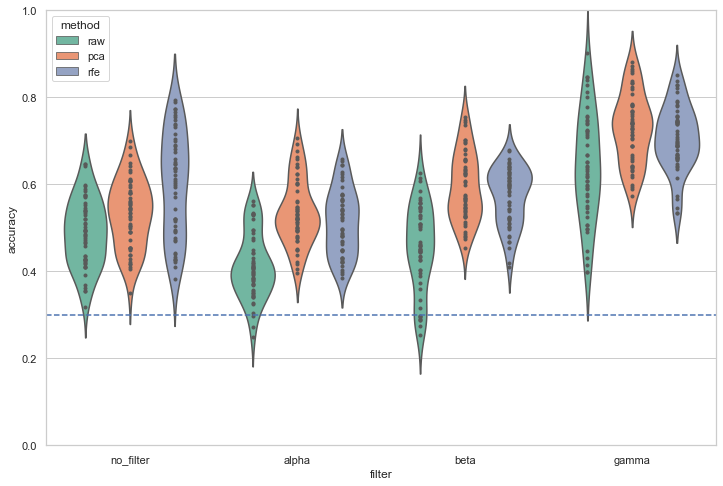
Figure 6: Comparison of baseline accuracies with those obtained after dimensionality reduction via PCA and RFE for participants.
Discussion
The novel TDA-based classifier provides comparable accuracies to conventional methods like nearest neighbor classification (1-NN). However, its reliance on shape characteristics rather than explained variance highlights a critical difference in approach. While 1-NN classifiers exhibit improved performance with increased variance explanation, TDA classifiers prioritize intrinsic data shape, which stabilizes at a specific dimension.
This behavior suggests potential applications where interpretability and data structure insights are crucial, such as understanding neural states during complex cognitive tasks. The findings reinforce the effectiveness of TDA in capturing topological features relevant for classification, particularly in high-dimensional biological data.
Conclusion
The study presents a promising avenue for data classification using topological analyses, advancing both theoretical understanding and practical application in neuroscience. The TDA classifier's focus on shape over variance offers insights into data structure that traditional methods may overlook, opening possibilities for more interpretable AI systems in sensitive applications. Further research could explore expanding the classifier's applicability across varied datasets and refining its robustness in different domains.