- The paper presents a Con1dResNet model that improves SSC estimation accuracy by 26.4% and firmness by 33.7% over conventional methods.
- It utilizes hyperspectral imaging across 400-1000 nm to capture both spatial and spectral data for detailed fruit quality analysis.
- The comparative analysis demonstrates deep learning's superiority on large datasets, setting new benchmarks for non-destructive fruit quality testing.
Deep Learning and Hyperspectral Images Based Tomato Soluble Solids Content and Firmness Estimation
Introduction
The study focuses on enhancing non-destructive testing techniques for measuring the soluble solids content (SSC) and firmness of cherry tomatoes using hyperspectral imaging combined with deep learning regression models. These metrics are essential for assessing the quality of tomatoes, influencing consumer satisfaction and market valuation. The traditional methods for measuring SSC and firmness are mainly destructive and inefficient for large-scale operations; thus, the research develops novel methodologies to address these limitations.
Hyperspectral Imaging System
The research utilizes a sophisticated hyperspectral imaging system to acquire spectral scattering images of cherry tomatoes, covering a spectrum range of 400 to 1000 nm. This imaging technique captures both spatial and spectral information simultaneously, providing a comprehensive view of the fruit's quality beyond conventional imaging modalities that are limited by spectral range or costs.
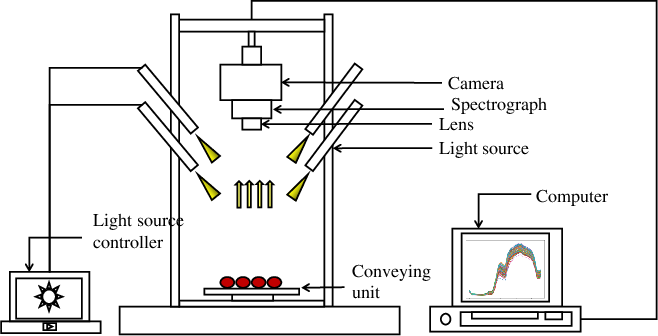
Figure 1: Schematic of the hyperspectral imaging system for acquiring spectral scattering images from cherry tomatoes.
Model Development: Con1dResNet
A key contribution of the paper is the development of a one-dimensional convolutional ResNet (Con1dResNet) model tailored for regression tasks. The model architecture is adapted to process reflection values from 462 spectral bands, enabling robust prediction of SSC and firmness. The Con1dResNet leverages deep learning's ability to automatically extract features from complex datasets, which enhances the accuracy and relevance of the predictions compared to conventional machine learning models.
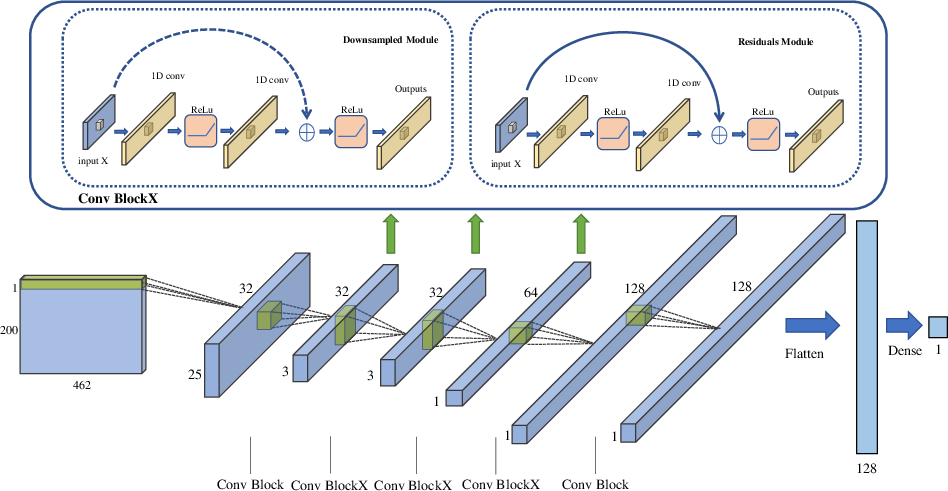
Figure 2: Con1dResNet network structure schematic.
Comparative Analysis with Machine Learning Models
The study rigorously evaluates the Con1dResNet model against prevalent machine learning techniques such as SVR, KNNR, AdaBoostR, and PLSR. While machine learning-based methods generally perform well under preprocessed conditions (e.g., MSC, second-order differentials), the deep learning approach benefits from utilizing raw data and demonstrates superior performance on large datasets. Notably, the Con1dResNet model improves SSC estimation accuracy by 26.4% over the best competing method and firmness estimation by 33.7%.
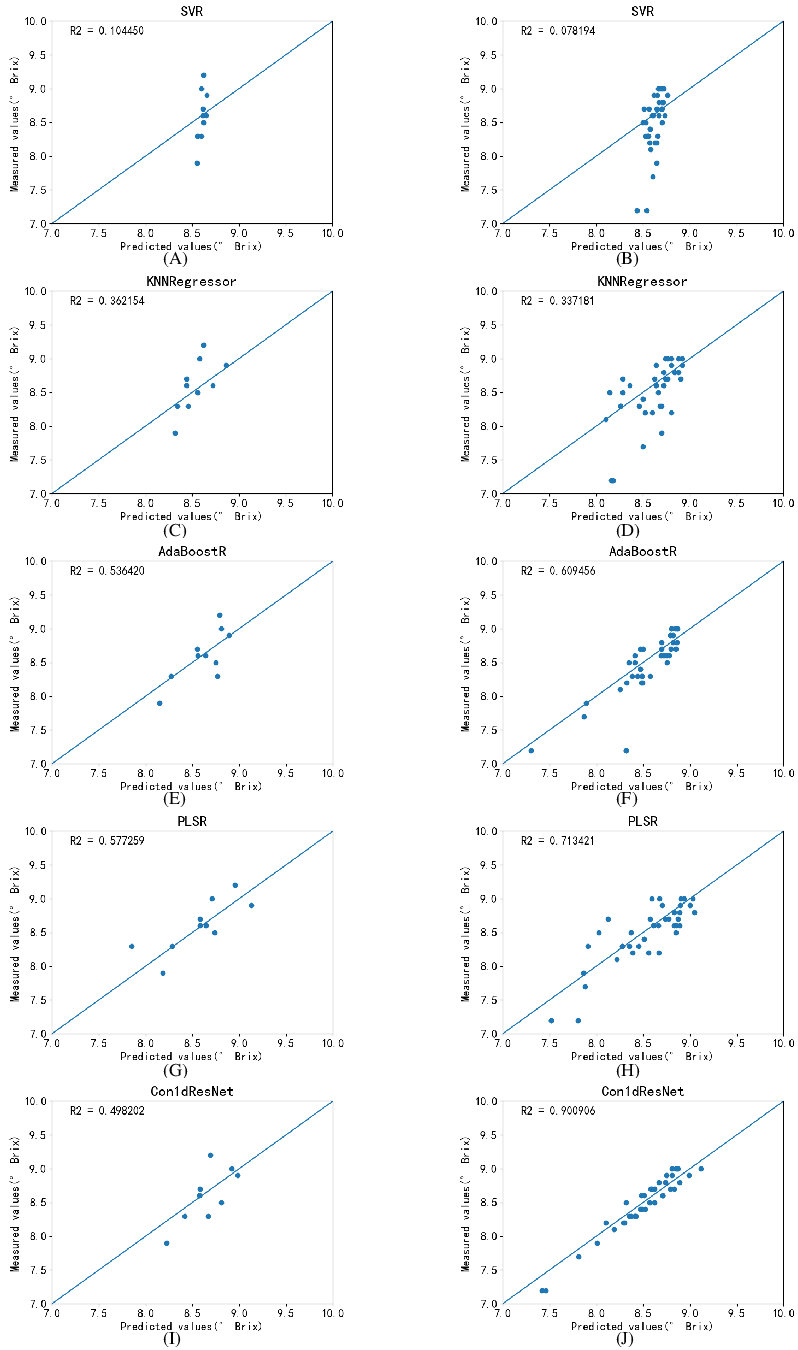
Figure 3: SSC estimation results for each model. (A) SVR estimation results on small sample data, (B) SVR estimation results on large sample data, (C) KNNR estimation results on small sample data, (D) KNNR estimation results on large sample data, (E) AdaBoostR estimation results on small sample data, (F) AdaBoostR estimation results on large sample data, (G) PLSR estimation results on small sample data, (H) PLSR estimation results on large sample data, (I) Con1dResNet estimation results on small sample data, (J) Con1dResNet estimation results on large sample data.
Results and Implications
The findings indicate a marked improvement in non-destructive estimates of SSC and firmness when employing hyperspectral imaging combined with deep learning methods, particularly on large sample sizes. However, the research also notes suboptimal results for firmness estimation, suggesting further investigation into broader spectral ranges and methodological refinements for enhanced precision.
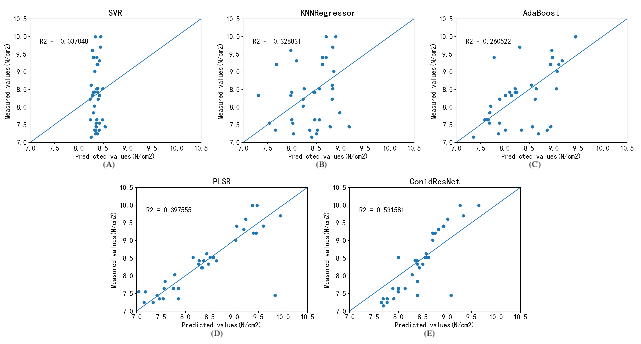
Figure 4: Estimation results of firmness for each model on a large sample dataset.
Conclusion
This research underscores the potential of integrating hyperspectral imaging with deep learning for assessing fruit quality, offering promising advancements for agricultural practices. Future developments could refine the spectral range and optimization parameters for firmness estimation, while the Con1dResNet model sets a new benchmark for SSC prediction in horticultural productions.
Overall, the study presents a detailed and comprehensive approach, leveraging emerging technologies to address longstanding challenges in fruit quality assessment, paving the way for practical applications in agricultural industry workflows.