- The paper reveals that Taurid stream #628 serves as a major reservoir of large cometary impactors influenced by Jupiter’s 7:2 resonance.
- It employs observational data from DFN and CAMS to analyze orbital characteristics and size frequency distribution, highlighting the stream’s stability and stratification.
- The study discusses recent fragmentation events potentially linked to asteroid 2015 TX24, shedding light on the continuous evolution of the meteoroid stream.
Introduction
The Taurid Stream #628, commonly referred to as the s-Taurids, emerges as a remarkable component within the Taurid meteor shower complex, characterized by periodic outbursts of significant fireballs. The investigation of this stream reveals its intricate relation with the Southern Taurid Complex and provides insights into the meteoroid dynamics influenced by Jupiter's gravitational resonance. Through observations in 2015 by the Desert Fireball Network (DFN) and the Cameras for Allsky Meteor Surveillance (CAMS), the stream exhibited peculiar stratification and an involvement in the 7:2 mean-motion resonance with Jupiter—a pivotal factor in its sustained influence in the meteoroid environment.
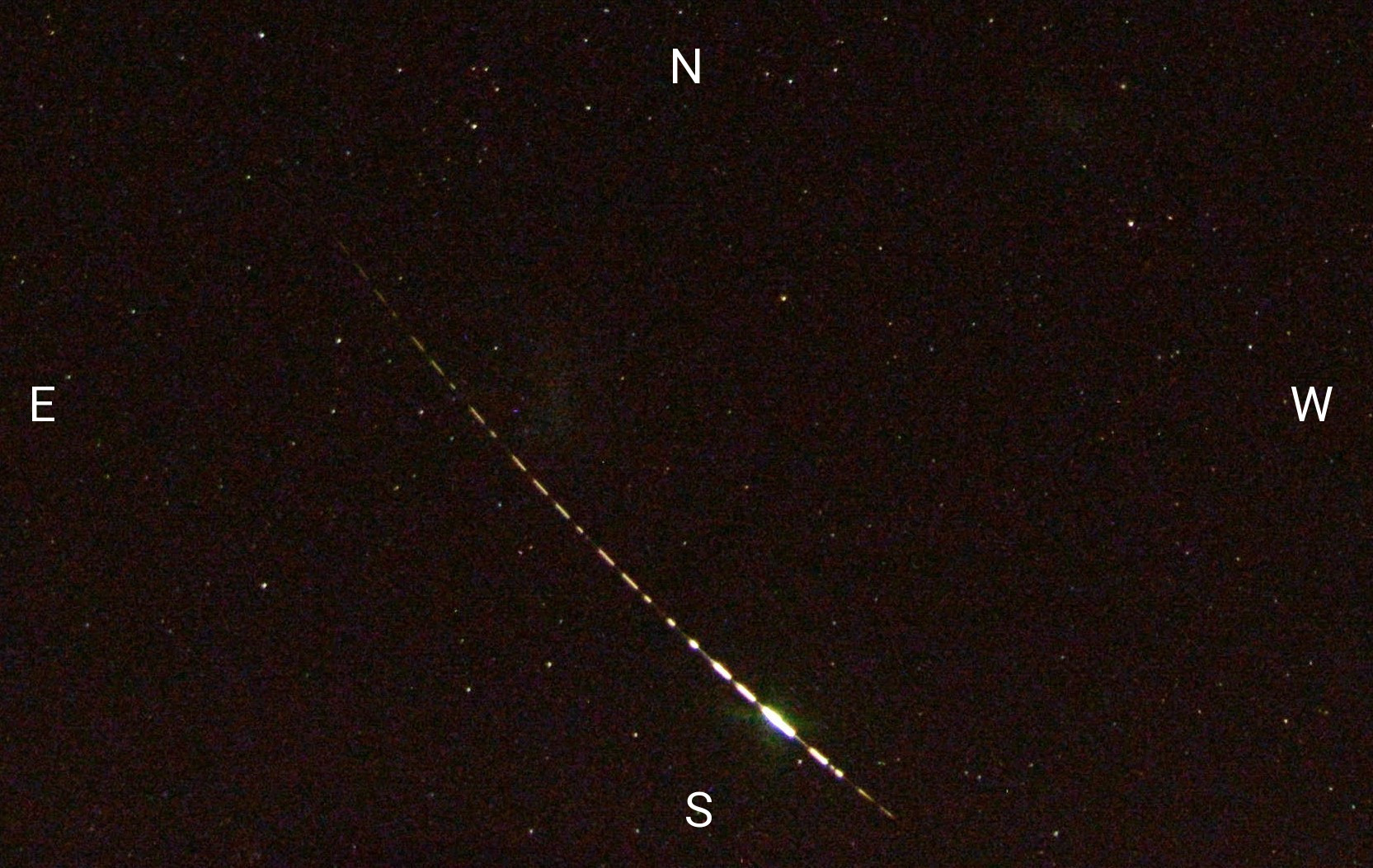
Figure 1: DN151104_01 shows a catastrophic fragmentation of a 2.6 s s-Taurid meteoroid at 74 km altitude.
Analysis of Orbital Characteristics
The orbital analysis of the s-Taurids is instrumental in distinguishing their formation and dispersion. Observations confirm that while the Southern Taurid Complex generally produces a variety of results, the s-Taurids demonstrate a marked stratification with considerable variations in entry speed along Earth's orbit. The resonance with Jupiter plays a vital role in maintaining orbital stability, evidenced by semi-major axis measurements clustering around values compatible with the resonance. Jupiter’s gravitational influence effectively stabilizes the meteoroid orbits over extended periods, thereby preserving the stream's coherence and enhancing its potential as a reservoir for significant impactors.
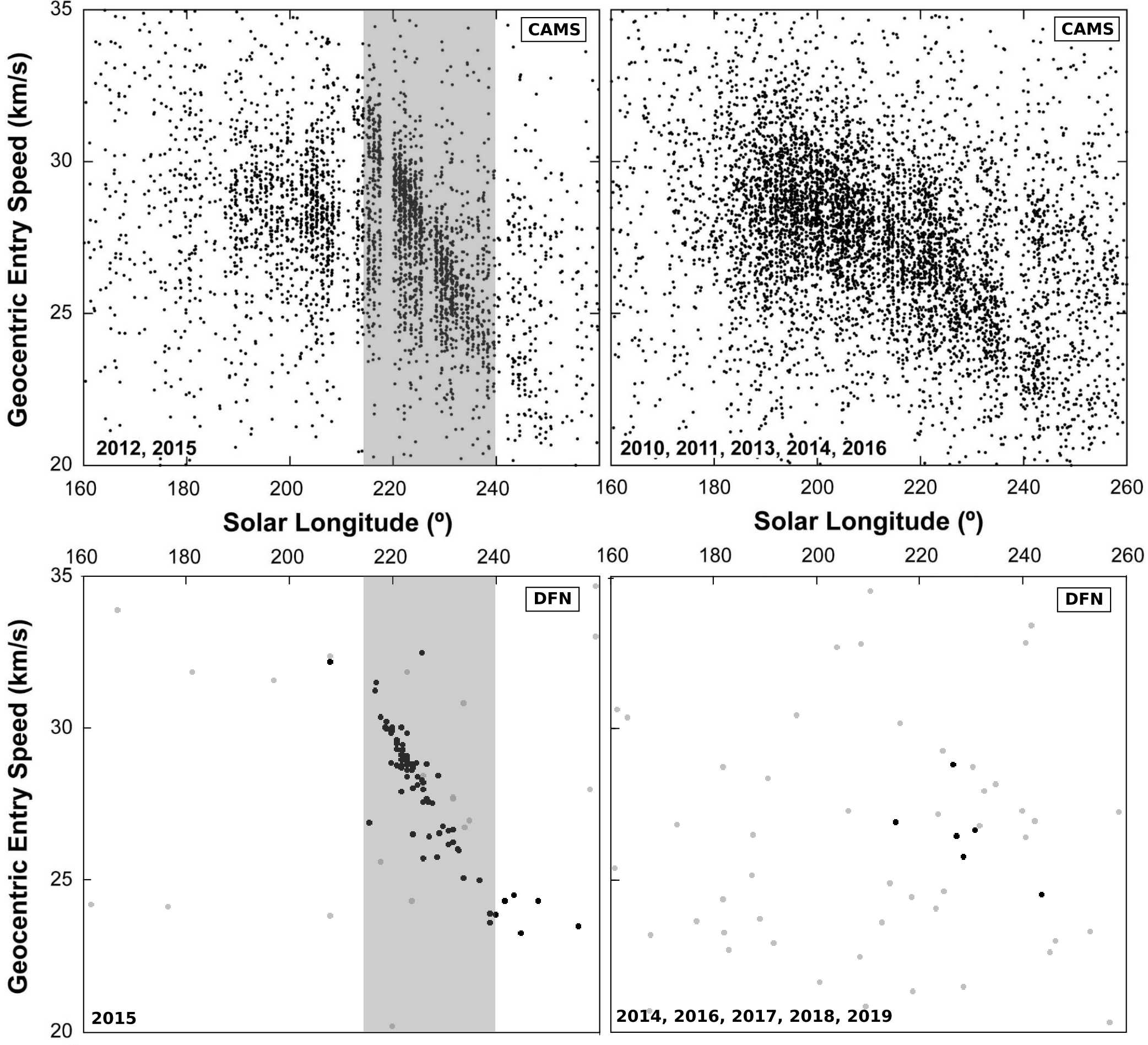
Figure 2: Detected meteors’ geocentric entry speeds as a function of solar longitude highlight the STS activity years.
Size Frequency Distribution
The s-Taurids exhibit a distinct mass distribution, heavily skewed towards larger meteoroids, which sets it apart from other typical Jupiter Family Comet (JFC) showers. The cumulative mass-frequency distribution established for the stream posits a continuation of particle size and distribution up to meter-sized fragments. The calculated differential mass index indicates a gentler fragmentation process of relatively strong material—a divergence from other weak cometary streams that typically disintegrate into smaller particles rapidly.
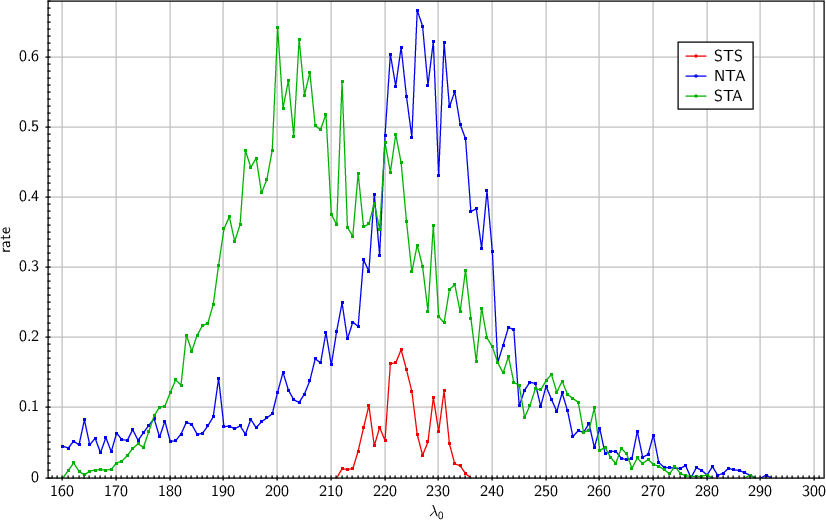
Figure 3: CAMS shower rates display the size distribution relative to sporadic meteors for streams including the s-Taurids.
Implications of Recent Fragmentation Activity
The investigation posits that the stream has undergone recent fragmentation, possibly related to asteroid 2015 TX24—a progenitor embedded in the resonance facilitating continued cluster formation. This fragmentation provides insight into an active dispersion model aligned with historical disruptions in the Taurid Complex, dominated by siblings of comet 2P/Encke. The implications for asteroid 2015 TX24 regarding its semi-major axis and nearness to resonance indicate its instrumental role as a parent body, possibly supplemented by counterparts like 2005 UR and 2005 TF50.
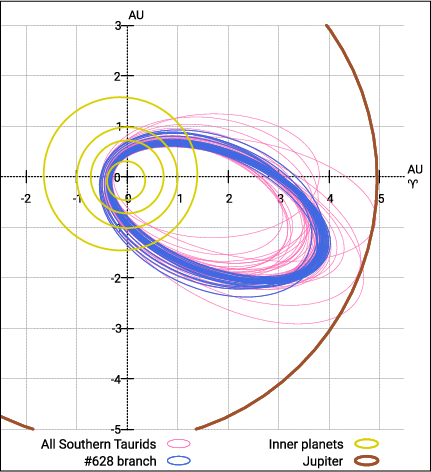
Figure 4: Ecliptic orbit plot displays all observed Southern Taurids, indicating concentration consistent with recent fragmentation activity.
Conclusions
The study captures the s-Taurids’ unique position as a stellar example of non-dispersed, dynamically bound meteoroid streams through complex resonance interactions. The dual presence of significant mass and gradual fragmentation within the stream elevates its potential contributions to Earth's meteoroid flux, inviting continuous attention to both its formation dynamics and broader impacts.
The 2022 return of this stream marks a pivotal point for further observational analysis, potentially aided by advanced facilities like the Large Synoptic Survey Telescope and Geostationary Lightning Mapper, allowing an enriched understanding of this complex and sizable reservoir.

Figure 5: Cumulative mass-frequency distribution for s-Taurids reconciles CAMS data with DFN observations.