- The paper demonstrates that NB centrality, derived from the Non-Backtracking matrix, effectively predicts influential spreaders at criticality.
- It maps bond percolation to the SIR model, utilizing spectral properties to rank nodes in both synthetic and real-world networks.
- The study validates NB centrality's superior performance over traditional measures through 10,000 simulation iterations across diverse network topologies.
Leveraging Percolation Theory to Identify Influential Spreaders in Networks
Introduction to Influential Spreaders
The challenge of identifying influential nodes in complex networks is a significant concern in the study of social, technological, and biological systems. These nodes, often termed as super-spreaders, can drastically influence the dynamics of spreading processes such as epidemic outbreaks, information dissemination, and innovation adoption. The paper utilizes percolation theory to address this challenge, focusing on the Susceptible-Infected-Removed (SIR) model at criticality and advocating for the Non-Backtracking (NB) centrality as an optimal centrality measure for discerning influential spreaders.
Bond Percolation and SIR Model Mapping
The study elaborates on the intrinsic relationship between bond percolation and the SIR model's static properties. This relationship allows for a novel application of spectral properties from the Non-Backtracking matrix to accurately predict influential spreaders. The paper demonstrates that the NB centrality, derived from the principal eigenvector components of the Non-Backtracking matrix, excels in predicting influence, particularly in locally tree-like networks at critical states.
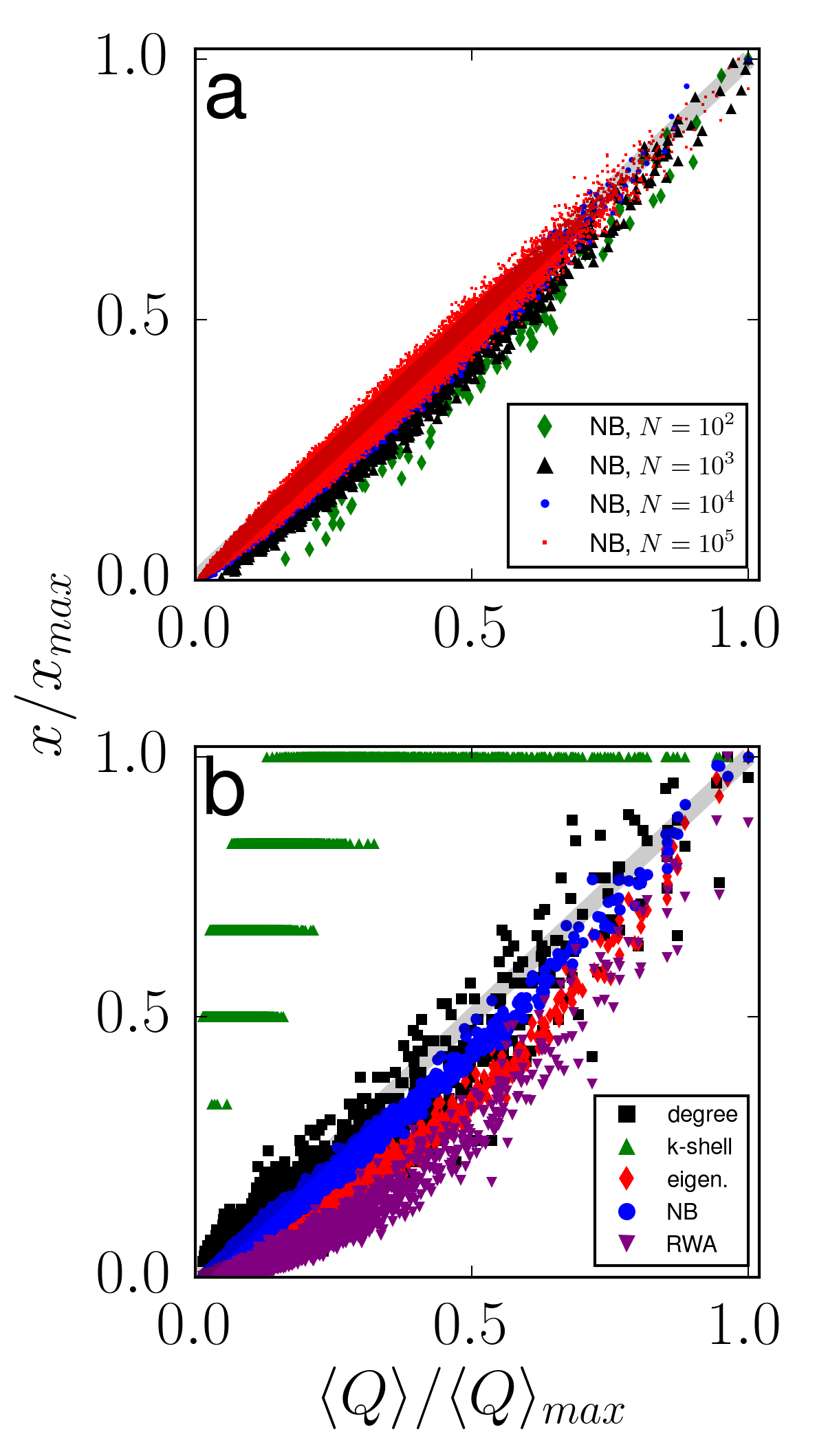
Figure 1: Impact of individual nodes at criticality in terms of predicted and actual spreading impacts measured against centrality scores.
The evaluation methodology involves ranking nodes based on their spreading power from 10,000 SIR simulation iterations on both synthetic and real-world networks. The paper computes and compares several centrality metrics such as degree, k-core, eigenvector, and generalized random walk accessibility. Quantitative comparisons utilize imprecision functions and Jaccard distances, which juxtapose centrality-derived rankings to actual SIR simulation-based rankings.
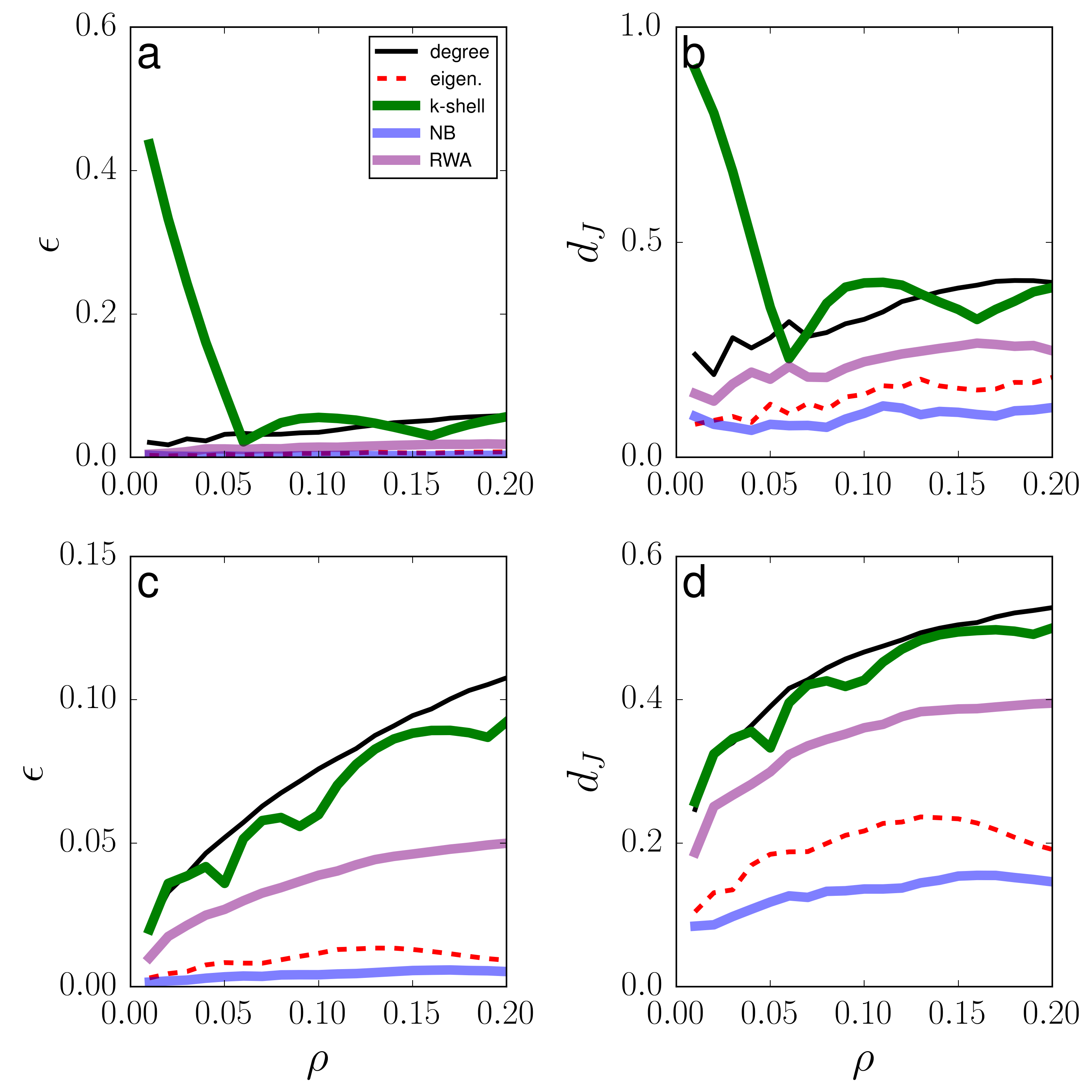
Figure 2: Identification of influential spreaders in Scale-Free graphs at criticality, displaying the efficacy of centrality measures like NB centrality.
Results and Observations
Simulation results substantiate the superiority of NB centrality across a substantial variety of network topologies, including social, biological, and technological networks. At criticality, NB centrality provides a robust predictor by showcasing proportionality with outbreak sizes precipitated by selected nodes. The paper also references scenarios where NB outperforms traditional metrics like degree or k-core, especially in non-spatial networks.
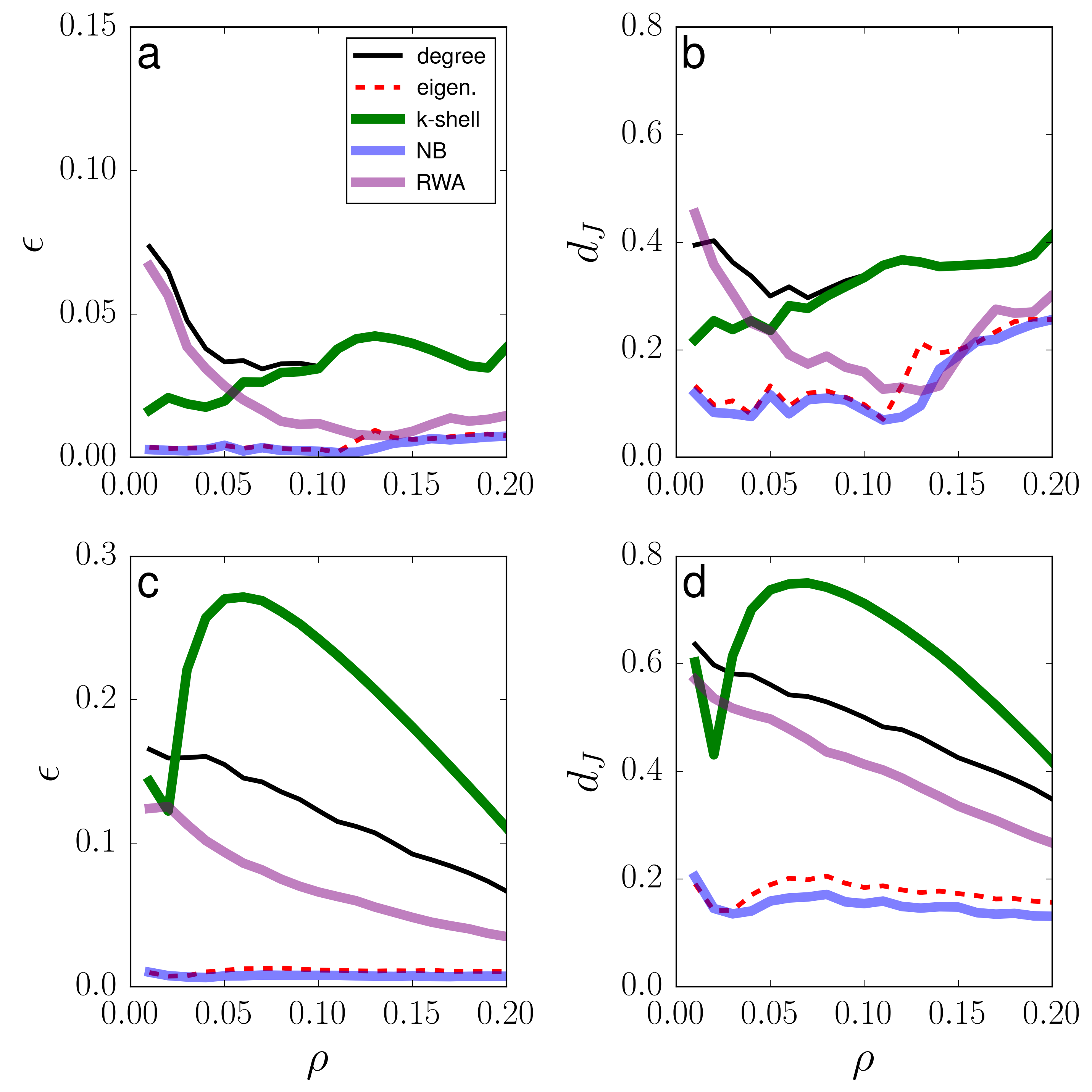
Figure 3: Identification of influential spreaders in real-world graphs at criticality, illustrating NB centrality outperforming other measures.
Applicability to Real-World Networks
In-depth analysis entailing a comprehensive set of 95 real-world network structures affirms that NB centrality frequently emerges as the most accurate metric for identifying top spreaders, outperforming other centrality measures in roughly 60% of cases. Notably, NB centrality holds its predictive accuracy not only at critical spreading phases but also through subcritical and supercritical regimes.
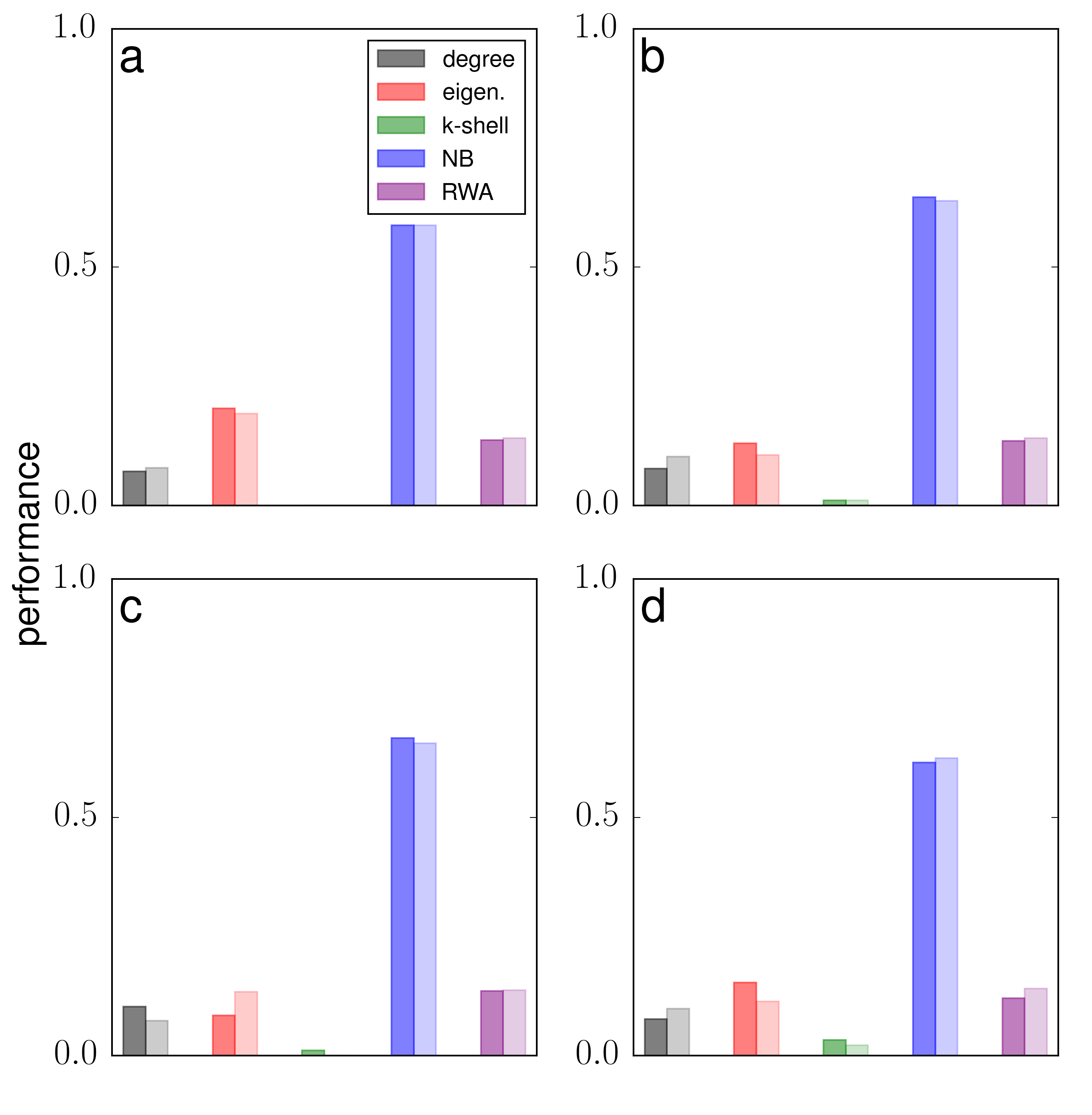
Figure 4: Comparison of predictive power of centralities in nonspatially embedded real-world graphs at criticality, underscoring NB centrality's consistent performance.
Conclusion
The research establishes the efficacy of utilizing the NB centrality derived through percolation theoretical constructs to pinpoint influential spreaders in complex networks. By bridging percolation theory with epidemic models, this approach offers a scalable and computationally efficient mechanism for targeting optimal influence nodes, offering potential avenues for advancements in epidemic control and network analysis.
Overall, this study paves the way for future exploration into dynamic networks with varying topological properties, broadening the application spectrum of NB centrality and related methodologies.