- The paper establishes a precise condition for when H-freeness is one-sided error testable, linking testability to the connectivity of subgraphs after removing independent sets.
- It introduces local exploration methods via constant-query testers that overcome challenges posed by high-degree hubs in p-degenerate graphs.
- The work unifies and extends prior results by providing a structural characterization that informs the design of efficient algorithms for sparse graph property testing.
A Structural Characterization of One-Sided Error Testability in Bounded Degeneracy Graphs
This paper rigorously delineates the precise boundary for which monotone graph properties are testable with one-sided error in the random neighbor oracle model, when input graphs are from the class of p-degenerate graphs (i.e., graphs admitting an order of vertices so each has at most p lower-indexed neighbors). Unlike the minor-closed case, bounded-degeneracy graphs possess unbounded degrees, allowing “hub” nodes that may occlude globally forbidden structures from local exploration algorithms. The random neighbor oracle model restricts exploration to locally available information: only existing edges can be observed, and negative information about non-edges is fundamentally inaccessible.
The main object of study is the testability, with query complexity dependent on parameters like degeneracy but not on the order of the graph, for arbitrary monotone properties—those closed under edge deletion. The paper focuses on one-sided error testing: the tester must accept every graph with the property with probability one and may reject only when it explicitly finds a subgraph violating the property.
The work generalizes and strictly subsumes the characterization previously established for proper minor-closed graph families, moving to degenerate graphs which can have arbitrarily high degrees and, crucially, can “hide” constant-size forbidden subgraphs within large neighborhoods, evading detection by local, constant-query oracles. This strict increase in expressiveness of the input family is shown to permit fundamentally different (non-testable) behavior for many graphs.
Main Theoretical Results
The authors’ structural characterization proceeds in two principal steps. First, the analysis reduces to forbidden subgraph properties: monotone properties are exactly those defined by the exclusion of a finite family H of constant-size forbidden subgraphs. The central technical challenge is to precisely characterize, for a given such forbidden family, when one-sided error testing is possible with constant query complexity (with respect to n).
The paper establishes a sharp structural dichotomy for when, for a fixed forbidden subgraph H, the property of being H-free is one-sided error testable in bounded degeneracy graphs:
H-freeness is one-sided error testable in bounded-degeneracy graphs if and only if for every independent set S⊆V(H), the induced subgraph on V(H)∖S is connected.
That is, the only independent sets that separate H are those that—when removed—leave a disconnected graph. If such a “separating” independent set exists, p0-freeness is not testable with constant queries.
This result is constructive on both sides: for “hard” graphs (those possessing such obstacles), the authors explicitly construct infinite families of p1-degenerate graphs p2 that are p3-far from being p4-free, yet any constant-query one-sided error tester will fail with high probability to find a copy of p5 (see Figure 1). The construction leverages high-degree vertices (“hubs”) with “spoke” connections, distributing the support for the forbidden subgraph across the graph so that all necessary pieces are extremely unlikely to be simultaneously revealed by local sampling.
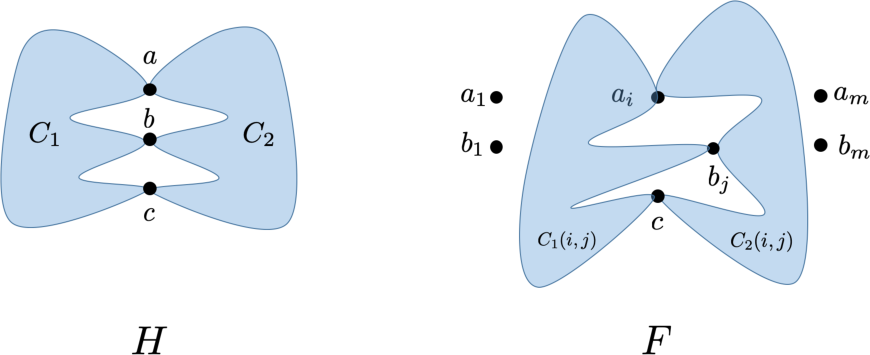
Figure 1: The graph p6 has a separation set p7.
This is made concrete with the canonical p8 lower bound: constructing a 2-degenerate graph with two hubs and two sets of paths between them—every p9 is split between these hubs and the path vertices, but no constant number of local explorations can recover a full cycle with non-negligible probability. The general construction (Figure 1) extends this to arbitrary obstacles.
For the case where no such separating independent set exists (i.e., for all independent sets, the remainder is connected), the authors design constant-query testers based on local explorations that, after appropriate “cleaning” (removing only edges affecting heavy-to-heavy connections), always discover a forbidden subgraph when the input is far from H0-free.
Families of Forbidden Subgraphs and Collective Testability
For monotone properties defined by arbitrary families H1 of forbidden subgraphs, the authors provide a full characterization: such a property is testable if and only if, for every non-testable H2 (i.e., with a separating independent set H3), and for each subset H4 of cardinality H5, there exists another H6 in the family (a "sentinel") such that H7 can be mapped into a “cactus” structure whose attachment points correspond to H8, but in which each H9-role is covered by at most one vertex.
The necessity is proved by adversarial constructions (“lower bound” graphs) which, unless some other forbidden subgraph detects the obstacle, demonstrate that no local search can succeed with constant probability. The sufficiency is shown via an inductive, algorithmic embedding of one of the sentinels, leveraging the structure of the “petals” (connected parts of cacti) to avoid collisions and ensure the probability mass is not lost at each branching.
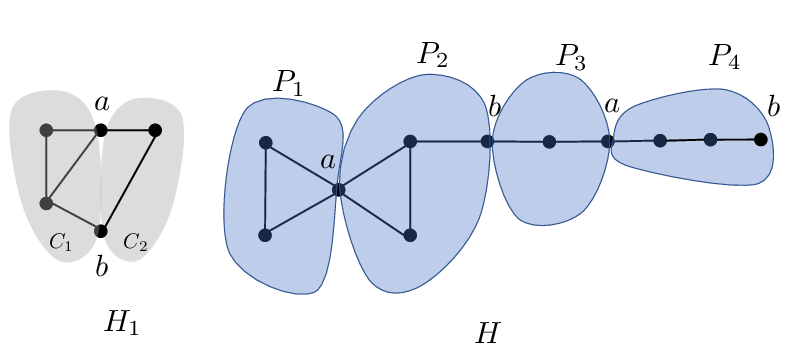
Figure 2: The graph n0 has an obstacle set n1.
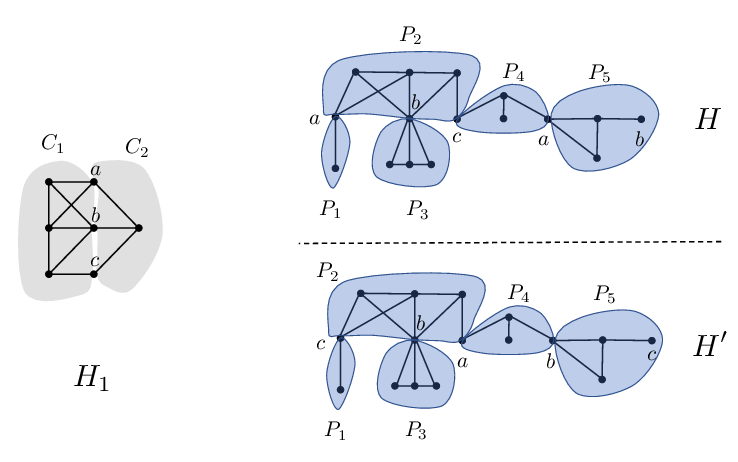
Figure 3: The graph n2 has a separation set n3.
Thus, the presence of testable "sentinel" forbidden subgraphs in the family functionally “breaks” the hard obstacle construction, a phenomenon exemplified by families such as n4 (the 4-cycle and the 10-star): although cycle-freeness is not testable in general, the presence of the forbidden star bounds the maximum degree, precluding the C4-obstacle and rendering the property testable.
Technical Approach and Canonical Testers
All results are formalized in the random neighbor oracle model, with explicit construction of canonical testers: procedures that start exploratory searches from n5 randomly chosen vertices, using bounded-depth BFS with random neighbor sampling, and only reject upon explicit discovery of a forbidden subgraph.
The lower bound arguments make rigorous use of birthday-paradox reasoning to quantify the vanishing probability of local testers finding all necessary pieces of a forbidden structure coordinated through high-degree hubs. For upper bounds, the analysis shows that in the absence of such “fragmented” structures, a small sample must, with high probability, suffice to witness a violation.
Implications and Future Directions
The characterization provided sharply distinguishes the random neighbor oracle testability landscape for n6-degenerate graphs, subsuming and generalizing earlier results for minor-closed families. The construction of the lower bound instances reveals the power of degree heterogeneity in enabling “hidden” forbidden structures, and the necessity of global connectivity among the pieces of a forbidden configuration for feasible detection.
The explicit characterization for families of forbidden subgraphs provides a usable framework for analyzing the testability of complex monotone properties in sparse graphs, with immediate implications for subgraph-freeness, hyperfiniteness, and structural graph parameters.
On a theoretical level, these results clarify the interplay between connectivity and local testability, suggesting further investigation into more refined models of local exploration, resource-bounded testers, and parameterized extensions (e.g., higher arboricity, local expansion constraints).
Conclusion
This work delivers a complete structural characterization of monotone properties one-sided error testable in the random neighbor oracle model for n7-degenerate graphs. The testability boundary is governed not merely by the presence of forbidden subgraphs, but by the fine-grained connectedness of these subgraphs and the combinatorics of how their “pieces” interact with high-degree neighborhoods. The results provide foundational insights into the granular mechanisms by which combinatorial structure constrains algorithmic property testing in sparse graph regimes, and the framework is broadly applicable for future explorations in local algorithms and combinatorial property testing.

