- The paper derives analytic and numerical expressions for shadow morphology by incorporating Lorentz-violating parameters alongside black hole spin.
- It employs a metric-affine formulation and ray-tracing simulations to capture anisotropic deformations and brightness asymmetries in the shadow profile.
- Findings reveal that increased LV parameter X and high spin yield teardrop-like, asymmetric shadows, providing potential observational tests for Lorentz symmetry breaking.
Rotating Black Hole Shadows in Metric-Affine Bumblebee Gravity
Introduction
The paper "Rotating black hole shadows in metric-affine bumblebee gravity" (2603.28722) presents a rigorous analysis of black hole shadows in the context of metric-affine bumblebee gravity—an extension of General Relativity (GR) that introduces spontaneous Lorentz symmetry breaking (LSB) via a vector field Bμ with a non-zero vacuum expectation value. The focus is on characterizing shadow morphology for rotating (Kerr-like) black holes, parameterized by the dimensionless spin a=J/M and the Lorentz-violating (LV) coefficient X=ξb2, and examining how these interact to produce observable deviations from standard GR predictions.
Metric-Affine Bumblebee Gravity Framework
The model is formulated in the Palatini approach, with metric gμν and affine connection Γμνλ treated as independent variables. The action incorporates the bumblebee field Bμ and a LSB potential, yielding an SME-like gravitational sector with non-minimal couplings. Importantly, the metric-affine formalism maintains projective invariance, mitigating ghost degrees of freedom. The resulting Kerr-bumblebee metric is determined explicitly, with the LV parameter X modifying both diagonal and off-diagonal metric components, notably introducing anisotropy in null geodesic propagation.
Analytical Structure of Shadows
Null geodesics are analyzed to derive expressions for the photon sphere radius, critical impact parameter, and shadow radius. Key findings include:
- The photon sphere radius rph is independent of X, consistent with the standard Kerr form.
- The shadow radius depends explicitly on X, with larger a=J/M0 leading to a reduction in the apparent shadow size and the introduction of anisotropic features in the observed profile.
- The effective potentials governing photon motion are modified by a=J/M1, yielding directionally dependent stability and capture regions.
Numerical Intensity Profiles and Parameter Dependence
Simulation of intensity profiles with thin accretion disk models reveals:
- Increasing spin parameter a=J/M2 (fixed a=J/M3) transitions the shadow from circular (Schwarzschild) to "D"-shaped (maximal Kerr), with flattening and displacement due to frame-dragging and rotational Doppler effect.
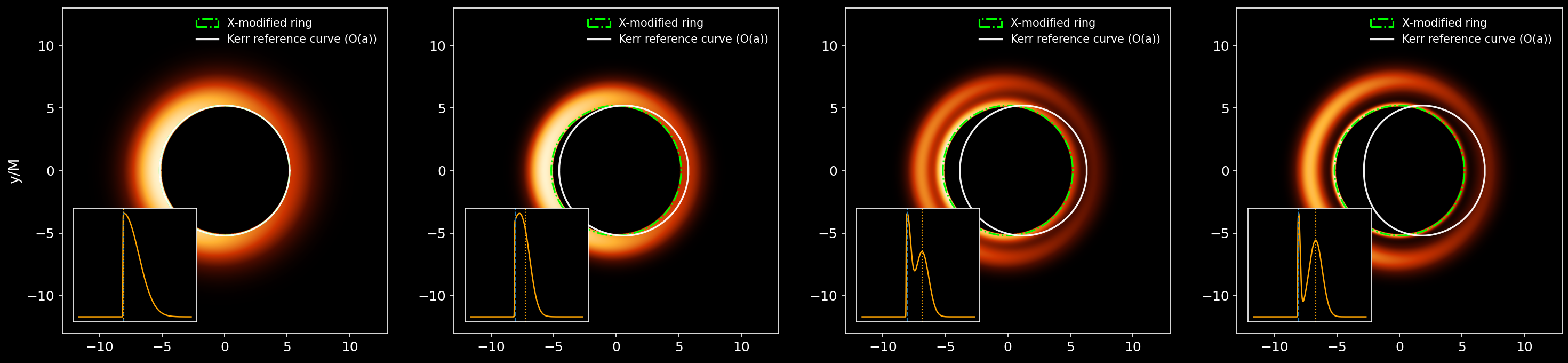
Figure 1: Variation in intensity profile with increasing rotation parameter a=J/M4; a=J/M5 (pure Kerr/Schwarzschild).
- At fixed spin, increasing a=J/M6 produces lateral displacement proportional to a=J/M7 and vertical flattening (a=J/M8). For high values of a=J/M9, the shadow exhibits prominent asymmetric deformation and teardrop-like morphologies.
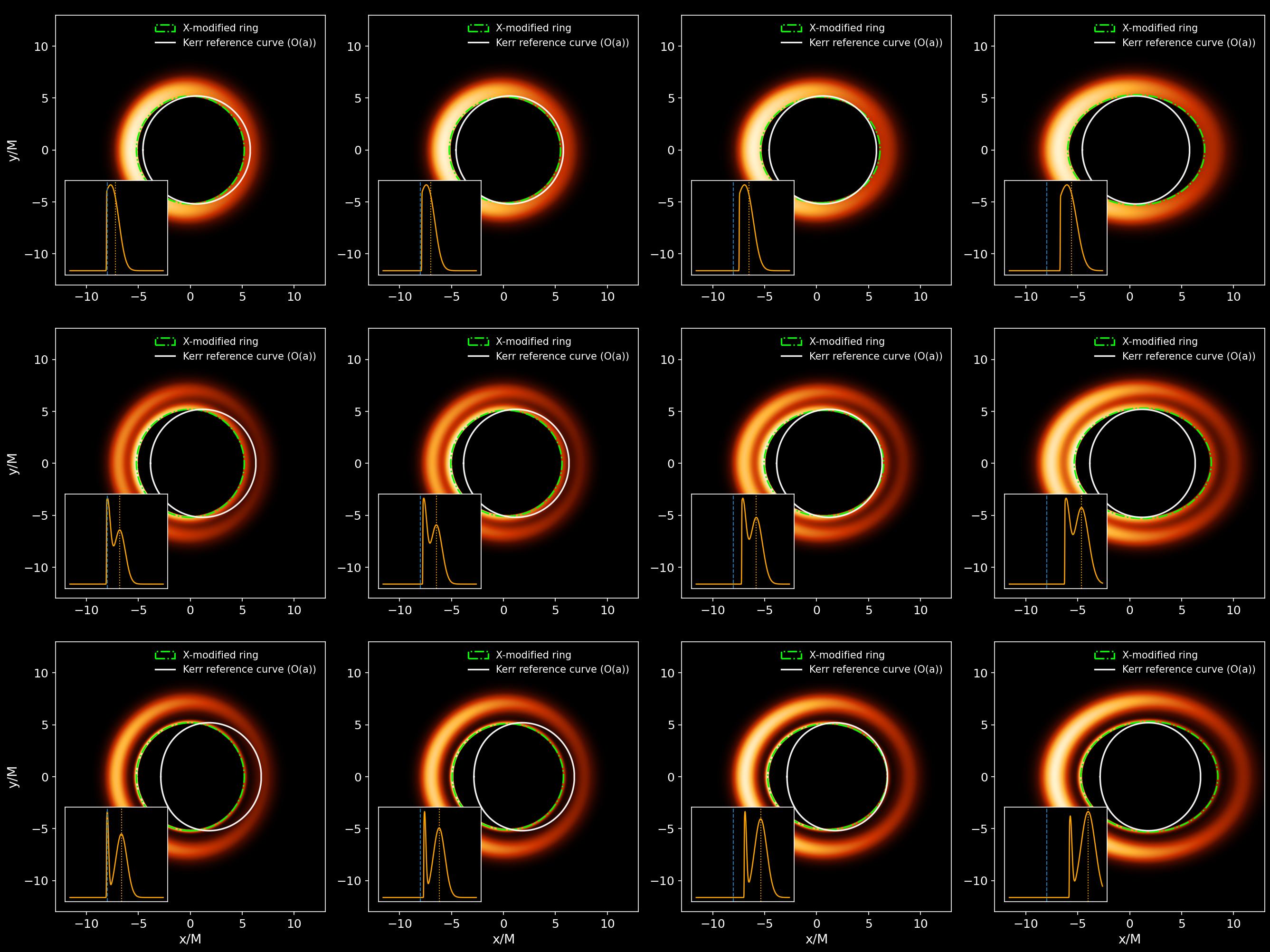
Figure 2: Intensity profiles for varied rotation (X=ξb20) and LV parameter (X=ξb21), highlighting increasing anisotropy and displacement with higher X=ξb22.
- When fixing X=ξb23, the shadow remains perfectly symmetric for all X=ξb24 values, indicating that observable deviations require the interplay of both rotation and LSB.
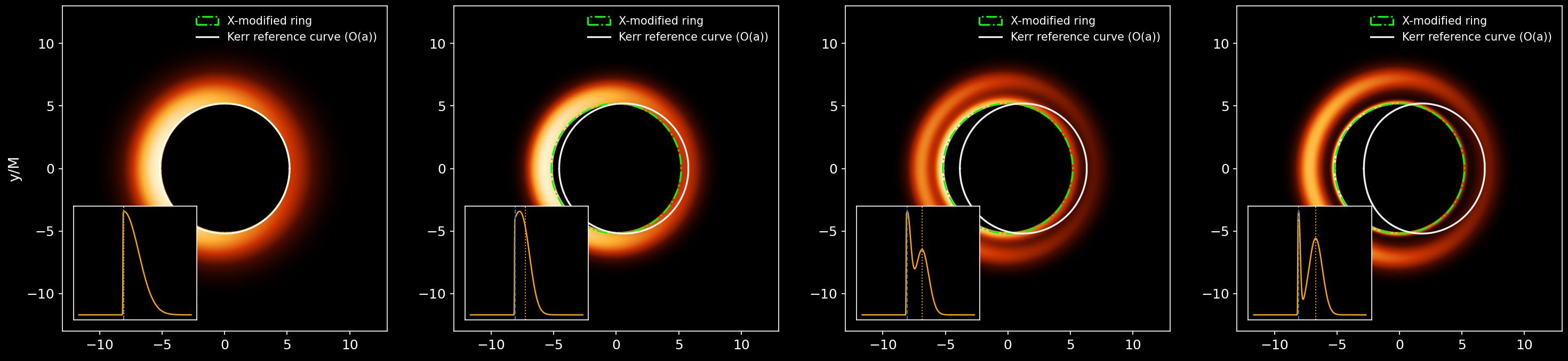
Figure 3: Profiles for X=ξb25 and varying X=ξb26; absence of rotation preserves shadow symmetry even as X=ξb27 increases.
Ray-Tracing Simulations with GYOTO
Ray-tracing simulations performed using GYOTO are crucial for realistic visualization and analysis of the shadow silhouette in astrophysical contexts. Key results:
- For X=ξb28, GYOTO reproduces classical Schwarzschild and Kerr shadows, with standard ring and "D"-shaped deformation under spin.
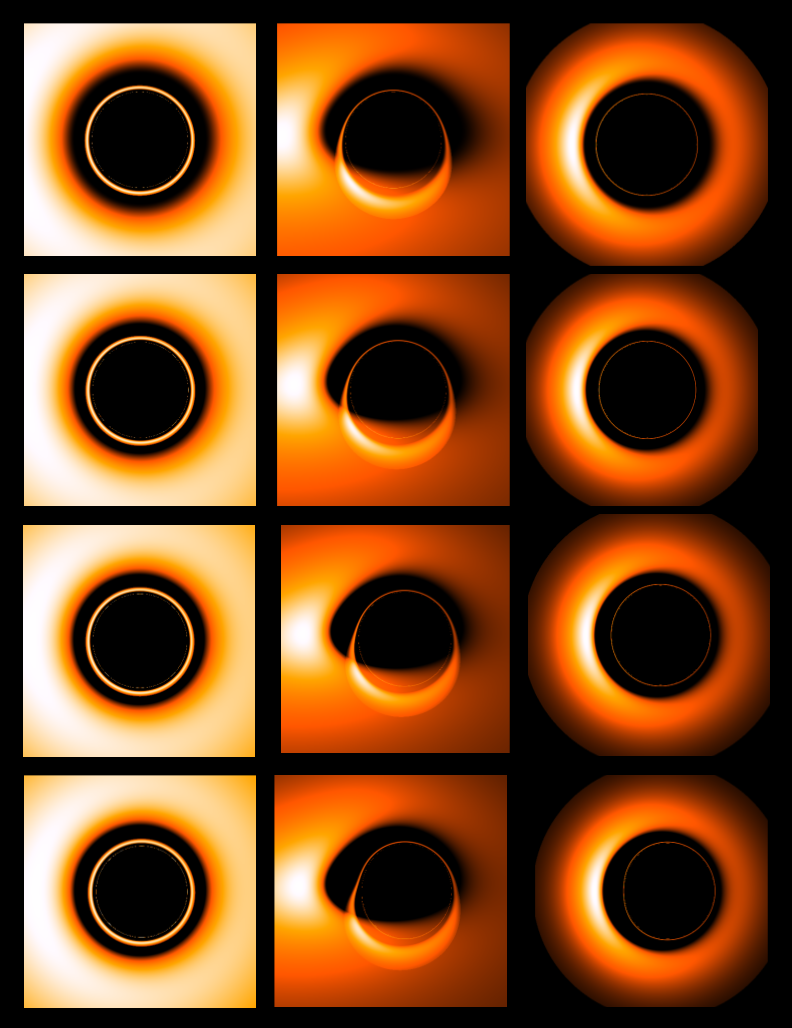
Figure 4: Shadow evolution for X=ξb29 with increasing rotation; transition from Schwarzschild to Kerr morphology.
- Introducing finite gμν0 (e.g., gμν1), the shadow displays pronounced lateral displacement, vertical flattening, and eventually, partial arc structures for near-extremal spin and maximal LV.
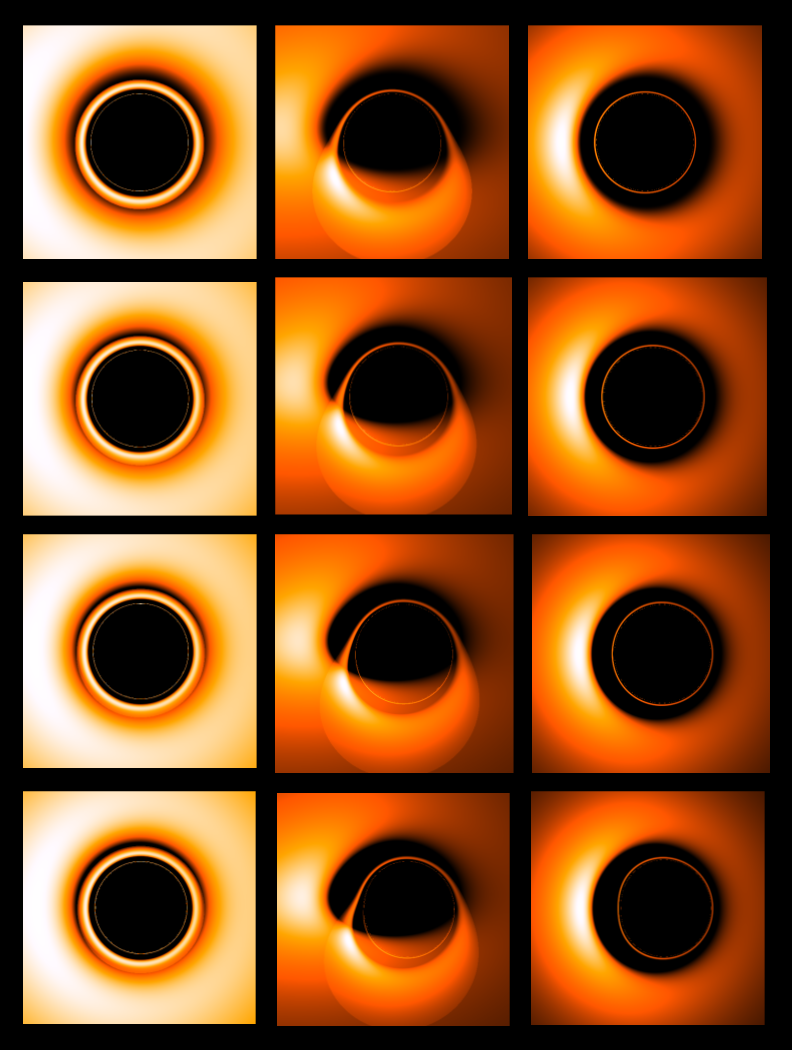
Figure 5: Shadows for fixed gμν2 and varied spin, illustrating interplay of rotation and Lorentz violation.
- High values of gμν3 combined with large gμν4 result in asymmetric brightness, loss of axial symmetry, and local collapse of the lower silhouette, distinct from purely rotational or disk asymmetry effects.
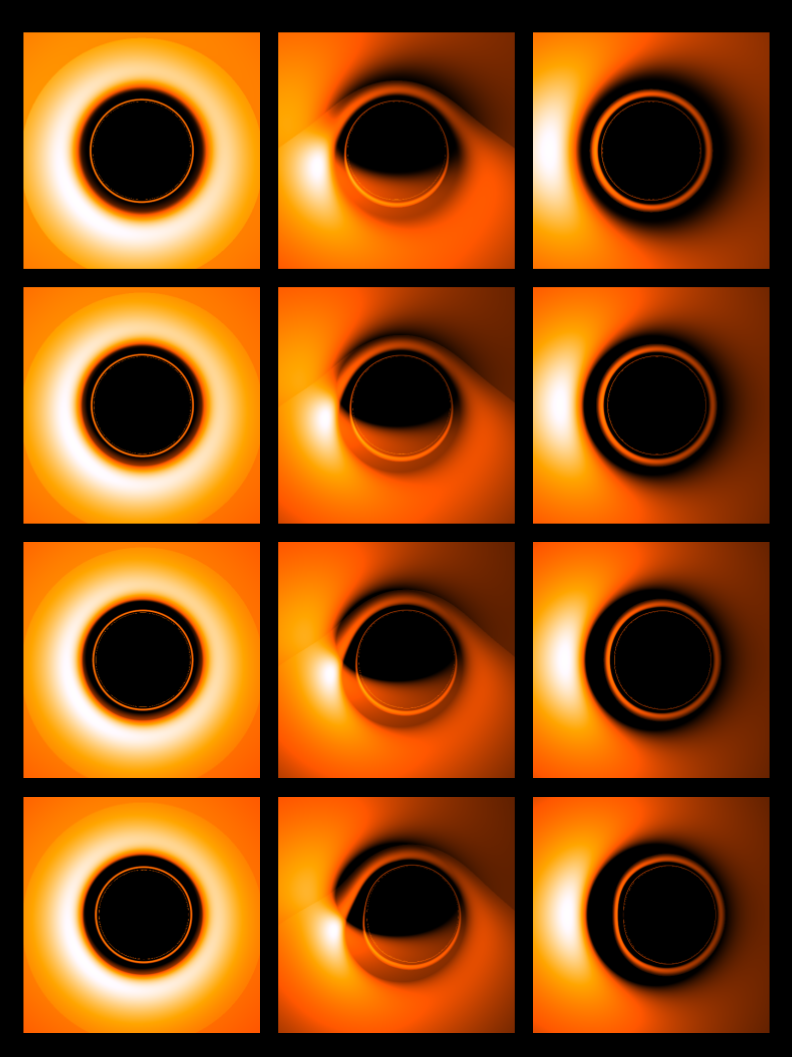
Figure 6: Severely deformed shadows for gμν5 and near-extremal gμν6, with collapse and preservation of upper edge.
Morphological Analysis of Shadows
Systematic morphological analysis quantifies the effects:
- For non-rotating black holes (gμν7), increasing gμν8 drives gradual vertical flattening, with the lower portion of the shadow diffusing while the upper edge remains sharp.
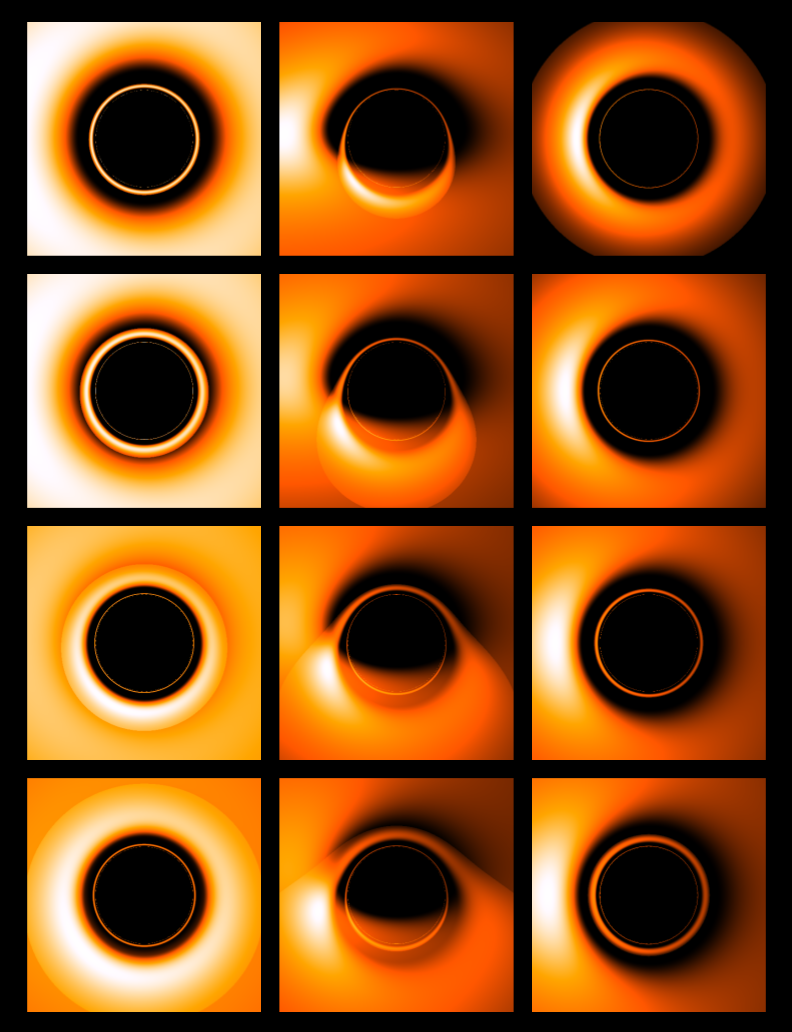
Figure 7: Non-rotating black hole shadows gμν9 with increasing Γμνλ0; progressive flattening.
- Low to moderate spin (Γμνλ1) and high Γμνλ2 yield teardrop-shaped, asymmetric shadows, with combined rotational and LV-induced Doppler effects.
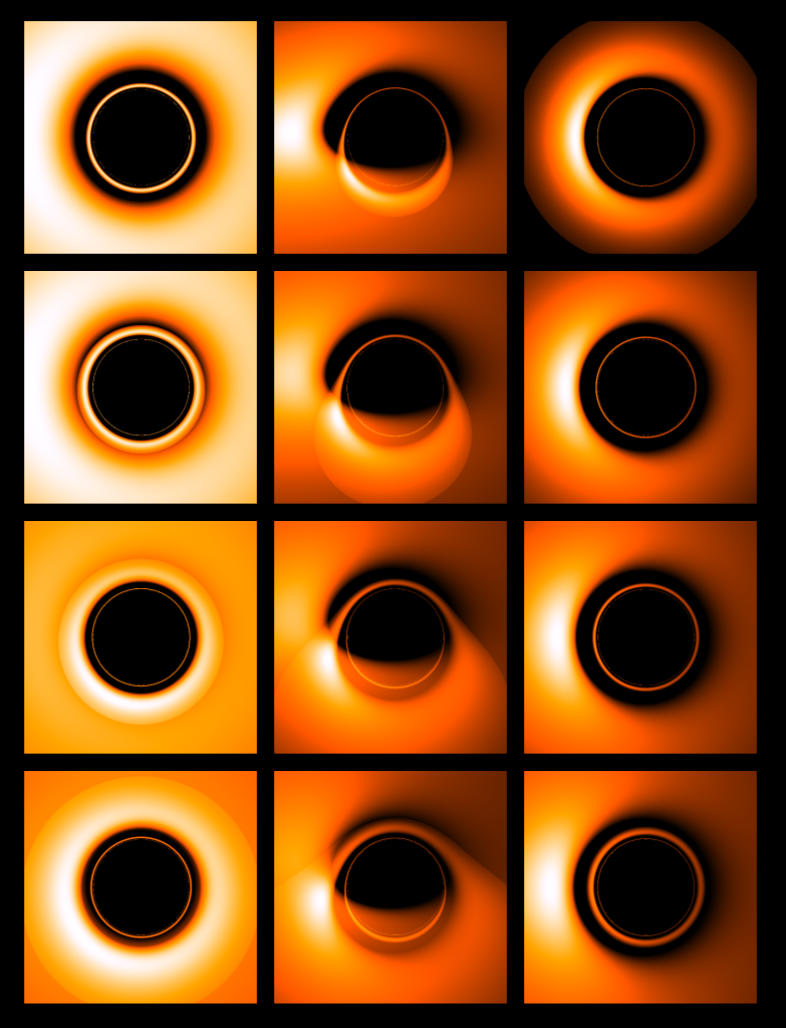
Figure 8: Shadows at Γμνλ3 with varied Γμνλ4; transition to teardrop morphology.
- Near-extremal spin (Γμνλ5) and high Γμνλ6 produce local collapse of the lower silhouette, highly sensitive to observer inclination and disk configuration.
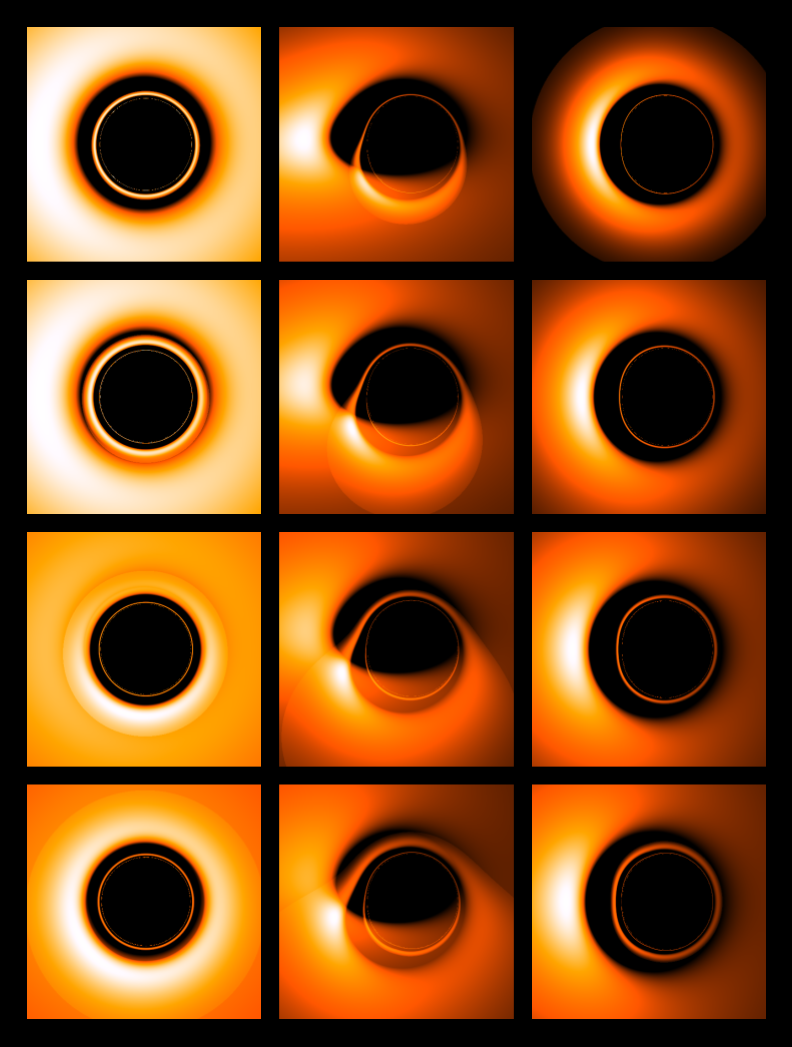
Figure 9: Shadows for near-extremal Γμνλ7 and increasing Γμνλ8; pronounced collapse and asymmetry.
Observational Implications and Theoretical Outlook
The study demonstrates that LSB signatures in metric-affine bumblebee gravity manifest as robust, observable departures from Kerr shadow predictions, particularly in shadow morphology and brightness asymmetry. These effects are most pronounced for systems with high spin and LV parameter, providing a discriminative test for LSB against GR via Event Horizon Telescope or similar high-resolution VLBI observations of supermassive black holes like M87* and Sgr A*.
Strong numerical results include:
- The clear, monotonic modification of shadow morphology and brightness with respect to both Γμνλ9 and Bμ0.
- Parametric shadow curves as functions of Bμ1 allow for Bayesian inference on observational data.
- The amplification of azimuthal symmetry breaking and vertical flattening as Bμ2 increases—distinct from disk or jet-induced asymmetries.
From a theoretical perspective, these findings extend the repertoire of strong-field GR tests into the regime of spontaneous Lorentz violation, and motivate further study into the interplay of bumblebee field configurations, metric-affine corrections, and astrophysical observables.
Conclusion
This paper rigorously characterizes the shadows of rotating black holes within metric-affine traceless bumblebee gravity, uncovering substantial and direction-dependent anisotropic distortions governed by the LV parameter Bμ3 and angular momentum Bμ4. Analytical, numerical, and ray-tracing analyses collectively show that these LV-induced deformations—vertical flattening, lateral displacement, teardrop morphology, and local silhouette collapse—are strong signatures, potentially observable with contemporary and future VLBI imaging arrays. The results imply that shadow observations constitute a sensitive probe of Lorentz violation in strong gravity, offering both practical constraints and deepened theoretical insight into gravity beyond GR. Future studies will refine emissivity models, explore parameter estimation, and further enhance constraint capability for LSB gravity models in astrophysical environments.